Club Profile
Sunderland
“Sun’lun” was just hanging on in the Premier League for years before a dramatic fall a few years ago—but they are back, returning hope to an amazing group of supporters.
LOCATION: Sunderland is about four hours by train from either London or Manchester.
CONTACT: safc.com, 0371 911 1200, #SAFC
NICKNAMES: The Black Cats, apparently because of a black cat that lived in their old stadium
History
If you used measurements like top-flight titles, FA Cups, support, and stadium capacity, Sunderland would be a right big club. And indeed, they used to be—80 years ago. Now they are thrilled just to be back in the Premier League after dropping into League One for a few seasons.
The club was founded in 1879 and has since spent 86 years in the top flight (winning six titles) and 31 in the second. 2020–21 was only their fourth year in the third tier, but the third in a row. The last league title was in 1936, and the following year they won their first FA Cup. Then came 40 pretty dry years before they won another FA Cup in 1973 while playing in the second tier. That has only been done by two clubs since.
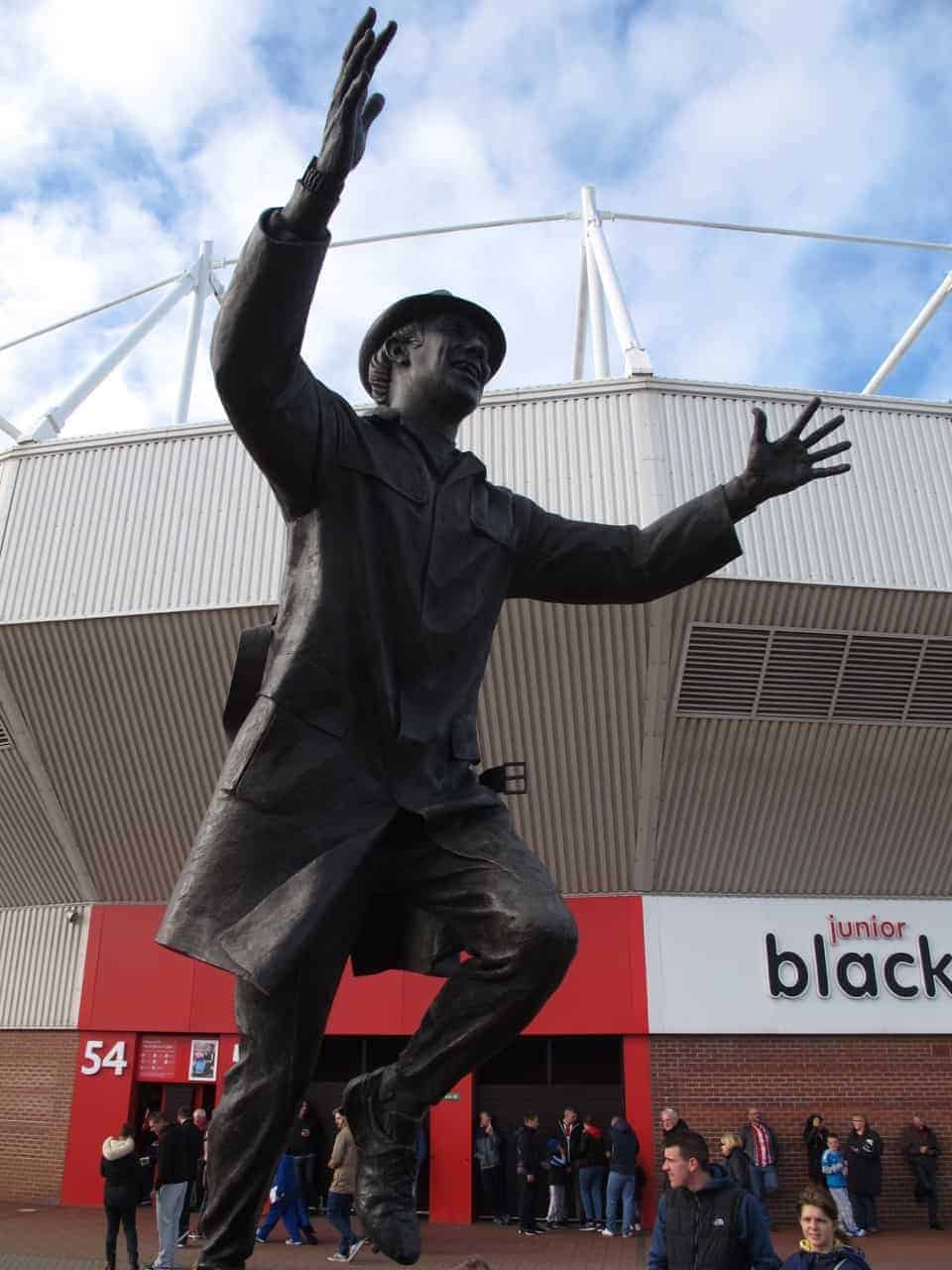
In that 1973 final, they beat Leeds United—the best team in the country at the time—1–0 on a famous goal by Ian Porterfield. Even more famous was a double save made by their keeper, Jimmy Montgomery; it was so amazing, the BBC announcer thought the ball had gone in. But the most famous image was of their manager, Bob Stokoe, who at the final whistle took off running straight at Montgomery to give him a hug. The image of him striding across the pitch at Wembley, arms aloft, is preserved in his statue outside the Sunderland stadium. Such was the importance of that win that Stokoe has a statue despite being the manager for less than four full seasons.
Their next major highlight was in 1985 when they made the final of the League Cup, which back then was called the Milk Cup. They drew Norwich City, and it was the height of the hooligan days. Both sets of fans were determined to put on a proper show of good behavior, and the result was what’s often called the Friendly Final. The supporters mingled and drank together before, during, and after the game; swapped scarves as souvenirs; and fed mints to the police horses. They also played a game of football in the “carpark” that was said to be at least 50 versus 50.
Norwich won the real game, 1–0, on a Sunderland own goal. On the trains after the game, Norwich fans sang, “We Won the Cup,” and Sunderland fans sang back, “We Scored the Goal.” Such was the goodwill from that day that ever since, when they play each other, they contest the Friendship Trophy. But several of their supporters made it clear that no one actually cares about this and they are all tired of hearing about it!
Two seasons of a Netflix documentary called Sunderland ’Til I Die document, in excruciating detail, their fall to League One and then their loss in the playoff final to get back up. Along the way, they also lost the 2019 League Trophy final at Wembley to Portsmouth. They won the League Trophy in 2021, but their fans couldn’t even be there to see it because of the COVID-19 pandemic. But in May 2022 they made it back for the promotion playoff final, and they won it.
In last season’s playoff final against Sheffield United, they levelled it at 1 in the 76th minute and then won it in the 95th. They are back in the promised land.
2024–25 SEASON: 4th in the Championship (promoted via playoffs), 3rd Round FA Cup, 1st Round League Cup
2025–26 SEASON: Premier League (promoted in 2025)
Rivalries
Newcastle United, which is about 12 miles away, is the main rival—and it’s positively tribal. They can’t even agree what to call it. Sunderland is on the River Wear, Newcastle on the Tyne. So Sunderland call it the Wear-Tyne derby and Newcastle the Tyne-Wear. Newcastle holds the slight edge with 54 wins to Sunderland’s 53, and there have been 49 draws. Middlesbrough is also considered a rival; that’s the Wear-Tees derby in these parts. This season will see the first league derby since a draw March 2016. Before that, Sunderland had won six in a row, which I imagine they remind their neighbors of from time to time.
Women's Team
Sunderland Ladies play in the Women’s Super League 2, the second tier. Home games are at The Eppleton Colliery Welfare Ground in the southern part of the city.
Songs
Not so much a song as a chant, you will regularly hear fans yell, “Haway the Lads!” It’s northeastern dialect, but of course in Newcastle it’s spelled Howay. Pregame, they also sing “Can’t Help Falling in Love” and another that says, “Things Can Only Get Better,” which they adopted during a great escape year in 2013.
Stadium
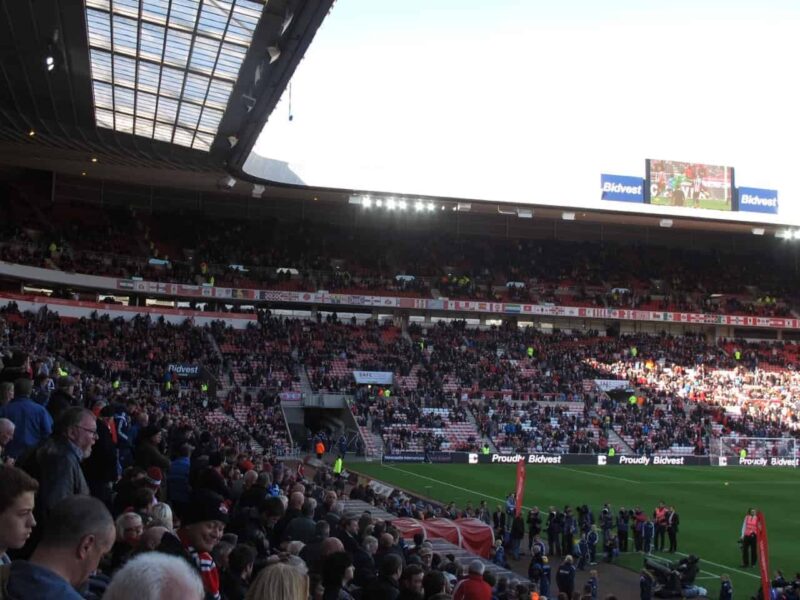
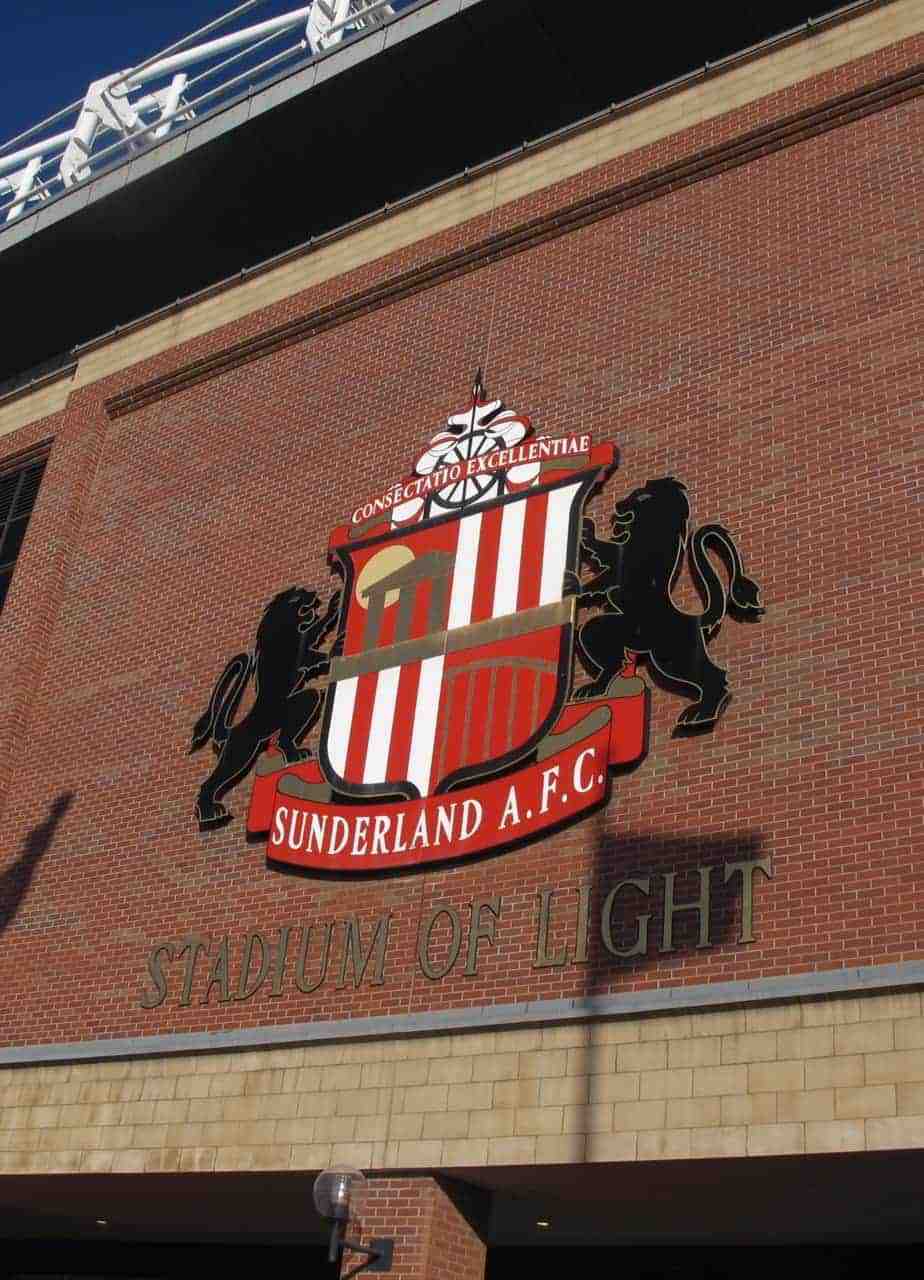
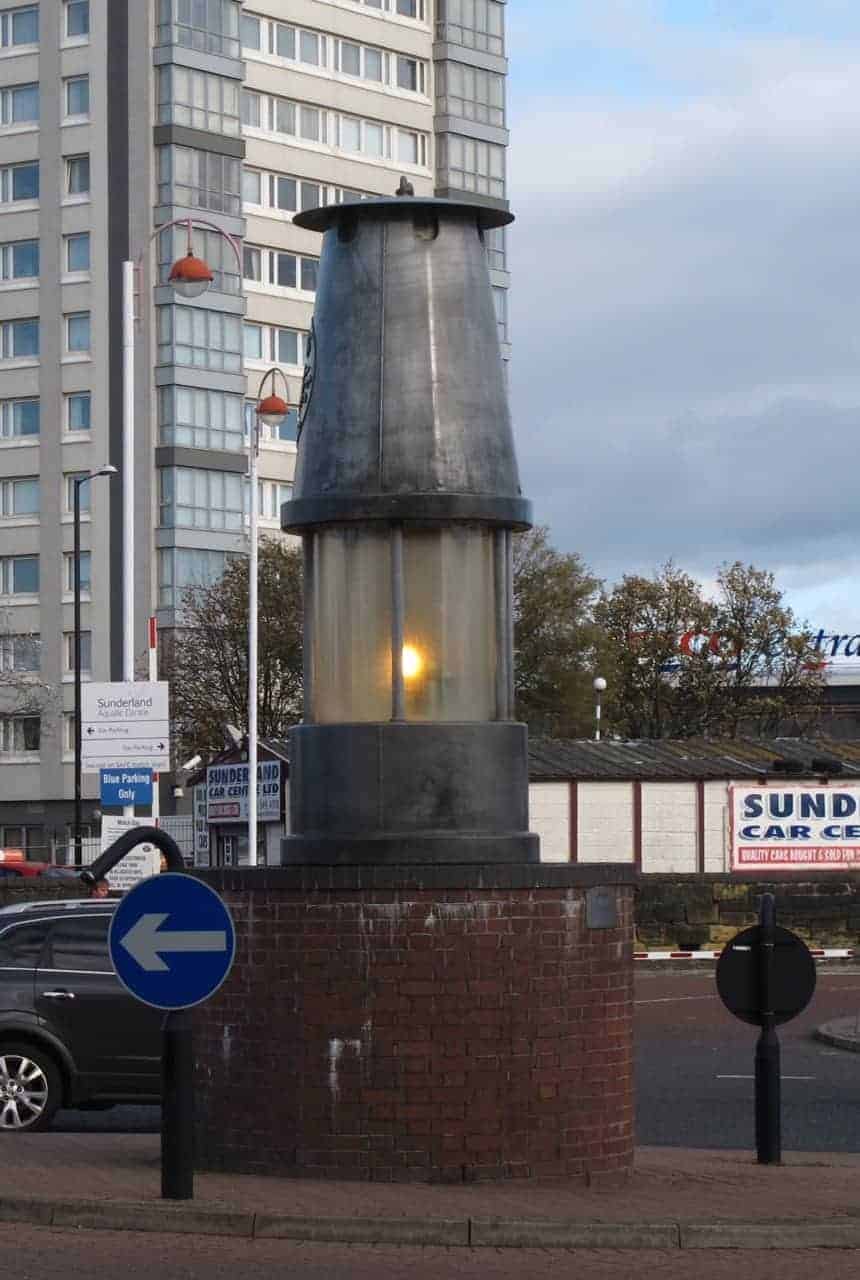
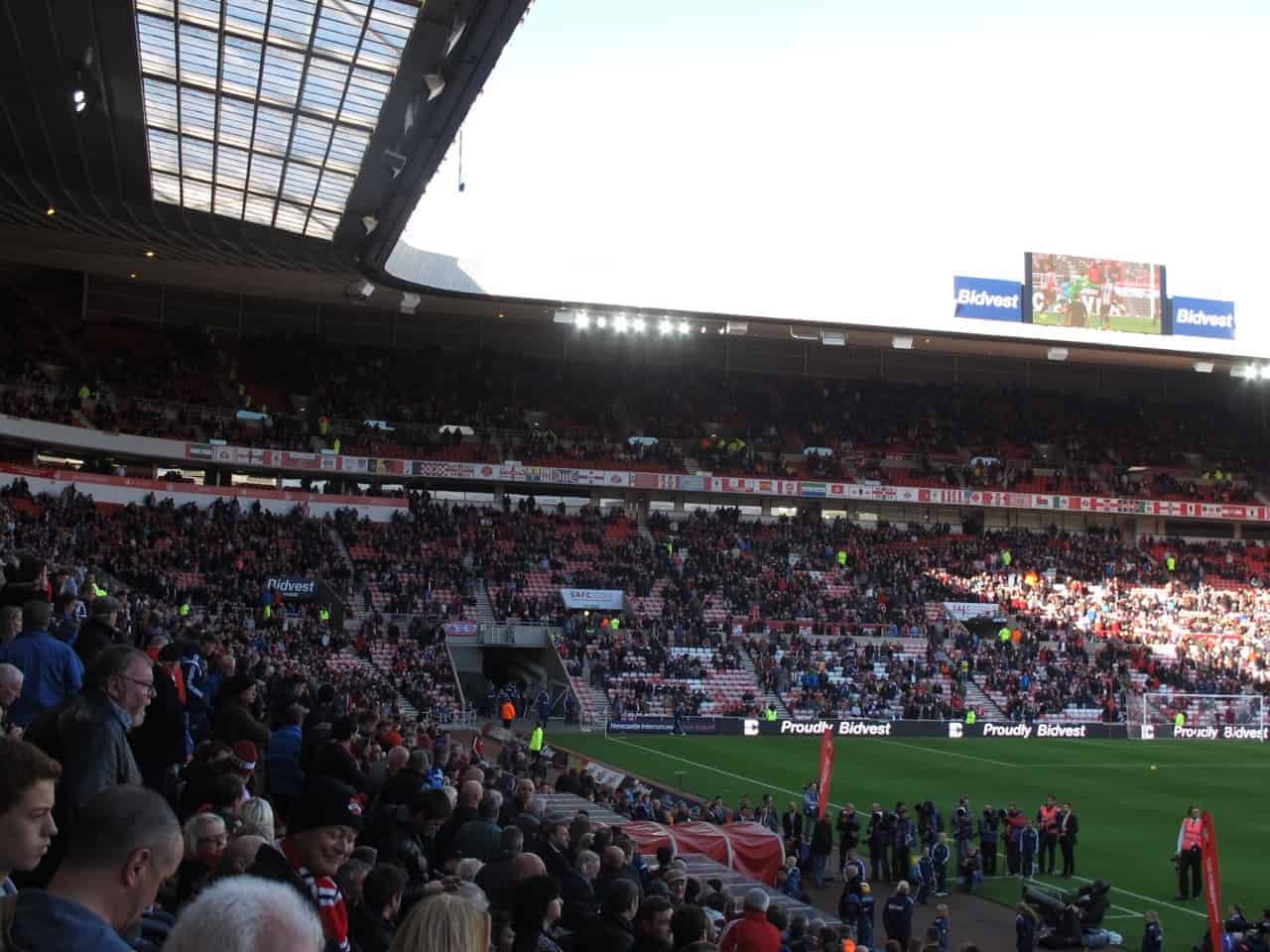
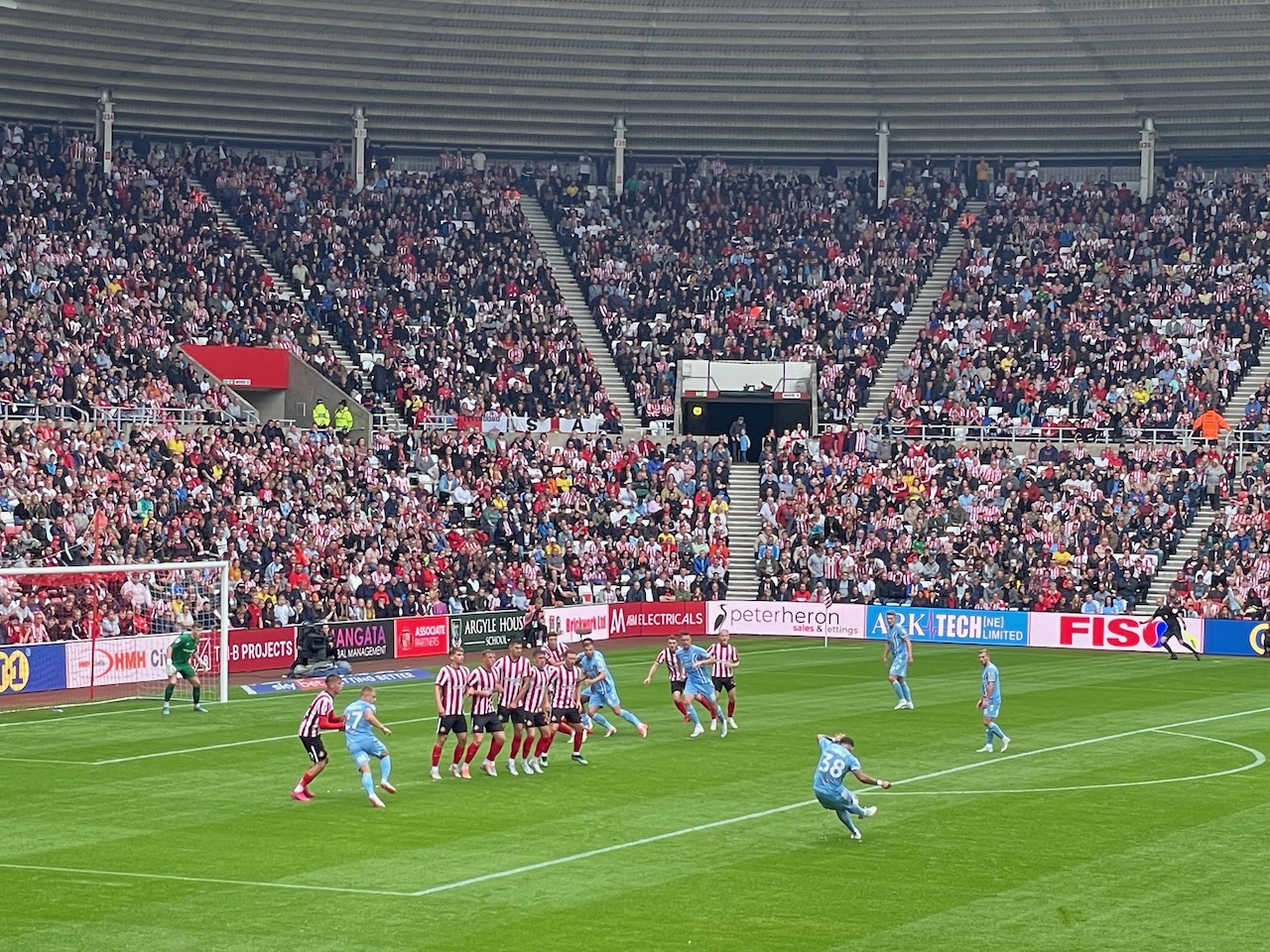
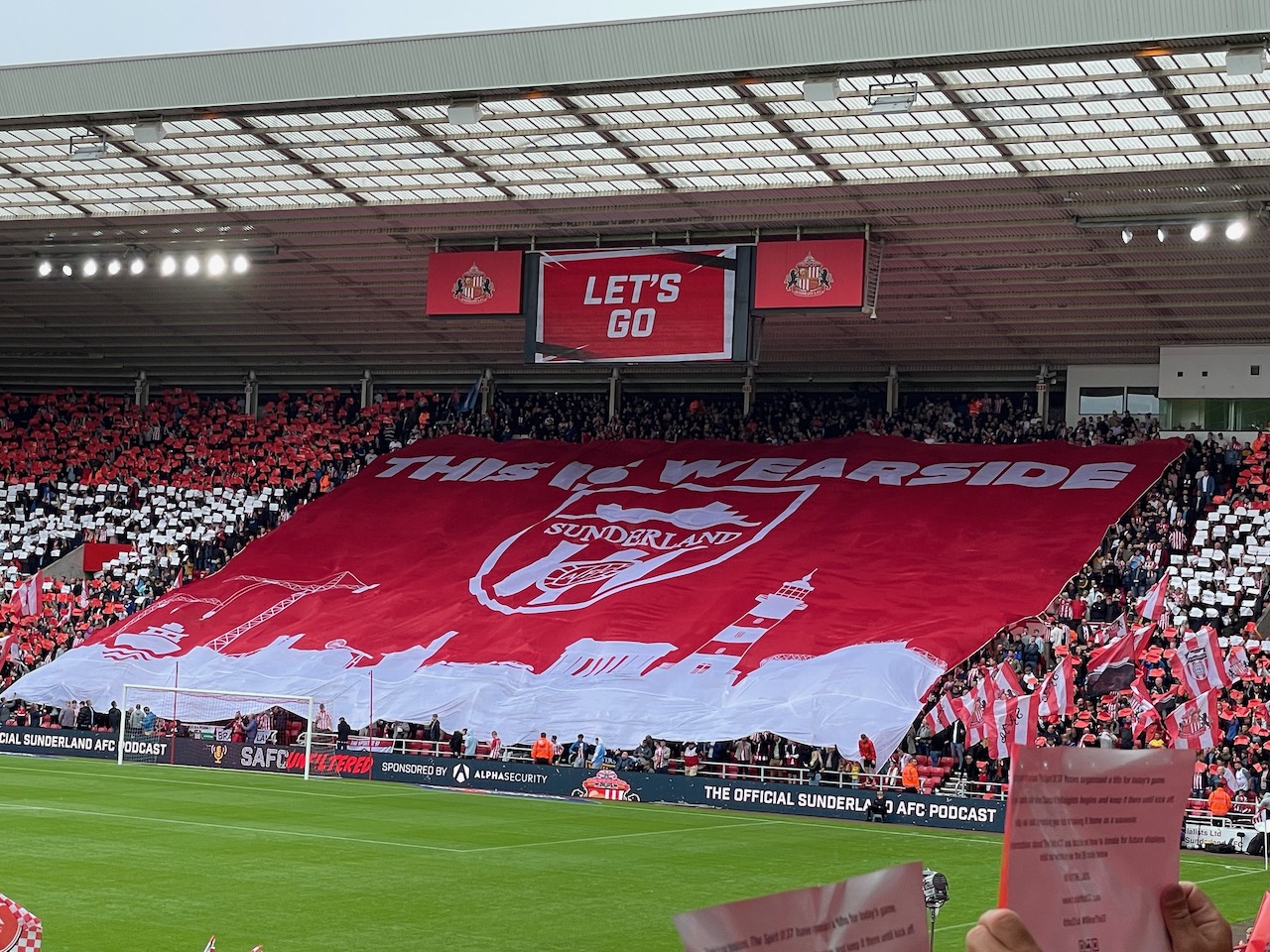
The Stadium of Light holds 48,707, and it is yet another example of a fairly bland, fully enclosed oval—just bigger than most. The name comes from the city’s long mining heritage. A light would be left on at the top of the mineshaft until the last miner was out. This became a symbol of the city’s commitment to its workers and football club, and today there is a light outside the stadium, along with the statue of the running Bob Stokoe.
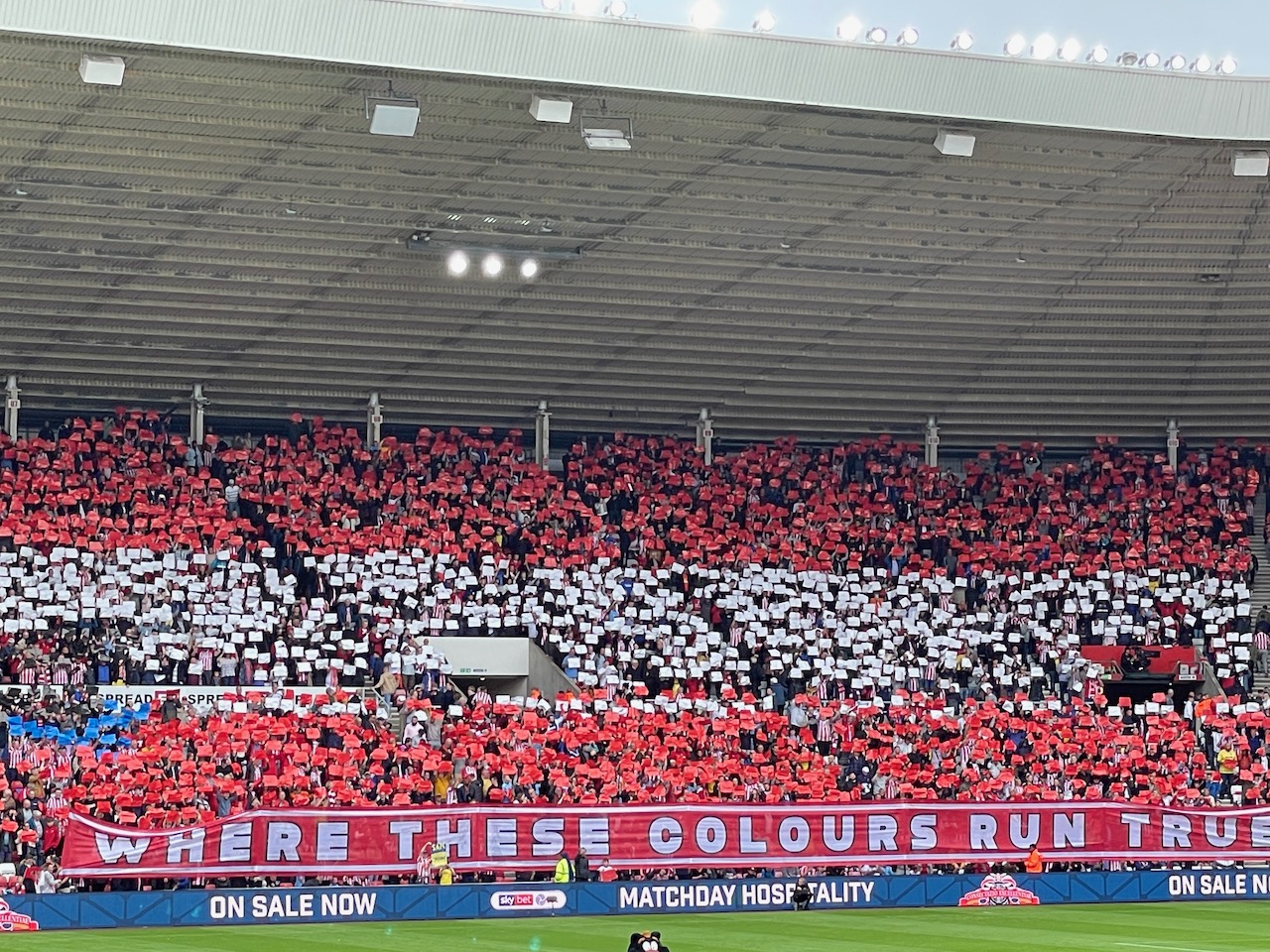
Away fans are in the upper tier of the north stand, home rowdies in the opposite Roker Stand.
TOURS: Offered several days a week (not match days) for £10
Going to a Game at Sunderland
GETTING THERE: From the Sunderland train station, you can walk it in just over 20 minutes. You can also take the Metro tram’s Green Line to St. Peters and walk just under half a mile. That line also continues on to a stop called Stadium of Light, but it’s a little farther away. The Metro also connects into Newcastle. Note that after the game, trains from the Stadium station will only go north, and from St. Peters they only go south.
PUBS: The Colliery Tavern, right by the stadium is popular. The Harbour View is a nice option on the seafront, about a 20-minute walk down Roker Avenue from the main stadium entrance and close to the old ground’s location. But the Fans Museum, just north of the bridge over the River Wear, is probably the best bet. It has memorabilia, pieces of the old stadium, and a bar with outdoor seating on game days.
Over by the station, south of the river, the Dun Cow has received awards from CAMRA for good beer selection, and it’s right next door to the famous Empire Theatre.
GRUB: There’s not much near the stadium except the pubs listed above.
AROUND TOWN: They’ve put a lot of work into the riverbank in Sunderland, including a sculpture trail. The National Glass Center has exhibits and glass blowing. You can download a map of the South Tyneside Heritage Trail from visitsouthtyneside.co.uk; use it and Metro to explore local towns and sites, including the 1871 Souter Lighthouse.
Also, if you put “Midfield Drive” into Google Maps, you can go stand at the exact spot where once was the center circle of Roker Park, the team’s former ground from 1898 to 1997. It’s on the way to the waterfront.
A few miles up the River Wear—and of interest to Americans, anyway—sits Washington, as in George. His family was from here, and the Old Hall where they lived is now a National Trust location. Tours are £5; see nationaltrust.org.uk/washington-old-hall.
South Shields is a famous old-school seaside town that has been remade as a renowned hub of Indian food. There is a park and pier on the water, and the Indian places are all lined up along the main road from there. South Shields has a Metro stop that’s about 40 minutes north of downtown.
Sunderland Tickets
Presumably they will be tough again this season. There was no word on pricing as of this writing.
Photo Gallery



Videos

Sunderland Goal v Man United at Old Trafford, League Cup, 2014
More About Sunderland