Club Profile
Blackpool
A proper big historic club in a historic city, The ‘Pool is well worth a visit.
LOCATION: Blackpool is on the North West Coast, around two hours by train from Manchester.
CONTACT: blackpool.co.uk, 01253 599344, #UTMP
NICKNAMES: The ‘Pool, Seasiders, or Tangerines for their colors
History
Here’s probably the main thing you need to know: On the club’s official Twitter profile, it reads “1953 FA Cup victors and record, six-time play-off promotion winners.” So there’s one (real) trophy in the case, but that doesn’t mean they’ve done nothing. They have been in the Football League since 1900, they have a large and loyal following, and besides, that FA Cup win was one of the most famous of all time.
To recap their history, though, we can skip ahead: They started in the Lancashire League, made the Football League, and by the 1930s were in the top tier. After the war they hit their glory years, when a core group led by forward Stan Mortensen and winger Stanley Matthews led them to finish as high as third in the league in 1951. They lost two FA Cup Finals, as well, before going back in 1953.
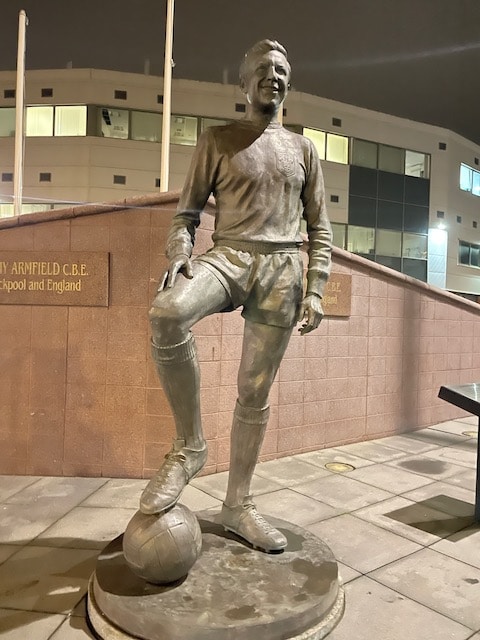
Matthews, by then, was 38 years old and had already been a pro for 21 seasons, known for his pace and dribbling skills. He was ahead of his time, as well, in terms of nutrition, fitness and training. In the Final, Bolton Wanderers were up, 3-1, after an hour when Matthews took over the game, repeatedly dashing past his marker down the right side and whipping in passes. Mortensen got two goals by the 70th minute to tie it, then William Perry scored the winner in injury time. Such was Matthews’ performance that, even though Mortensen scored the only hat trick in FA Cup Final history (still the case), the game is forever known as The Matthews Final.
Matthews stayed on Seaside until 1961, eventually retiring with hometown Stoke City at age 50. Blackpool finished second in the league in 1956, but that was their high-water mark. They were relegated in 1967, back up for a season in 1970-71, and have since spent only one season (2010-11) in the Premier League.
Recent history has been rather uglier. The Oyston family owned the club for many years, even after the family patriarch was jailed for rape; their son took over and was later found to have illegally stripped the club of its assets. They spent a season in League Two during these years. Finally, in 2019, a local businessman bought the clowns out, and the crowds–who were essentially boycotting the ownership–returned in droves and high spirits. In 2021, they won the playoff to get back to the Championship, but unfortunately finished 23rd in 2023 and were relegated to League One, where they have finished 8th and 9th the last two seasons.
2024–25 SEASON: 9th in League One, 2nd Round FA Cup, 3rd Round League Cup
2025–26 SEASON: League One (relegated in 2023)
Rivalries
The West Lancashire derby with Preston North End is one of the classics that are rarely played for any significant honors, and are hardly noticed outside the region, but it is a local, personal affair stretching back nearly 100 games 1901. In 2022 they played for the first time since 2010, each winning at home.
Women's Team
Blackpool FC Ladies are in the North West Women’s Regional Football League Premier. Home games are at the home of the (somewhat confusing) AFC Blackpool.
Songs
The most common are a rolling “Come on Blackpool” and a simple clap-and-chat of “Seaside!” that can get pretty loud.
Stadium
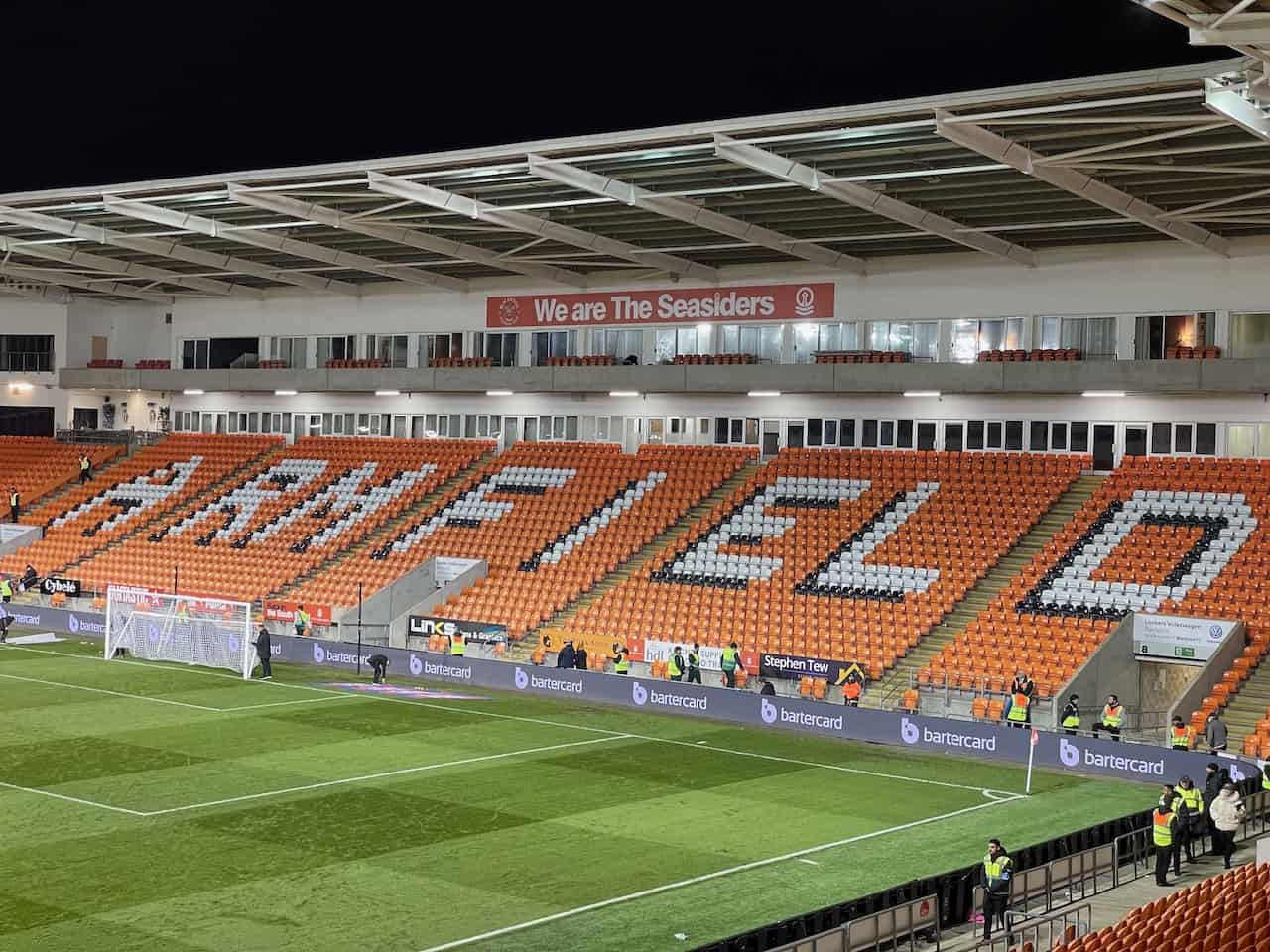
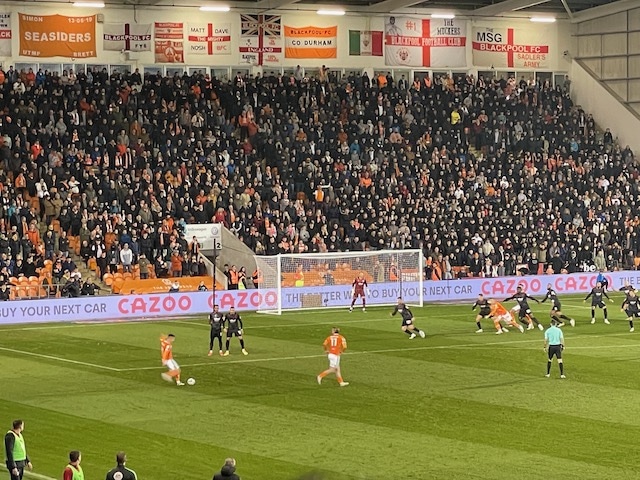
Blackpool’s home, Bloomfield Road, seats 17,000 but somehow feels bigger and louder. Three of the four stands were built after 2000, and so was the fourth, but it was a “temporary” stand put up in 2010 when the club spent one year in the Premier League. It remains there to this day, with posts all along the front, no facilities underneath, and away fans occupying half of it.
The rest of it is modern and nice, and even has a hotel attached to it. The outside of the ground, though, looks like a 1970s-era office building, at best. At least it’s in town proper, just a few minutes’ walk from the famous promenade and a short bus ride from the main train station.
The home rowdies will be in the Mortensen North Stand, aka The Kop, and as said before, the away fans are currently in the temporary East Stand (they’ve been moved around over the years.) So if you want to enjoy views of the supporters, go for the Matthews (West) Stand; otherwise, head for the Kop and prepare to make some noise.
TOURS: None
Going to a Game at Blackpool
GETTING THERE: It’s a couple of miles from the main train station, Blackpool North, so it’s best to take a bus or taxi. The No. 11 bus from Blackpool North stops a short distance away.
PUBS: The Bridge on Lytham Road seems to be the main away-fans pub. Just down that road, also look for the large Manchester Pub and the New Albert. One of the largest Wetherspoons in the country is up by the seafront; it’s called the Velvet Coaster. Some other classic and historic pubs are in the town center; look for the Mitre, the Saddle (which dates to 1770), and The Rhythm and Brew Room.
GRUB: Elsewhere on Lytham Road are a few of the roughly 519 fish and chips places in Blackpool. We were told – sadly, after we tried another one – that Lily’s by the pier is the pick of the bunch.
Inside Bloomfield Road, though, the club has done what very few other clubs do: They went and found a local producer of high-quality pies, and they sell those in the ground. Decent pies at a football game? It’s a miracle. The local heroes are called The Pork Shop, and their excellent pies run £3 or £3.50. Highly recommended.
AROUND TOWN: As Americans, we were trying to think of the U.S. city that most resembles Blackpool, and we settled on a combination of Las Vegas and Gatlinburg, Tennessee. Or maybe just Atlantic City.
It’s Vegas in that it has bright lights, famous venues, casinos, recognizable landmarks, and for years has been known as a party destination. (In England, they call these Stag Dos and Hen Dos.) Your author once listened to two guys at an Oxford United game spend most of said game going on about how absolutely insane their upcoming trip to Blackpool was going to be. (Read that story here.)
Blackpool was built up starting in the 1840s, when a railroad connected it to the rest of Lancashire, whose cities were swelling with paid workers during the Industrial Revolution. So when they all wanted to go to the beach, Blackpool was the place, and it mushroomed in population, hotels, and attractions.
But electricity really took things to another level when it arrived in the 1870s. Blackpool was the first city in the world to have electric street lights (1879) and one of the first to have an electric tram (1885). The latter still runs along the same line to Fleetwood (where Fleetwood Town of League One are based), and sometimes they even run vintage trolleys on it.
Also in 1879 came the Blackpool Illuminations, with lights all over the “Golden Mile” from September through Christmas every year. The tram runs right through the middle of it. In 1894 the 400-foot-tall Blackpool Tower opened (you can go up it to this day), and its glorious ballroom is one of the most famous dancing venues in the world, host of international competitions and the popular British TV show “Strictly Come Dancing.”
1896 saw the founding of Pleasure Beach, still famous for its four wooden roller coasters, and … well, you get the idea. It’s Vegas. But it’s also Atlantic City, because none of the above has been updated, really, in decades, and we got the vibe around town that people go there because their grandparents told them it was amazing.
Anyway, it’s well worth a visit for a day or two. Something you “must do,” apparently.
Blackpool Tickets
Last year adult tickets were £21 to £27.
Photo Gallery