Club Profile
Burnley
From a town of 73,000, with a ground that mixes old and new, Burnley was for years a model for a gritty club from a gritty town hanging on in the Premier League. But now, they’ve shifted to become more of a Championship regular.
LOCATION: An hour north by train from Victoria station in Manchester
CONTACT: burnleyfootballclub.com
NICKNAMES: The Clarets
History
Burnley Rovers started out as a rugby football club, but they switched to Association rules in 1882 and moved into their current home, Turf Moor, the next year. They were one of the original 12 clubs in the Football League, and one of their players got the first hat trick in league history.
After that, it is very much a standard small-club history—early glory, decline, another good run, near ruin, and now a battling run near the top—all set in a town that is the very definition of the Standard Northern English Town Story. They won the league in 1921, going 30 games unbeaten along the way. That’s the record Arsenal’s Invincibles would break decades later.
After World War II, Burnley built another winning team under the chairmanship of Bob Lord and the management of Alan Brown. Burnley was also an innovator: the first to build a separate training ground, the first to do short corner kicks, and a leader in youth development. In fact, when they won another league title in 1960—grabbing it with a last-day win at Manchester City after not leading the league all season—they did it with two players they bought and the rest they brought up through the youth system. That team had international players and a Footballer of the Year, and they made Burnley’s first trip to a European competition.
When those stars retired, the club started to lose the money battle to other, bigger outfits, and by 1971 they had been relegated. By 1985 they found themselves in the fourth tier and needing a last-day win to even stay there. But they rebuilt and popped up to the Premier League for one year, 2009-10, becoming the smallest town to ever host a Premier League team. They still are.
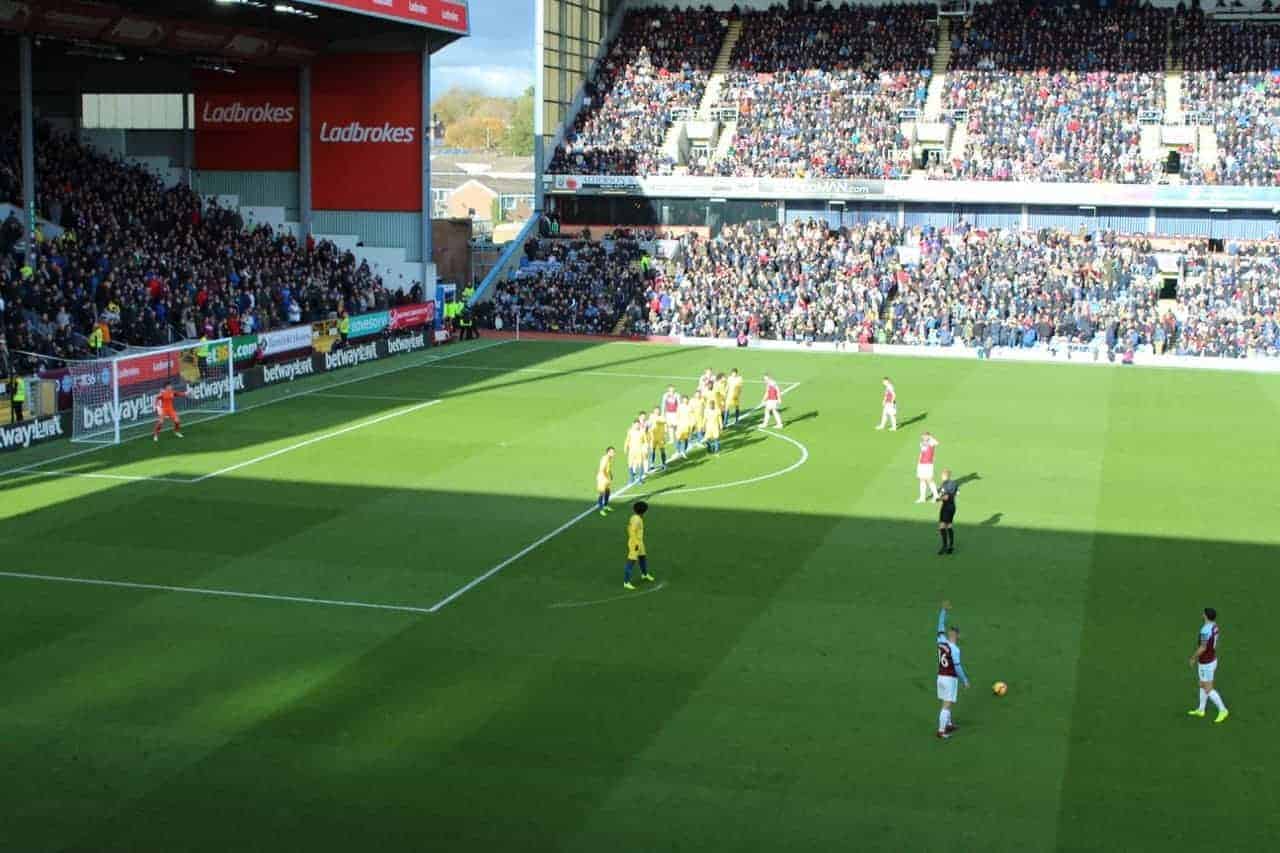
They bounced around between the top two divisions before barely staying up in 2017—the first time they repeated in the top flight in 40 years. Then, under manager Sean Dyche, they developed an outstanding formula for success: be organized, work hard, be tough to beat, and win at home. They had a particular ability to shock the big teams, like when they opened the 2017-18 season with a 3-2 win at defending champions Chelsea. That year they finished seventh, resulting in a Europa League berth—their first “European tour” in 50 years. They beat a Scottish team before losing to a Greek one, and the effort almost derailed their league campaign. The next two seasons they finished 15th and 17th.
In 2022, Dyche was sacked and they dropped back into the Championship. But they hired Manchester City legend Vincent Kompany as their manager, and in his first season, he led them to a first-place finish in the Championship, earning them an automatic promotion back to the Premier League. For good measure, they made the FA Cup quarterfinals as well before losing away to eventual winners Manchester City. They were relegated after one season, Kompany left for Bayern Munich, they spent last season back in the Championship, and now they are back up this season.
2024–25 SEASON: 2nd in the Championship (promoted), 5th Round FA Cup, 2nd Round League Cup
2025–26 SEASON: Premier League (promoted in 2025)
Rivalries
Among all the Lancashire teams, Burnley and Blackburn Rovers agree that they hate each other the most. Those games are called East Lancashire derbies or Cotton Mill derbies, the teams being separated by just 19 miles and in former mill towns. As a neutral, we’re sad that this one is back off.
Women's Team
Burnley Women FC play in the third-tier Women’s National League North. Home games are at County Ground in Leyland.
Songs
They have a fun one about Owen Coyle, who played and managed at Bolton and then managed Blackburn Rovers when they got relegated to League One. It includes the lines:
Owen Coyle’s a bastard.
He wears a bastard hat.
He was a Bolton wanker,
He’s now a Blackburn twat.
After goals they play “Tom Hark” by the Piranhas. You think you don’t know it, but you do. Google it.
Stadium
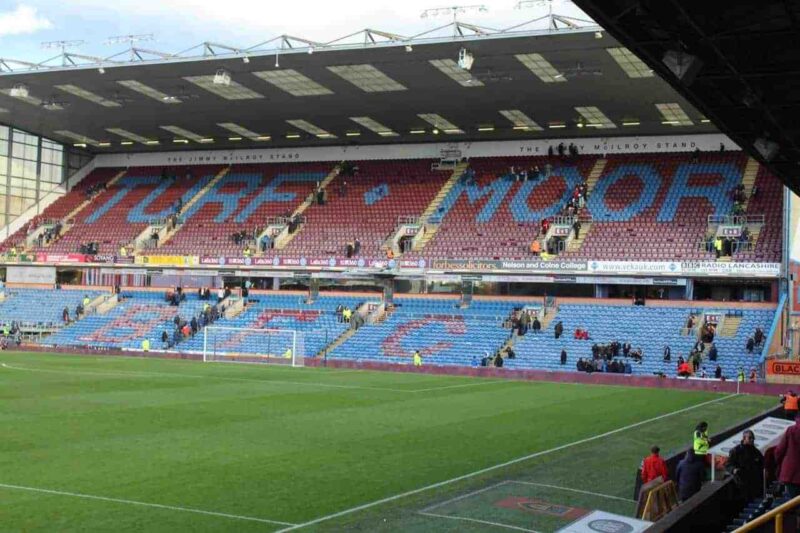
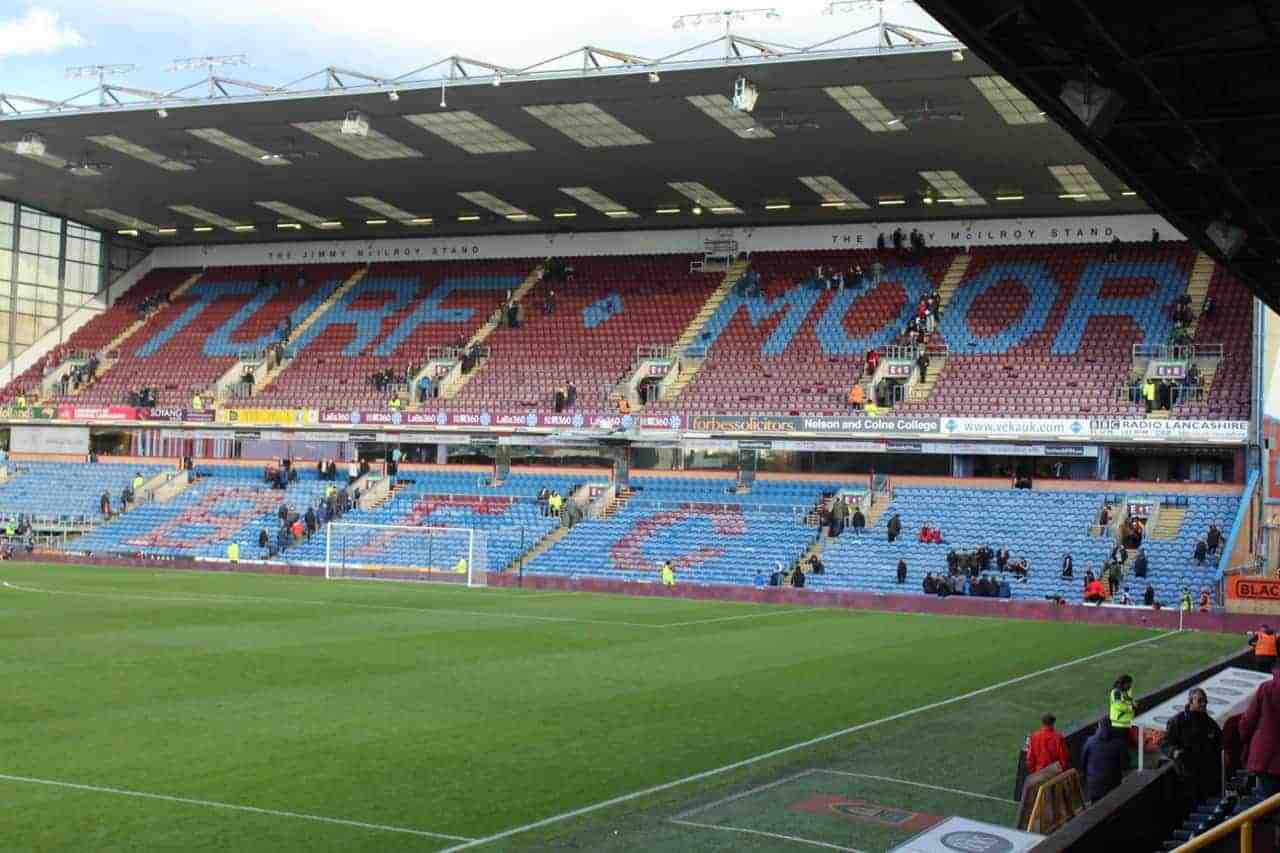
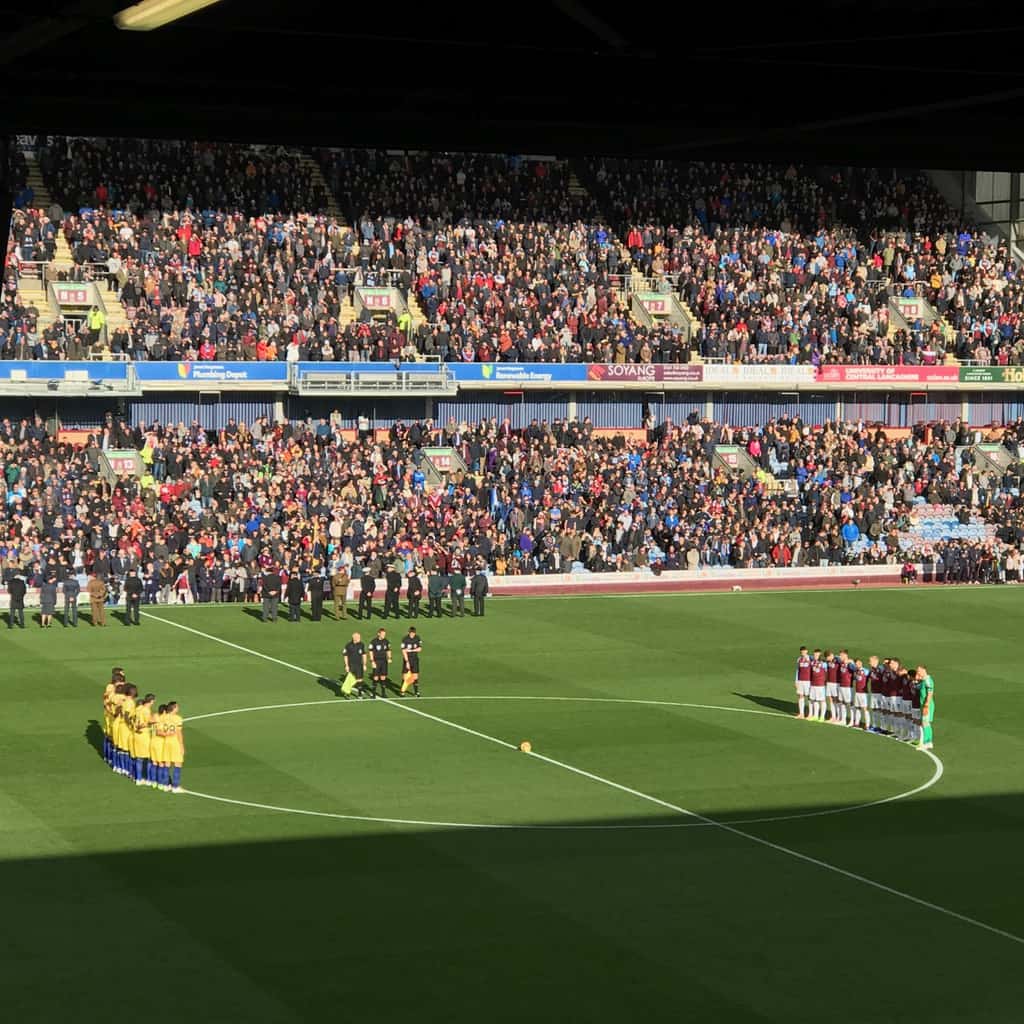
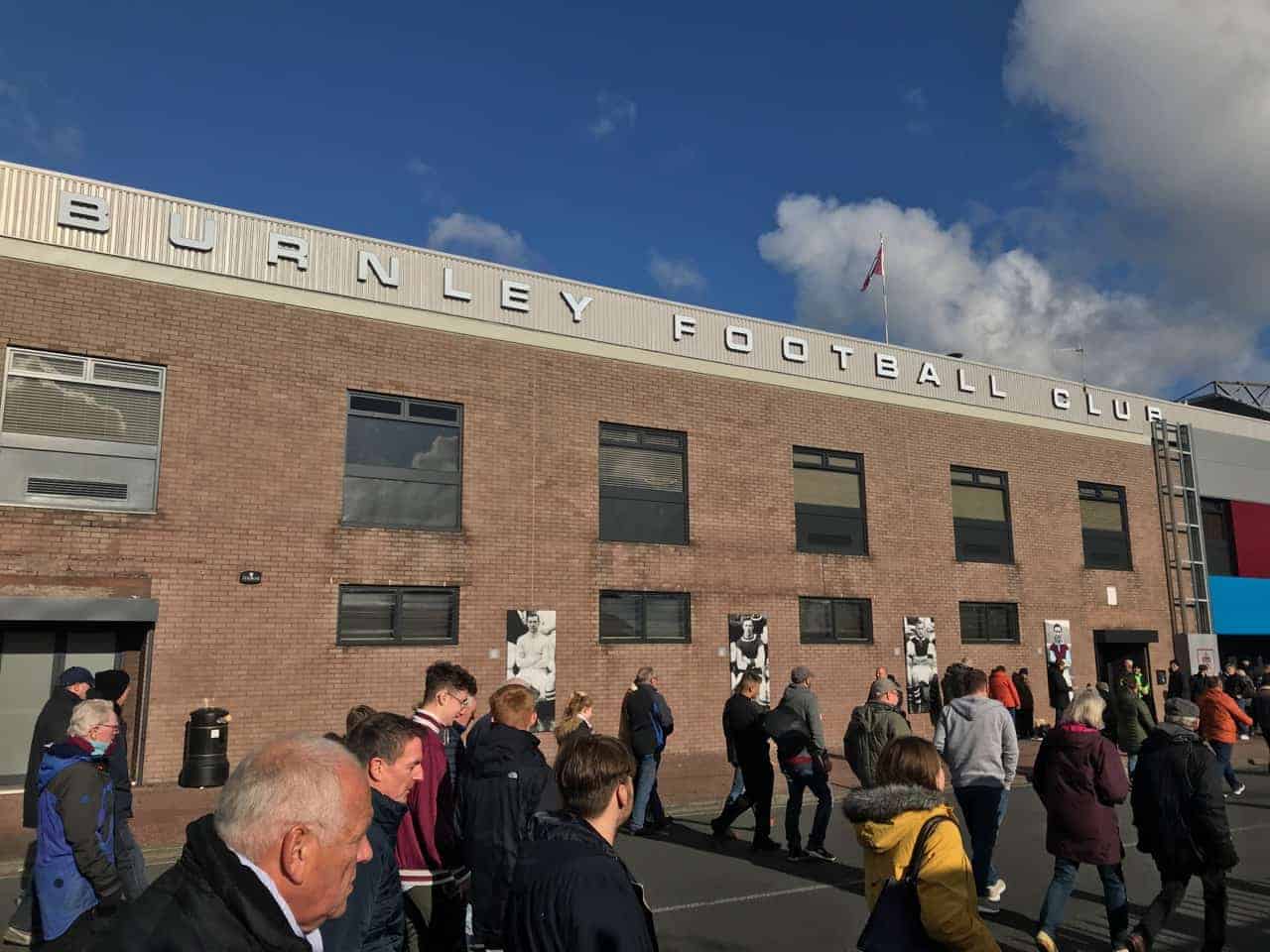
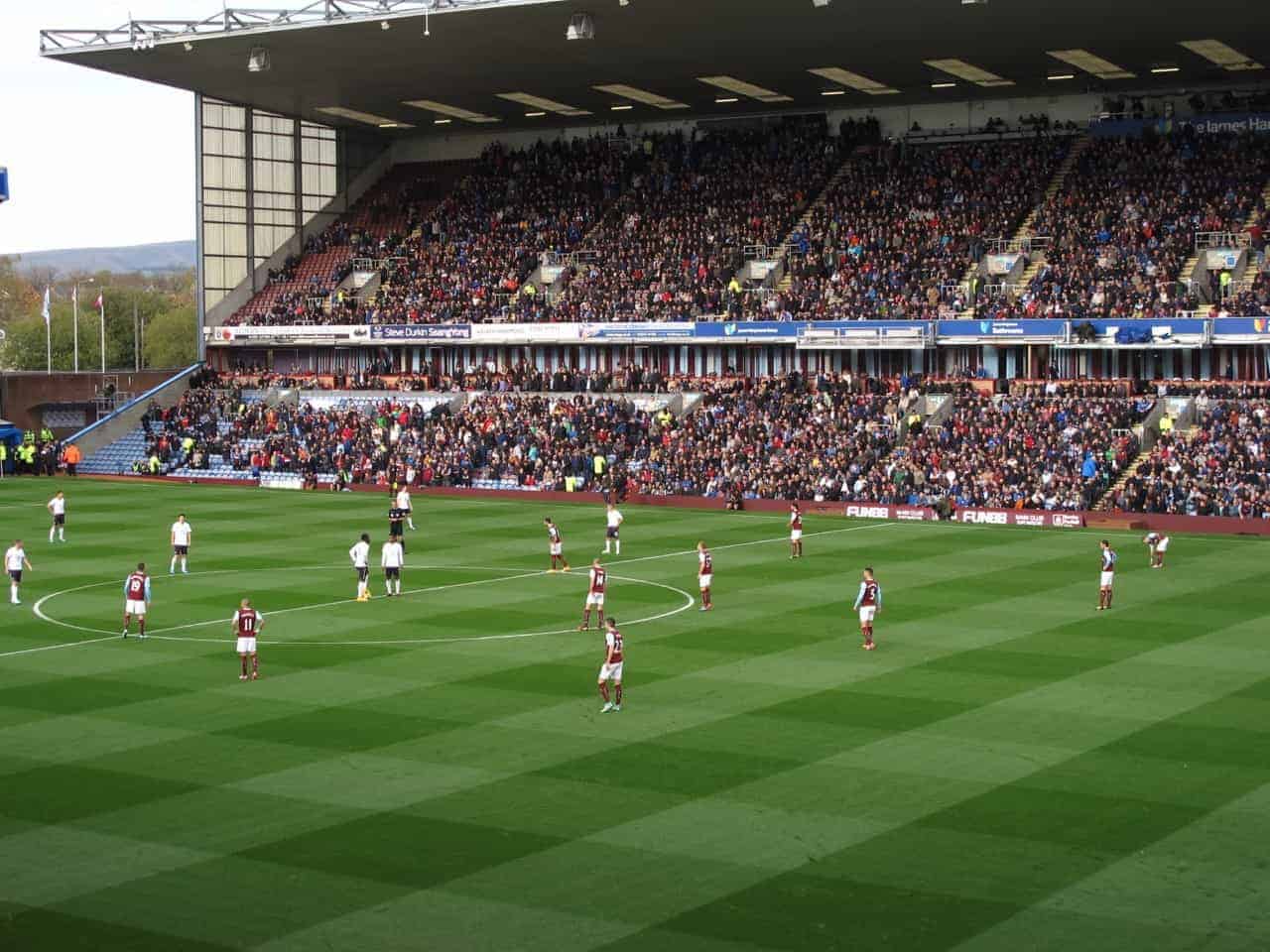
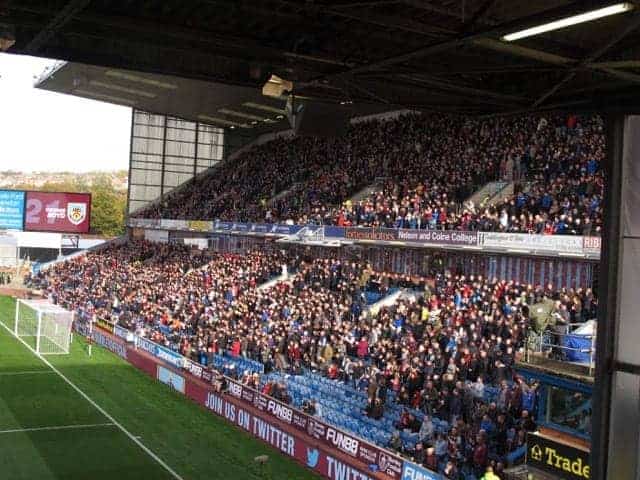
Turf Moor—what a name. And it is old school: we sat on a wood seat next to an older gentleman with pin badges all over his vest. He said of the place, “It’s a proper footballing ground.” And indeed it is—all 21,944 seats of it. Their home since 1883 is also the longest continually used stadium ever to be in the Premier League. (And do the math: they average 20,000 a game in a town of 73,000.)
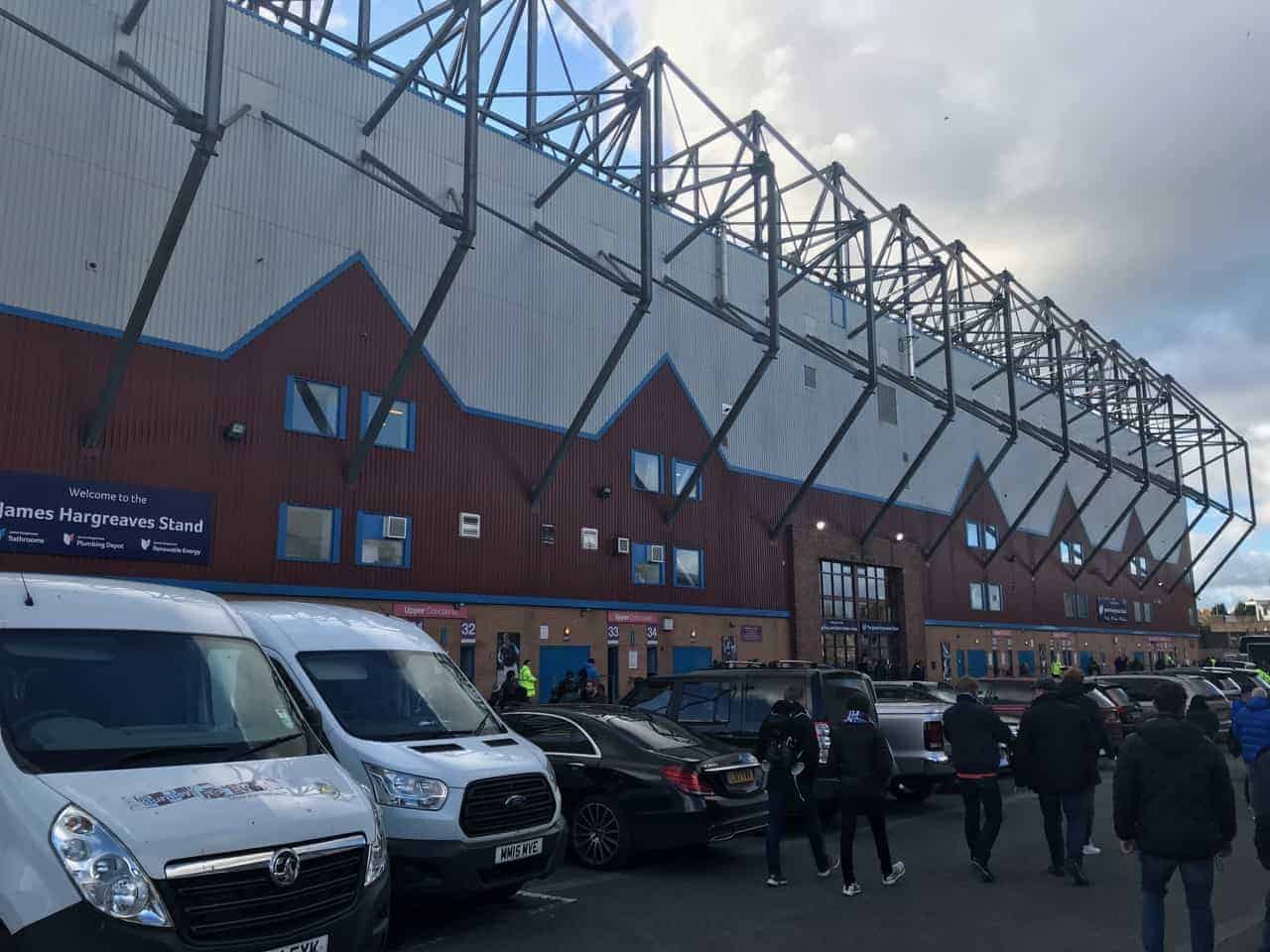
One side and one end were redeveloped in the mid-1990s and are two-tiered, but the other side and end, the Bob Lord Stand and the Cricket Field Stand, date from 1974 and 1969, and both have some wooden seats. Away fans will be in the Cricket Field Stand, with the rowdy Burnley fans in the near end of the James Hargreaves Stand.
TOURS: Can be booked on the club’s website.
Going to a Game at Burnley
GETTING THERE: To get to Burnley, you should come over from Manchester on the bus. The train ride is fine, and you can take it back for convenience, but the bus is a scenic trip over a hill through villages and sheep country. It’s called the Witch Way for some reason and has run continuously since 1948! Catch it at the Manchester Coach Station in Chorlton Street. The Burnley Coach (bus) Station is also much closer to Turf Moor than the railway station.
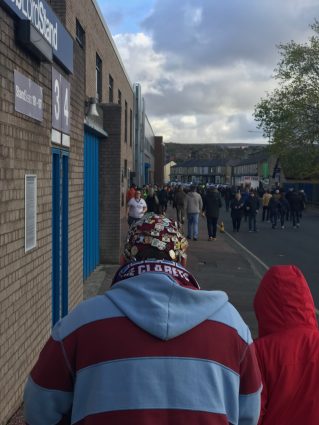
If you come in by train and arrive at Manchester Road station, it’s a 20-minute walk from there. It should be about £5 in a taxi.
PUBS: There is a big Fan Zone behind the North Stand, and right across the road from the South Stand is the big Park View with an outdoor beer garden. Along Yorkshire Street, the main route to the stadium, look for The Turf Hotel and the more happening—and wonderfully named—Royal Dyche, with a photo of their (now former) manager as some kind of medieval prince.
In town and along the walk from Manchester Road station, look for the Bridge Beer Huis, listed in the CAMRA Good Beer Guide. Farther away, but worth the 15-minute walk, is the Brewers Fayre Queen Victoria, set in the middle of a large park and offering a large menu and plenty of seating; there’s also a Premier Inn there.
GRUB: There’s not much by the ground and nothing that looks too spectacular in town. If you want fish and chips, look for Frydays over near the Bridge Beer Huis. And up by the Manchester Road station, if you want some sugar and caffeine before heading out of town, check out the somewhat goofy Chocstop Dessert Cafe.
AROUND TOWN: Look, they’re a great story, and Turf Moor is a favorite. And there are some wonderful people in Burnley—but every one of them assumed (correctly, by the way) that visitors would be leaving right after the game.
In fact, there is one thing to do. It’s called the Singing Ringing Tree, and it’s a piece of wind-powered art in the hills above town. Apparently, when the wind hits it right, it sings. Either way, the view is nice. You’ll need a taxi to get there, and it will be about £20 roundtrip, and from the road the tree is about a 10-minute walk. You might want to have the taxi wait for you.
Burnley Tickets
In the Championship, tickets were £30 to £40 for adults and usually available with some advance notice.

Photo Gallery


Videos

More About Burnley