

Club Profile: Wolverhampton Wanderers
Wolverhampton is an old-fashioned club, but recently they got rich owners and even made the Europa League a couple times.
LOCATION: Wolverhampton, which is officially a city of 250,000 people plus a metropolitan borough, but really is part of the great sprawling mass that is Birmingham
CONTACT: wolves.co.uk
NICKNAMES: Wolves—even though their name includes Wanderers. Who knows why?
History
Wolves go all the way back to 1877, making them one of the oldest clubs around. They were one of 12 founder members of the Football League in 1888, and in fact played in the first-ever Football League game against Aston Villa. They won the FA Cup in 1893, but they soon faded from prominence.
It was in the 1950s that they hit their glory days. With Billy Wright as the captain and Stan Cullis as the manager, they won the league in 1954, 1958, and 1959. They also staged “floodlit friendlies” with big teams from all over the world. The most famous of these was a 1954 game played at night, live on the BBC, against Honvéd from Budapest, then considered the greatest club side in the world. The Hungarians were up, 2-0, after 14 minutes, but at halftime Cullis told the staff to water the pitch to slow the opponents down. Wolves scored three in the second half and won it, causing the (British) press to declare them “Champions of the World.” The attention afforded that game was apparently the final straw to create the formation of a European Cup tournament, today known as the UEFA Champions League.
Wolves went on to win their fourth FA Cup but got relegated in 1964. Odd historical note: Wolves actually played in and won a 1967 league called the United Soccer Association that was made up of U.S. and Canadian “teams” that were actually foreign teams. The LA Wolves beat the Washington Whips (aka Aberdeen of Scotland) to win it, and then the league became part of the North American Soccer League.
Wolves made the UEFA Cup final in 1971, losing to Spurs, and then won the League Cup in 1974. Then they started bouncing up and down, and when they spent a fortune on the stadium in 1979, it almost wiped them out. By 1988 they were all the way down in the Fourth Division, playing teams like Scunthorpe and Newport County.
They got it together and spent most of the 1990s in the top division, then yo-yoed some more until 2012, when they were relegated from the Premier League. The next year they went down again to League One—a double-relegation that has since been called “doing a Wolves.” Sunderland did it themselves recently.
In the 2017-18 season, Wolves got back to the Premier League after a Chinese group bought the club and poured money into players for two seasons. They were one of the stories of the following season, finishing seventh and making the FA Cup semifinals. They qualified for the Europa League, made the Round of 16, then did the same again for 2020, getting as far as the quarterfinals. They finished a respectable 13th, 10th, and 13th the next three seasons but slumped to a nervous 16th last year.
2024–25 SEASON: 16th in Premier League, 5th Round FA Cup, 3rd Round League Cup
2025–26 SEASON: Premier League (promoted in 2018)
Rivalries
By far the biggest rival is West Bromwich Albion, just 12 miles away in another…suburb or whatever…of Birmingham. This is known as the Black Country derby after the region’s famous pollution during the Industrial Revolution. They have played more than 160 times, and in 2008, a national survey of football fans said Wolves–WBA was the fiercest rivalry in the country.
The other area teams, Birmingham City and Aston Villa, are also big rivals. Basically, they all hate each other.

Women's Team
Wolves Women, as they are known, play in the FA Women’s National League North, tier three. Home games are played at the home of Telford United.
Songs
Before each game and after each goal, you’ll hear a song you’ll recognize, even if you don’t know the name. It’s “Hi Ho Silver Lining” by Jeff Beck. There’s a moment when Beck sings, “Hi ho silver lining!” But that’s when the music stops and the whole crowd raises their arms and yells, “Hi ho Wolverhampton!” Sheffield Wednesday does this as well, and of course they both claim to have done it first.
They also play Evlis’s “The Wonder of You” before games, but no one seems to sing along, like they do at Port Vale.
Stadium
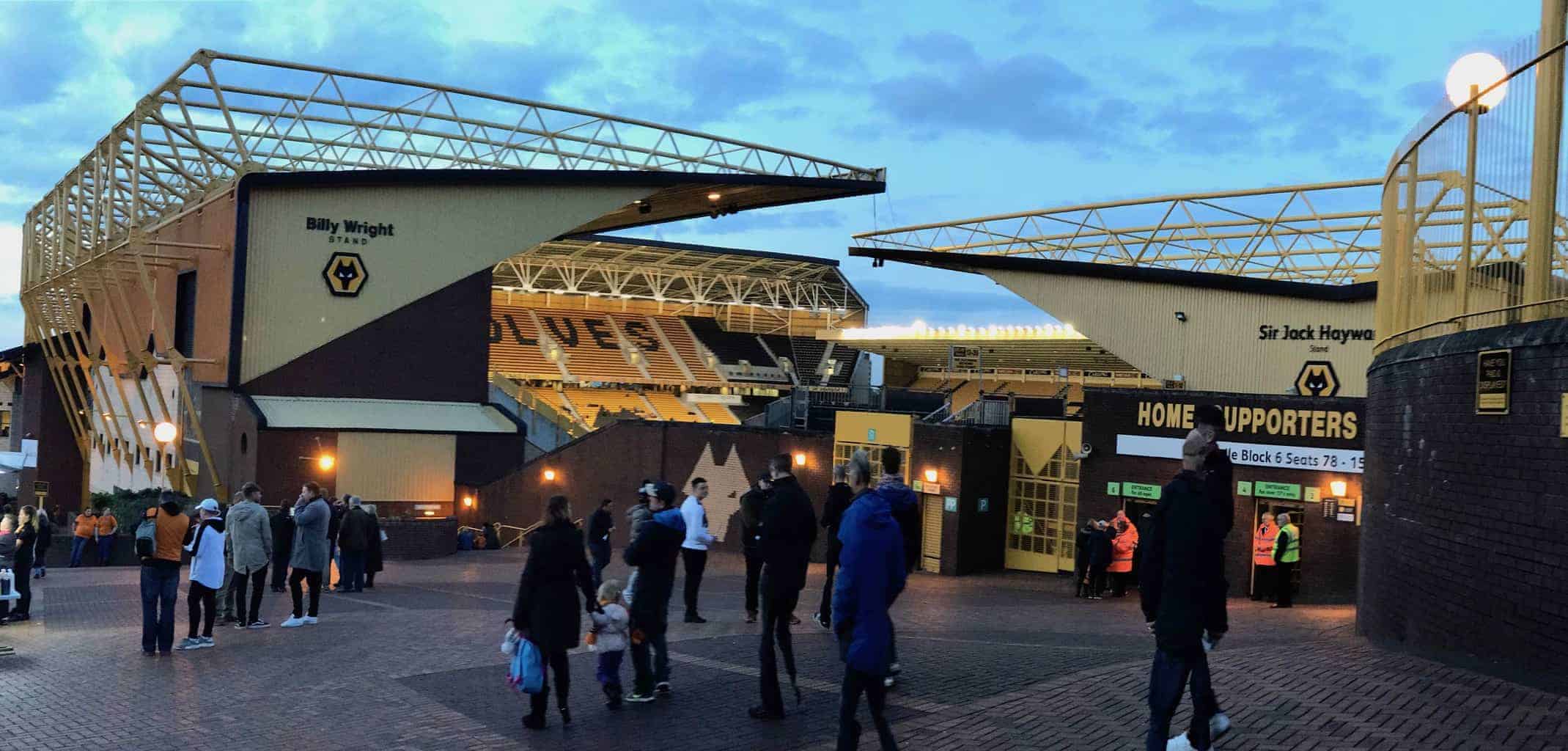
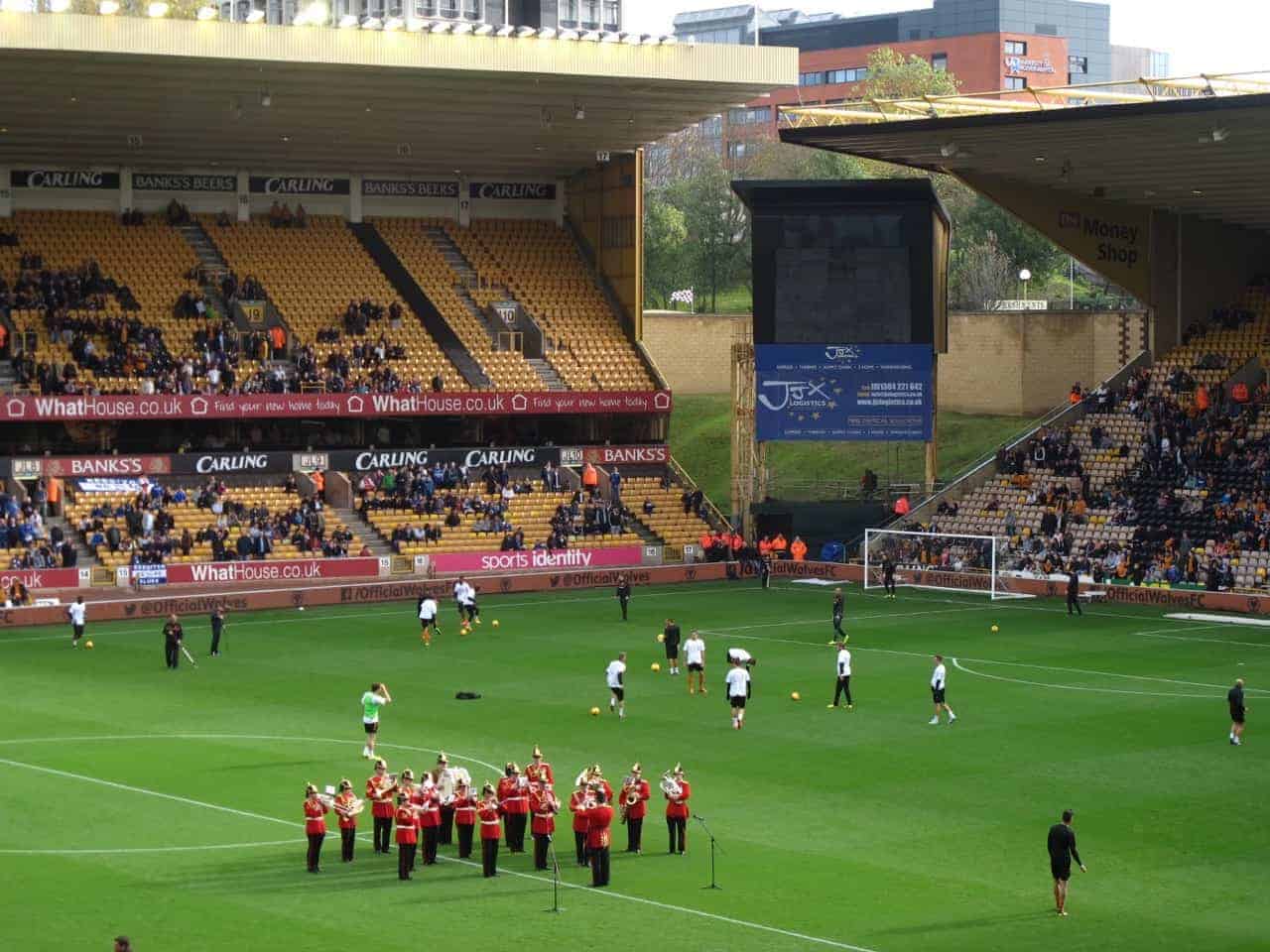
Molineux is a 31,700-seater that somehow seems bigger. It is also, like the team’s kits, of a striking color. Should you refer to it as yellow or orange, you will be politely but firmly corrected; it is “old gold.” Do not say orange or yellow in Wolverhampton!
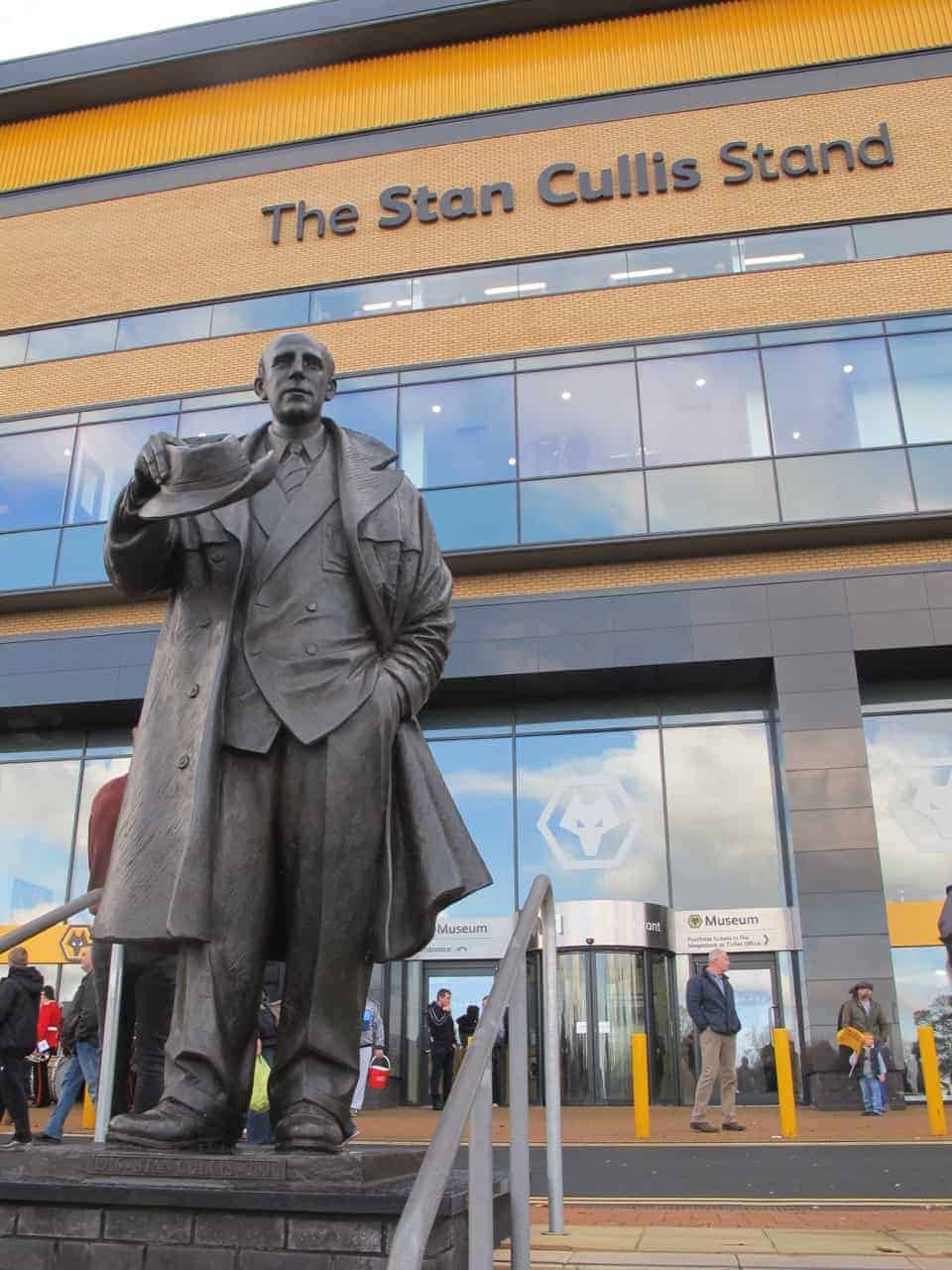
Its most prominent stand is actually behind a goal; the Stan Cullis Stand, named for a former player and manager, towers over the rest of the place and is visible from all over town. Behind the other goal is the small Jack Harris Stand, where the rowdies sit. There is also a temporary structure next to it, often unused, and known informally as the Gene Kelly Stand; since it’s uncovered, folks there wind up “singing in the rain.”
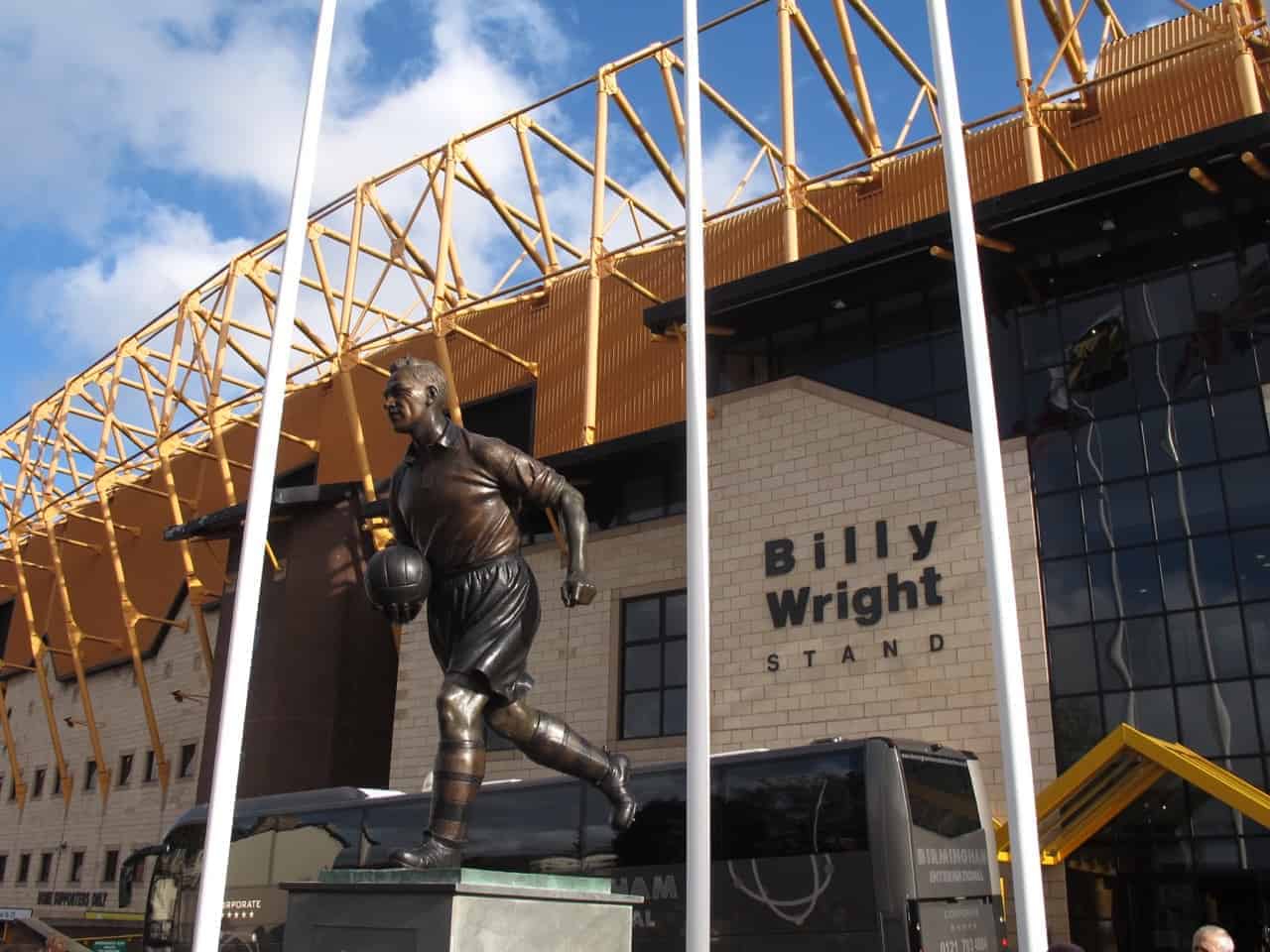
On each side are two-tiered, curved stands called the Billy Wright and the Steve Bull. Each of these is named for a club legend, and both the Cullis and Wright stands have a statue of their man outside.
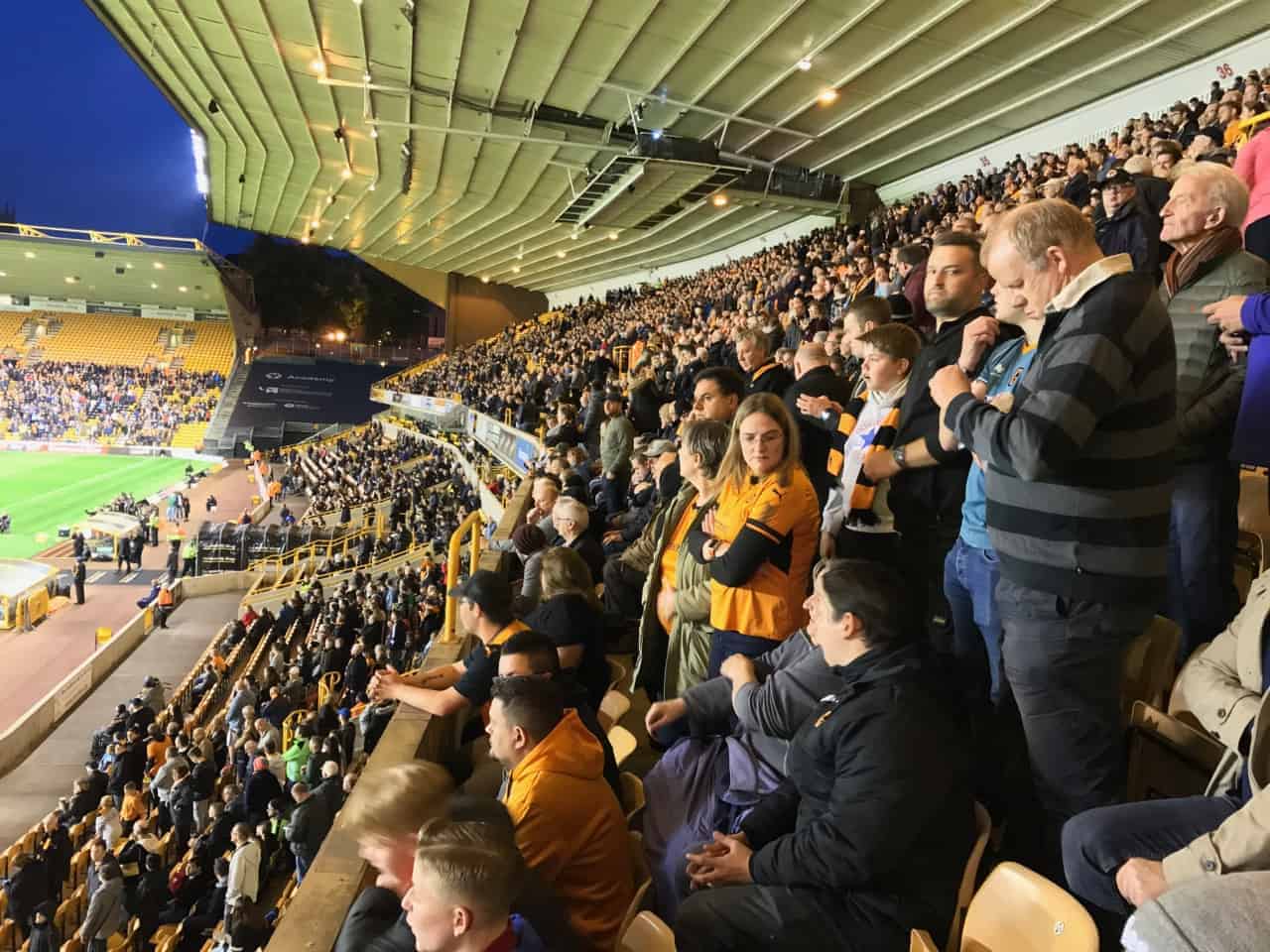
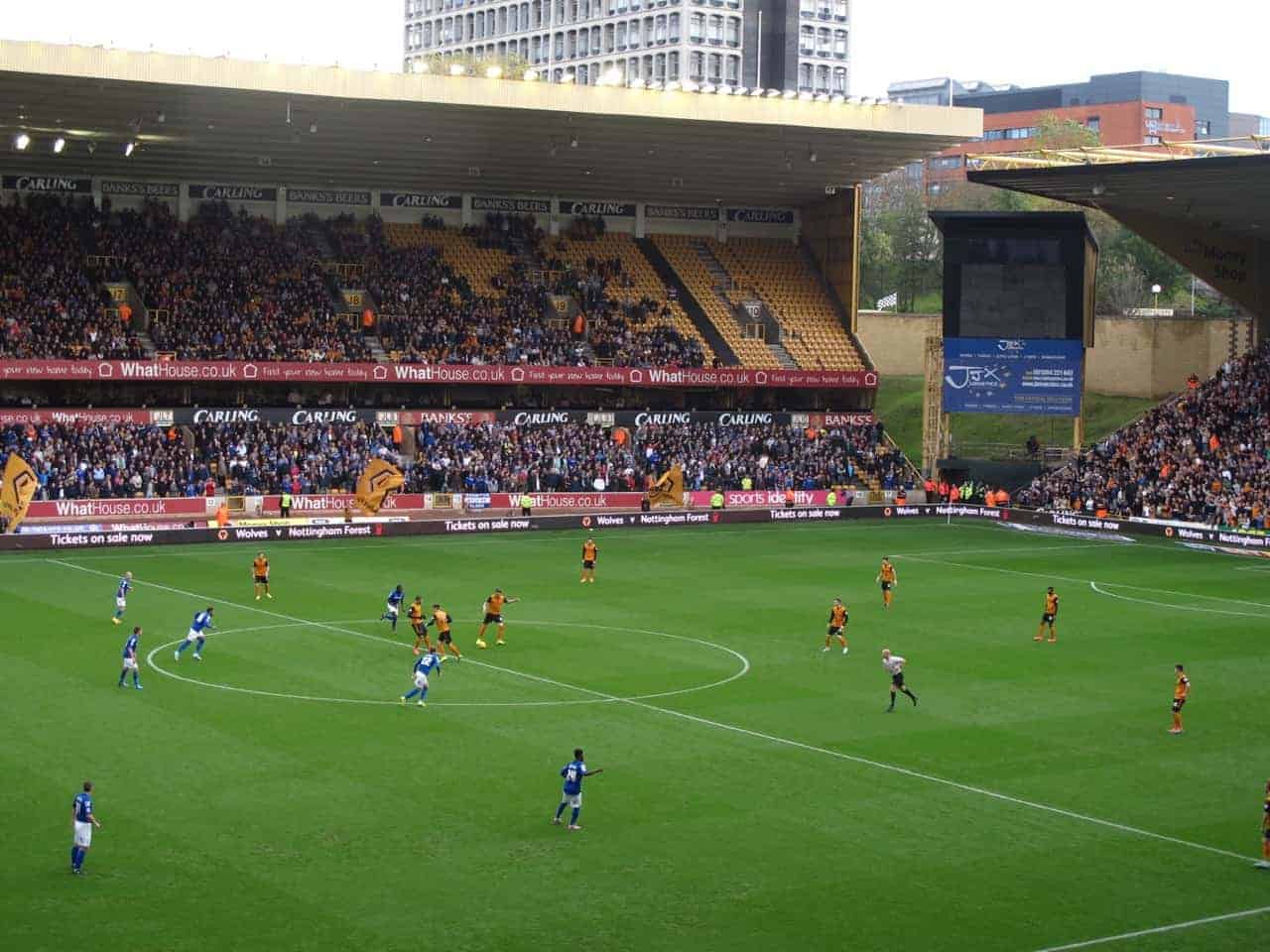
A distinct feature of the place is how they seat the away fans. Normally the away fans are in a corner or behind a goal. At Wolverhampton, they occupy the entire lower tier of the Steve Bull Stand on one side, all along the length of the pitch. So if their section is full, they stretch from goal line to goal line, with home fans above them. It makes for some interesting banter.
The name Molineux comes from the landowner in the 18th century. He built a hotel that still stands as the City Archives building, and the whole area eventually came to be a big park called Molineux Grounds. Wolves started playing there in 1889.
TOURS: Tours are Friday, Saturday or Sunday and include the museum. It’s £22 for adults.
Going to a Game at Wolverhampton
GETTING THERE: One of the reasons games at Wolverhampton are so much fun is how easy it all is. The stadium is about a 15-minute walk from the Wolverhampton rail station, which is about 20 minutes out from Birmingham New Street. You could even get there in two hours from Euston station in London.
PUBS: Another reason to enjoy a game at The Molineux: during that 15-minute walk from the station to the ground, you’ll go through the historic center of Wolverhampton and pass about 437 pubs. Okay, that’s a slight exaggeration, but it’s quite the density of boozers:
- The Banks Brewery also offers tours several days a week.
- The Posada is a traditional Victorian pub with no food but plenty of real ales and an outdoor space in back
- The Goose is a small traditional pub with eight TVs.
- The Hogshead gets good marks for atmosphere and a big menu.
- Since the Billy Wright is named for a former Wolves player, it would seem to be a good option for a pre-match pint. It also has a beer garden out back.
- The Lych Gate Tavern, near the old church, looks small from the outside but also has a beer garden out back.
- McGhee’s Irish Bar is on a side street behind the Billy Wright
- The Bohemian appeared a rather hipster place, advertising cocktails, craft beer, and cider.
- The Prince Albert, super prominent by the station, is more modern inside and also offers food and outdoor seating.
- Seems that away fans choose a Wetherspoon on the main drag called the Moon Under Water.
Seriously, that’s all in a 15-minute walk, and there are many more!
GRUB: Aside from the pubs above, Charlie’s Fish Bar is a friendly chippy.
AROUND TOWN: All of these sights are either right in town or quite nearby:
- The Royal Air Force Museum, which also hosts the British Airways Collection.
- Moseley Old Hall is a fully restored 17th-century manor house where Charles II stayed before he escaped to France during the English Civil War in 1651.
- Wightwick Manor and Gardens is a 19th-century Arts and Crafts manor house that depicts life in Victorian times.
- Wolverhampton Art Museum dates from 1884 and is known mainly for a collection of pop art second only to the Tate in London, as well as collections of japanned ware and enamels, which Wolverhampton was famous for.
And I love the Black Country Living Museum. It’s a collection of homes, shops and other buildings collected from the area and brought in to reproduce a Victorian village and a 1940s-60s village, with folks walking around in character and lots of fun events planned. It’s a bit remote but worth the trip. And if this means anything to you, they shot a lot of “Peaky Blinders” there. See their website for more.
Wolverhampton Wanderers Tickets
With demand so high—they sell out every home game—what they do for foreigners is have you buy a membership, then for each game they hold a lottery of foreign members. If there are two of you who want to attend together, you would both need to win the lottery. If they have this arrangement again, your best bet will be a cup game or a midweek game against a smaller opponent.
See below for everything we know about buying Wolves tickets.

Photo Gallery


Videos

Tottenham 1-3 Wolverhampton, 29 December 2018: Wolves' Third Goal


