
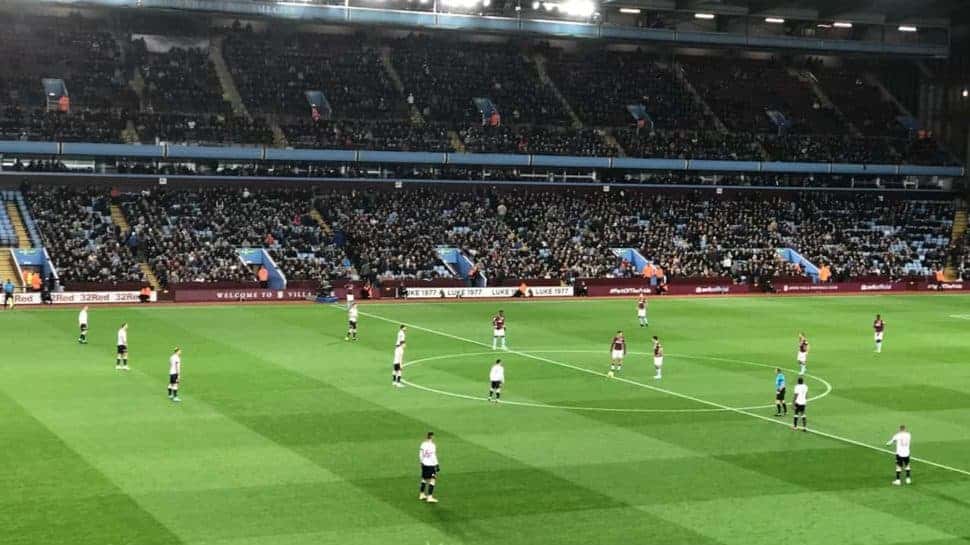
Club Profile: Aston Villa
Aston Villa is a big and historic club with an awesome stadium and giant fan base – and they’re back in Europe!
LOCATION: In Aston, which is part of the sprawling Birmingham area, just under two hours from Euston station in London
CONTACT: avfc.co.uk
NICKNAMES: Villans or the Villa
History
Villa is a massive club: seven league titles, seven FA Cups, five League Cups, one European championship, and one UEFA Super Cup—but none of that since 1996. Their last League Cup was in 1981. Still, they retain a large and loyal following; they’re a little like the Dallas Cowboys without the obnoxious owner and gaudy new stadium.
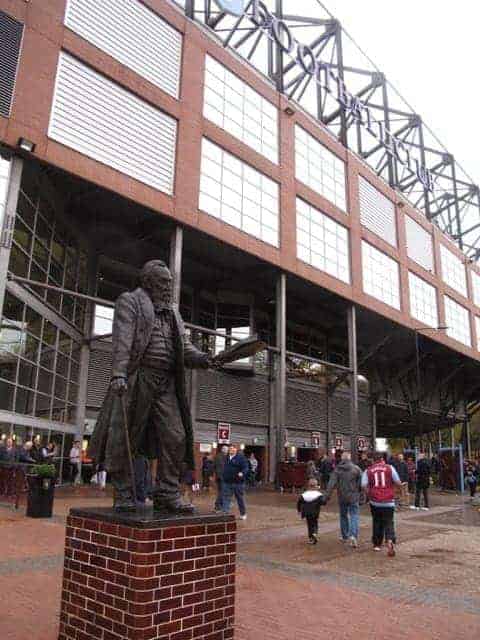
They were born in 1874 and became one of the 12 founders of the Football League in 1888. This is not surprising, since the whole idea came from their board member, William McGregor. (His statue is outside the stadium now, holding plans for the league.) But they didn’t just join; they dominated. By 1910 they had won six league titles and four FA Cups, including a double in 1897, the year they moved into the current location at Villa Park.
A decline started in 1920, and relegation came in 1936. The war interrupted their recovery, but by 1957 they were FA Cup winners again. The bottom came in 1967, when they spent a year in the Third Division. New ownership and management arrived, and in 1975 they were back in the top flight and primed for a remarkable run of success.
Villa won the league in 1981, and that meant Europe the following year. Despite a mid-season managerial change, they won the European Cup (now called the Champions League) by beating Bayern Munich in the final at Rotterdam, 1-0. The goal came from Peter Withe, and the moment—specifically the TV commentary of it—is memorialized in a banner across the front of the North Stand at Villa Park: “Shaw, Williams, prepared to venture down the left. There’s a good ball in for Tony Morley. Oh, it must be and it is! It’s Peter Withe!”
The following year they beat Barcelona to win the UEFA Super Cup. Then came another decline to a relegation in 1987. By 1992 they were up again to be founder members of the Premier League. For the next 20-plus years they stayed up, losing a few Cup finals but never challenging for the title. They went down in 2016. In 2019 they made the playoffs, this time knocking out local rivals West Bromwich Albion in the semis and Derby County in the final, getting them back to the top tier. In 2020, they stayed up by one point but made the League Cup Final, losing to Manchester City 2–1.
In 2024 they finished 4th in the league, their best finish since 1996, and secured their qualifying spot for last season’s Champions League, where they beat Bayern Munich and drew with Juventus at home in the League Stage, then wiped out Brugge in the Round of 16 and took eventual champions PSG to the wire in the quarterfinals, actually winning the second leg at home, 3-2. Meanwhile they also made the semifinals of the FA Cup.
For this season they are in the Europa League after finishing behind Newcastle on goal differential last season.
2024–25 SEASON: 6th in Premier League, Semifinals FA Cup, 4th Round League Cup, Quarterfinals Champions League
2025–26 SEASON: Premier League (promoted in 2019), UEFA Europa League
Rivalries
Birmingham City is the main rival; the Second City derby goes back to 1879 and has been played more than 120 times. West Bromwich Albion and Wolverhampton, the other big Birmingham-area clubs, are also rivals. So for this season, the Wolves game will be their most heated, with the Blues and West Brom down in the Championship.
Women's Team
Aston Villa WFC play in the top-tier Women’s Super League. Home games are at Bescot Stadium, home ground of Walsall FC. Some are at Villa Park.
Songs
They don’t have a particular anthem, but they do have some fun songs. They do the same “Hi Ho Aston Villa” thing that Wolverhampton and Sheffield Wednesday do. They’re doing the same “Allez Allez Allez” song as seemingly the rest of the country. They sing one about being “on our way to the Premier League” and “You Are My Villa” to “You Are My Sunshine,” as well as more than a few about Birmingham City that are filled with obscenities and threats of physical harm.
Maybe the most common is to the tune of “Ghost Riders in the Sky,” the one with “yippy-yi-ay,” but it’s “Holte Enders in the Sky.”
Stadium
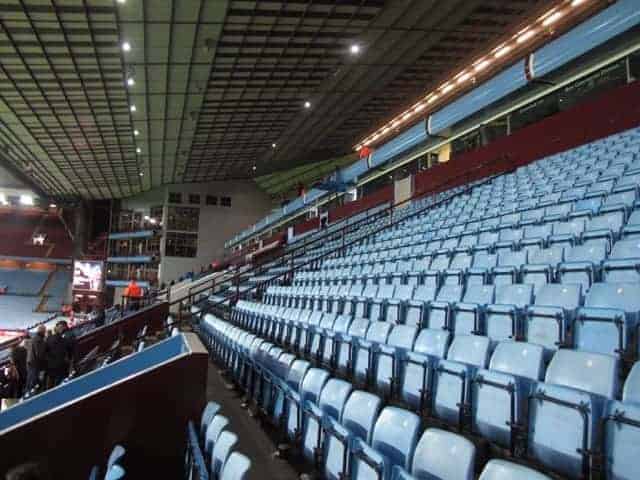
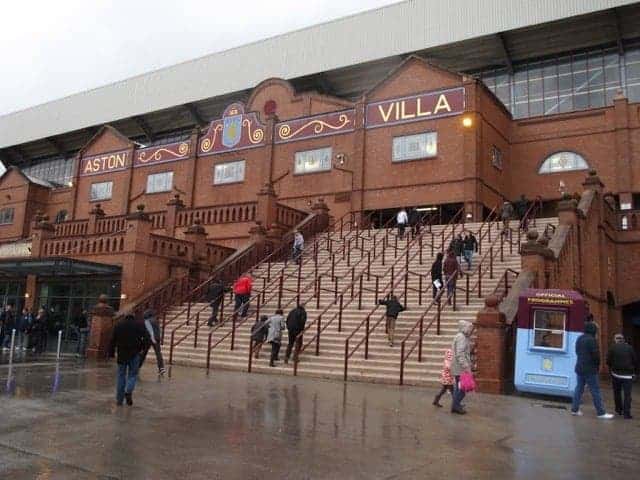
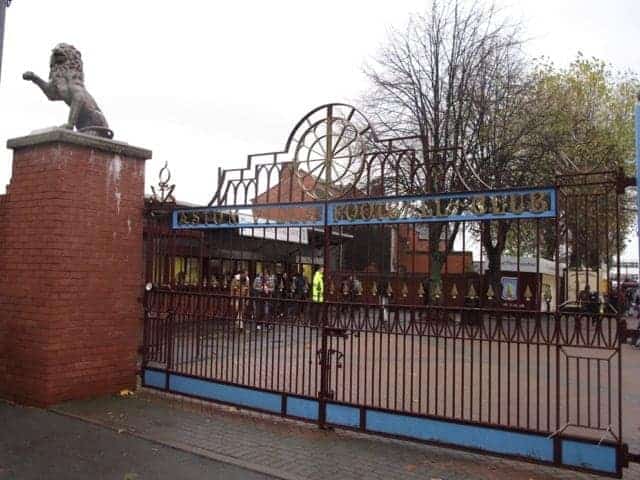
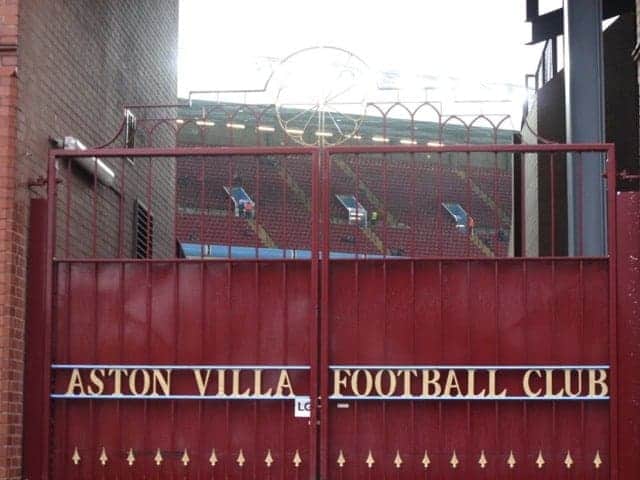
Villa Park is one of the greats. It combines size with style, history with class, and on a good night has a cracking atmosphere. It has historically been one of the major stadiums in the country as well. It hosted 16 England international matches and 55 FA Cup semifinals, before they all got moved to Wembley.
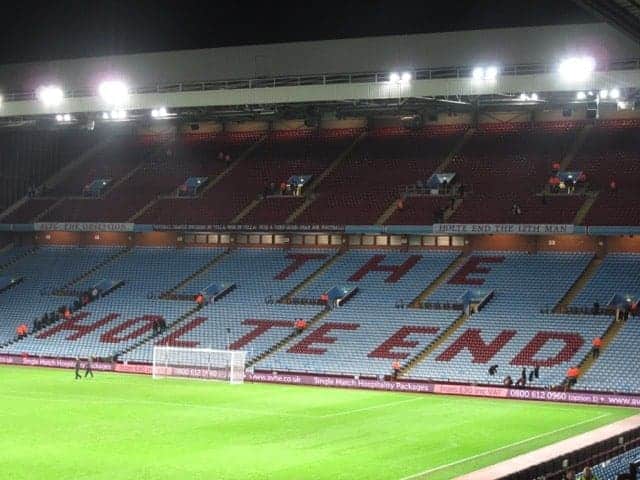
The capacity is 42,682, much reduced from the terrace days when the record was more than 76,000. This area was the grounds of Aston Hall, which was owned by Sir Thomas Holte; a stand is now named for him. The hall held gardens and a pond, and in 1897 the pond was filled in to form the same pitch they use today.
The most passionate Villa fans will be in the Holte End behind a goal. Away fans will be in the far end of the Doug Ellis Stand on the side. So if you want a good view of them, sit in the Trinity Road Stand near the North End or the North Stand over near the Doug Ellis.
TOURS: Tours are available throughout the week and cost £20–23 for a standard guided tour and £43 for a tour led by a Villa legend.

Going to a Game at Aston Villa
GETTING THERE: The closest train station is Witton, about a five-minute walk away. Catch a train there from New Street station in Birmingham. You can also get off sooner at Aston and have a slightly longer walk, unless you’re sitting in the Holte End. It’s only a few minutes longer to take bus 7 (Short Heath) from Livery Street near the New Street station. There is also a shuttle bus from Dudley Street just south of New Street Station to a spot on Grosvenor Road, about a 10-minute walk from the ground.
I’m not gonna lie, it is super tedious getting out of there after the game: traffic is snarled, and train queues are long. If you were ever going to arrange a driver ahead of time, this might be the place. The road behind the Doug Ellis Stand opens maybe an hour after the game, so that might work as a pickup spot.
PUBS: There are a few near the ground, starting with the most famous, a restored Victorian pub called the Aston Tavern. Also popular is The Witton Arms, which also lets away fans in—unless it’s a derby. The Yew Tree, about half a mile the other way from the Witton station, should also have a good mix of fans. One of the finest pubs in Birmingham is also nearby; The Bartons Arms is a protected building on High Street Aston. If you take bus 7, you’ll go right by it. If you’re coming from the Aston station, you’ll pass the Aston Tavern and the historic Holte Pub, both famously packed with Villans pregame.
There is a little Fan Zone just outside the Trinity Road Stand. And Villa recently opened the Warehouse, which is a spot where you can have a beer, eat some food, and watch other matches before and after the Villa match. It’s on the North Stand side next to the Villa shop.
GRUB: There isn’t much around the stadium, other than the pubs and the stuff at the stadium. Just make sure that at some point during your time in Birmingham you get a proper balti curry—not the dreck at the stadium, but a real one. Get yourself down to the Balti Triangle and go for it. Balti is a garlic-and-onion curry invented in Birmingham that is fast-cooked in oil then served hot in the pan. It’s rather amazing when done properly. The Balti Triangle is along Ladypool Road, and the place I went to – confirmed by locals as pretty much the place to go – is called Shabab’s.
SEE THE PLAYERS: About 90 minutes before the game, the Villa players will arrive by bus to the the main Trinity Road entrance to Villa Park. After the game, the players will emerge from the Players Entrance behind the North Stand, usually starting about 45 minutes after the game.
AROUND TOWN: Aston Hall, built in the 17th century, is still there and can be visited from early April to early November each year; see birminghammuseums.org.uk/aston.
Aside from the Balti Triangle and the four football grounds, Birmingham doesn’t seem to offer much to the tourist. But with a population of a million people in the city proper and more than twice that in the area, it still bears some exploration. The Birmingham Museum and Art Gallery and the Barber Institute of Fine Arts are both highly regarded.
And I love the Black Country Living Museum. It’s a collection of homes, shops and other buildings collected from the area and brought in to reproduce a Victorian village and a 1940s-60s village, with folks walking around in character and lots of fun events planned. It’s a bit remote but worth the trip. And if this means anything to you, they shot a lot of “Peaky Blinders” there. See their website for more.
For some other ideas, check out the West Bromwich Albion profile.

Aston Villa Tickets
Last season, adult prices ranged from £55 to £78 and were tough to get, especially against any big club. They have a lot of affordable hospitality options.
Groundhopper Guides can sell tickets and hospitality at Villa. See below for more.
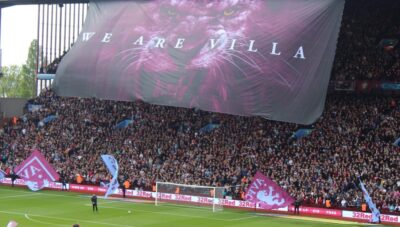
Photo Gallery
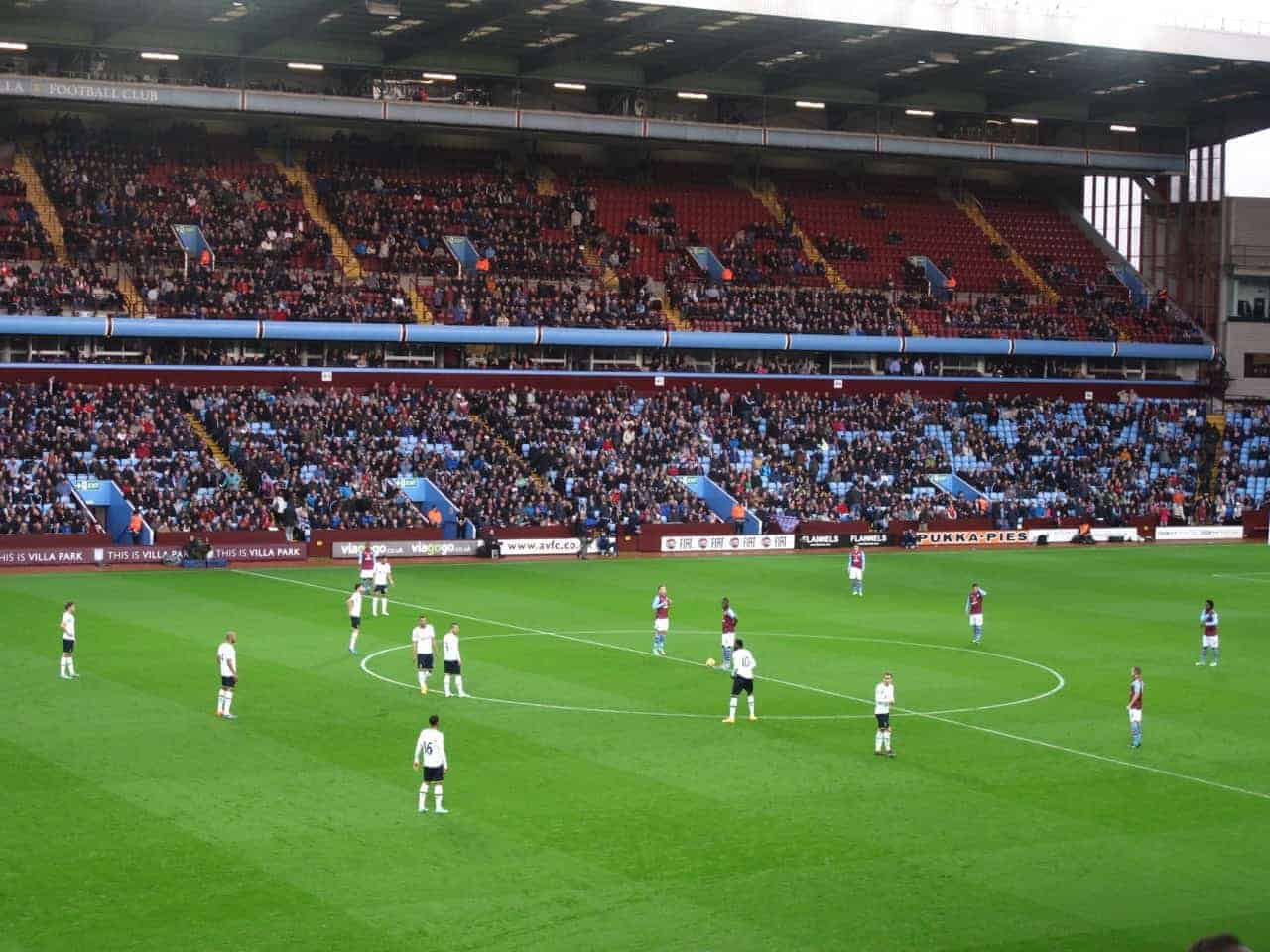
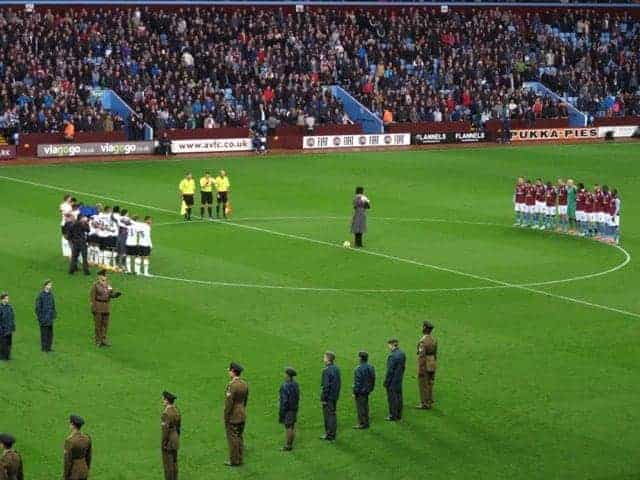
Videos

Aston Villa 2-1 West Bromwich Albion, 11 May 2019 -- Winning Penalty
Pregame at Villa Park, home of Aston Villa FC
More About Aston Villa


