
Club Profile
Borussia Dortmund
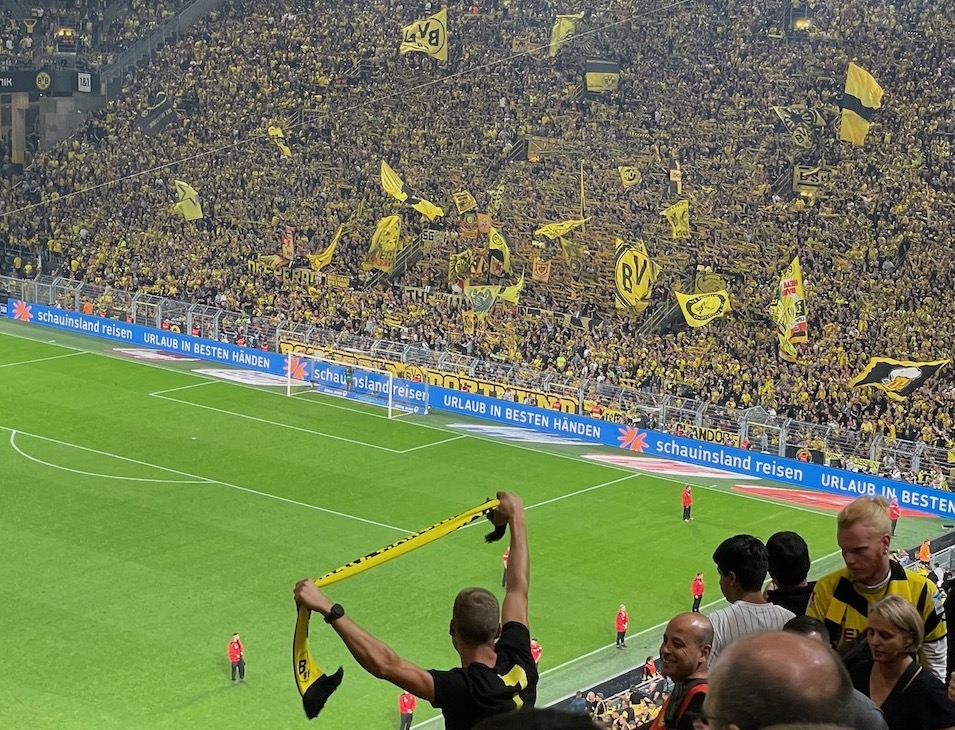
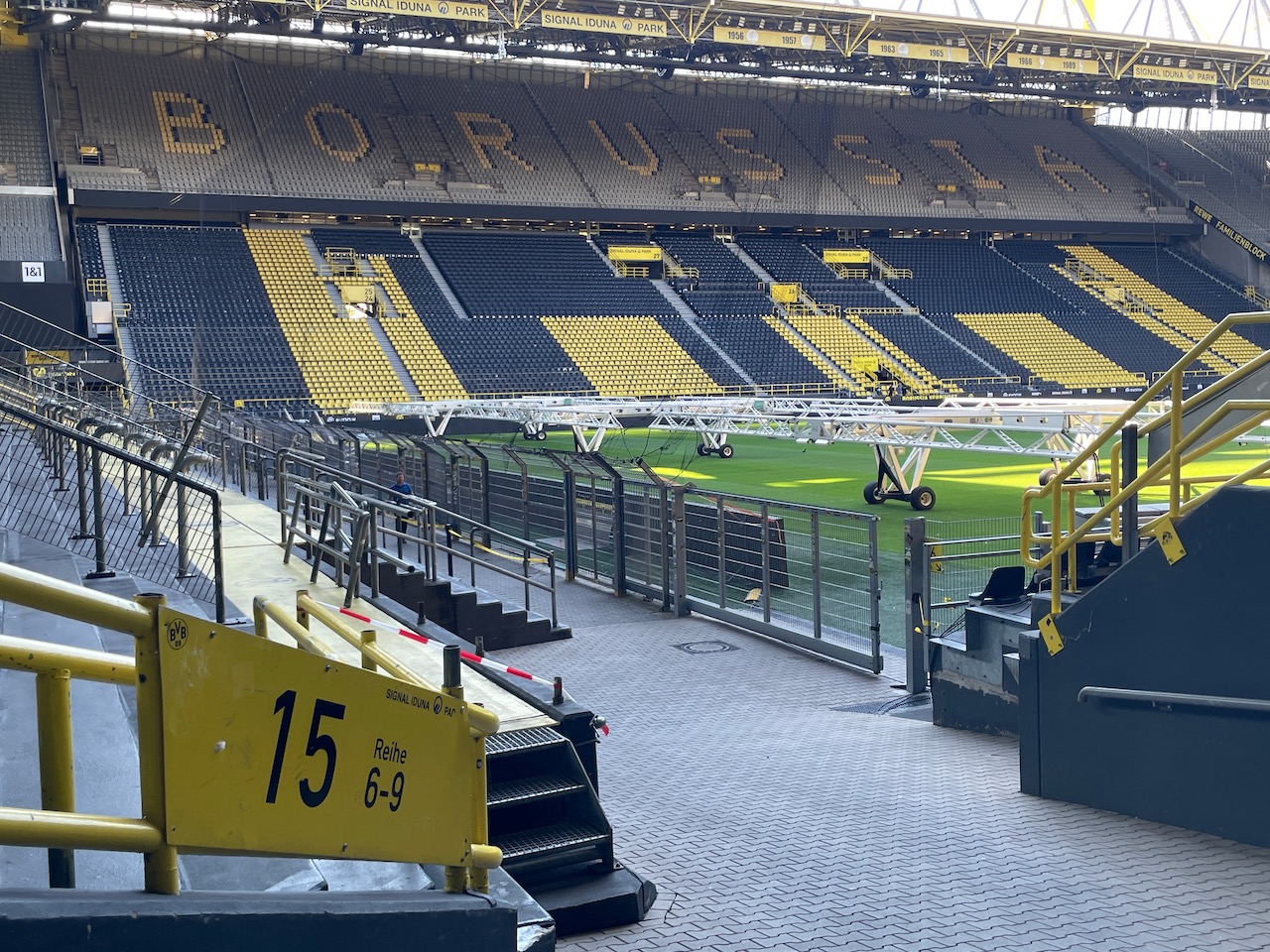
While it’s safe to call Dortmund “Germany’s second team,” after the almighty Bayern Munich, for many groundhoppers it’s a more appealing destination. That is because Dortmund plays in Europe’s second-largest club stadium, home of the 24,000-seat South Stand, known as the “Yellow Wall.”
LOCATION: Dortmund, Westphalia, Germany
CONTACT: BVB.de/eng, #BVB
NICKNAMES: Die Borussen, Die Schwarzgelben (The Black and Yellows), Der BVB (The BVB)
History
Founded in 1909, the club played in regional leagues under slightly different names until 1949, when they became Ballspiel-Verein (Sports Club) Borussia. This explains the BVB in the club crest. As for the word Borussia, it comes from an old Latin word for Prussia, a kingdom which included pieces of today’s Germany, Poland, Lithuania and Russia. So it’s kind of patriotic to use this name, which Dortmund shares with Borussia Monchengladbach and some smaller German clubs.
Dortmund won their first national championships in 1956 and 1957, won a couple more trophies in the 1960s, then were briefly relegated amid financial troubles in the 1970s. The golden years came in the 1990s, with Bundesliga titles in 1995 and 1996, then their only European Cup (now UEFA Champions League) win, 3-1 in the final over holders Juventus in Munich.
They made it back to such levels starting about 10 years ago, winning the league in 2011 and a league/cup double in 2012, all under manager Jurgen Klopp. Still, there was always Bayern to deal with; BVB lost to them in the 2013 Champions League Final at Wembley, then lost star striker Robert Lewandowski to them, as well. Since then, they’ve won two more German Cups, lost three more finals (two to Bayern), lost Klopp to Liverpool, and had seven second-place league campaigns — all in seasons where Bayern won the league. The worst of those was in the 2023-23, when all they had to do on the last day was beat ninth-place Mainz at home, but they drew 2-2 — and Bayern grabbed another title from on goal difference.
2022–23 SEASON: 2nd in Bundesliga, quarterfinals DFB-Pokal, Champions League Round of 16.
2023-24 SEASON: Bundesliga, Champions League
Rivalries
The local, Ruhr region rivalry is with Schalke 04, a matchup known as the Revierderby — revier being a simplified word referring to the area’s mining heritage. They have played over 180 matches since 1925 with Schalke having a few more wins than Dortmund, though in recent years the record has favored the BVB.
Of course, Bayern is also a rival, but not for geographical reasons; the cities are nearly 400 miles apart. It’s just that they are always title rivals.
Women's Team
BVB finally added a professional women’s team for the 2021-22 season. As such, they started out in the lower tiers of the German football league system. After securing two straight promotions, they currently play in the 5th tier of women’s football in Germany. Read more about BVB women here.
Songs
As at Liverpool, “You’ll Never Walk Alone” is the club’s anthem.
Stadium
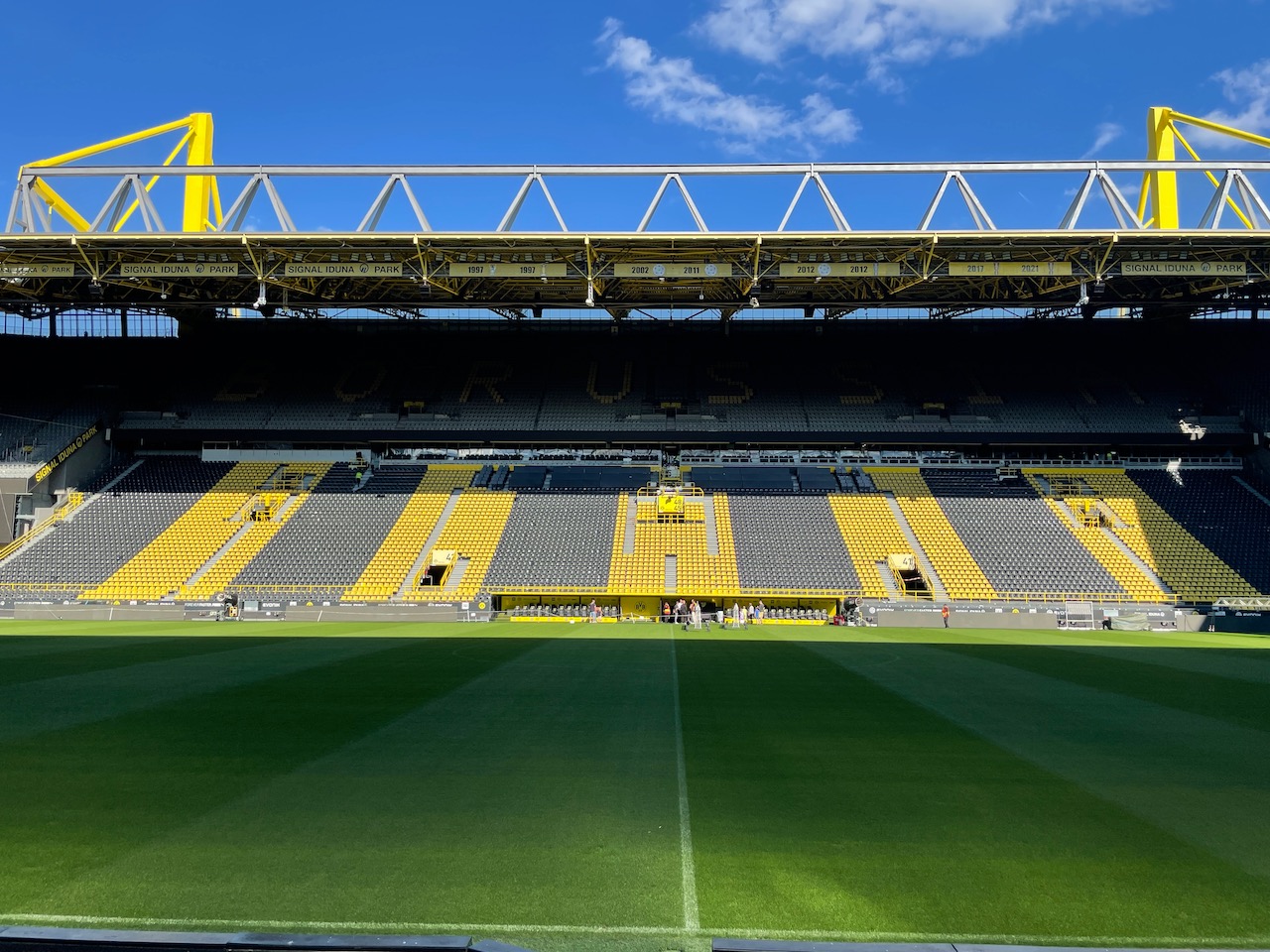
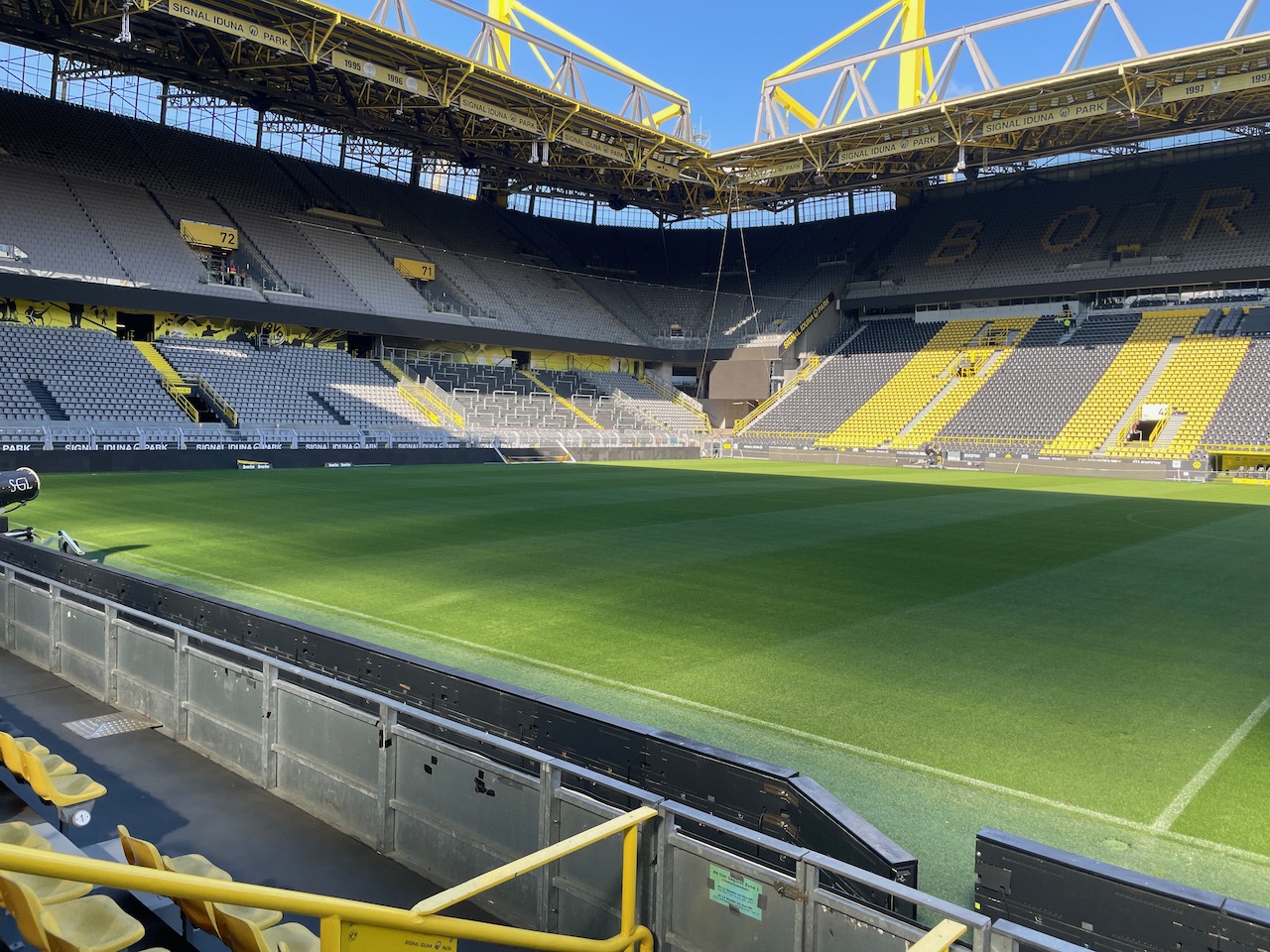
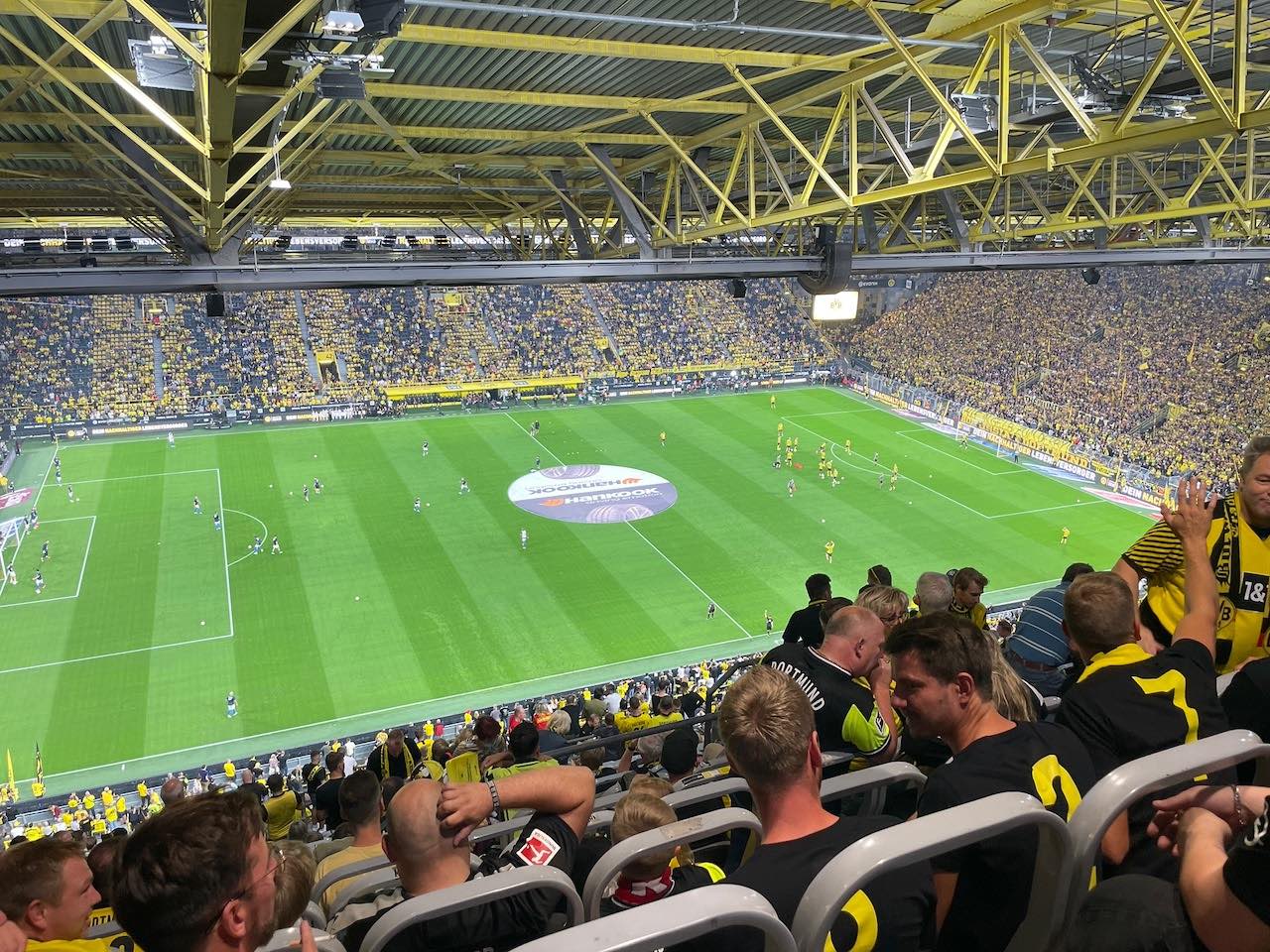
Officially known as Signal Iduna Park because an insurance company cut a check, its traditional name Westfalenstadion is, like Borussia, a reference to a Prussian province. At 81,365 capacity for league games, it’s the biggest in Germany and second-biggest club ground (after Barcelona’s) in Europe. It opened in 1974 for that year’s World Cup, and it hosted group stage games that year and knockout games, including a Germany-Italy semifinal, in the 2006 World Cup.
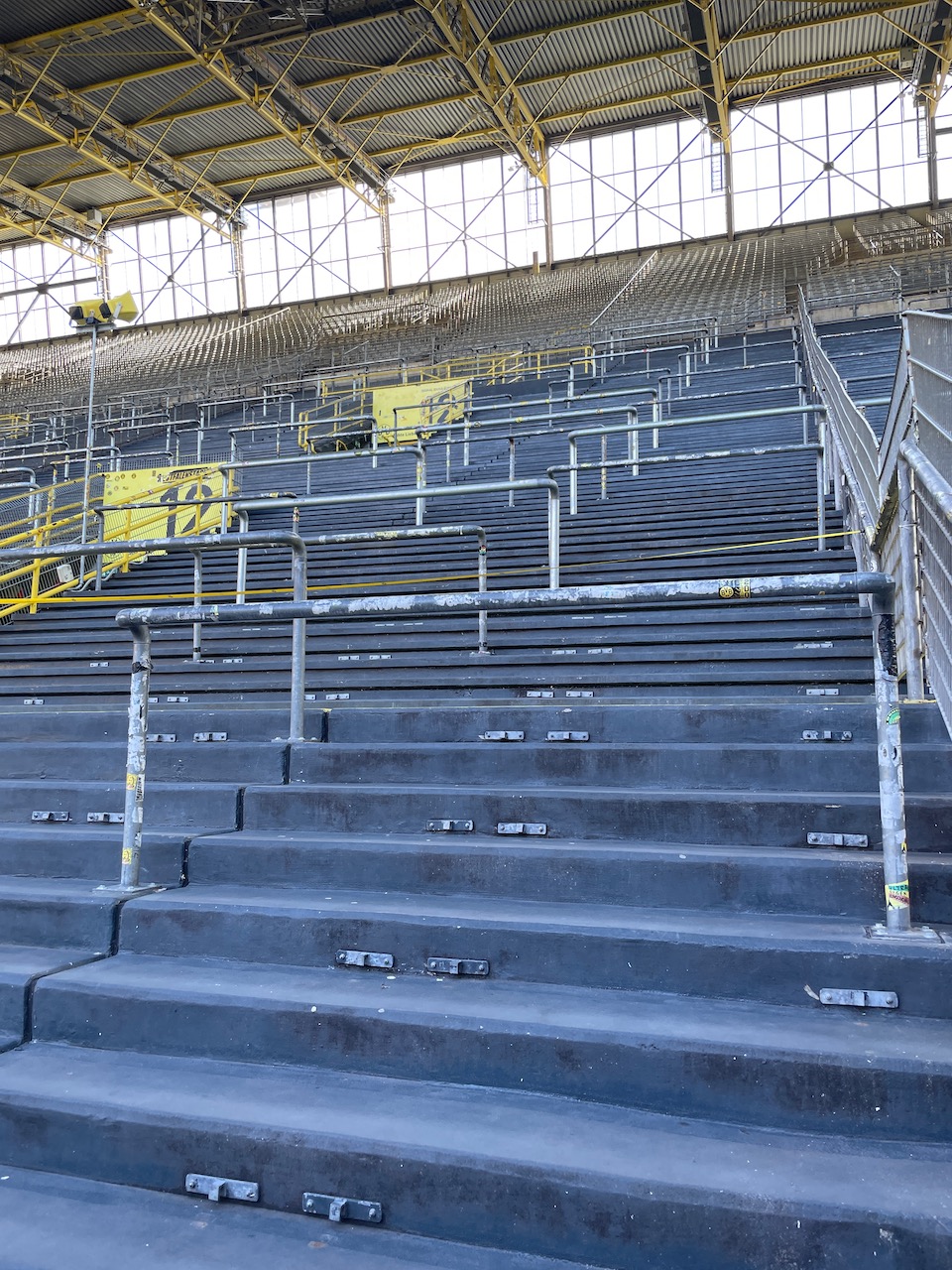
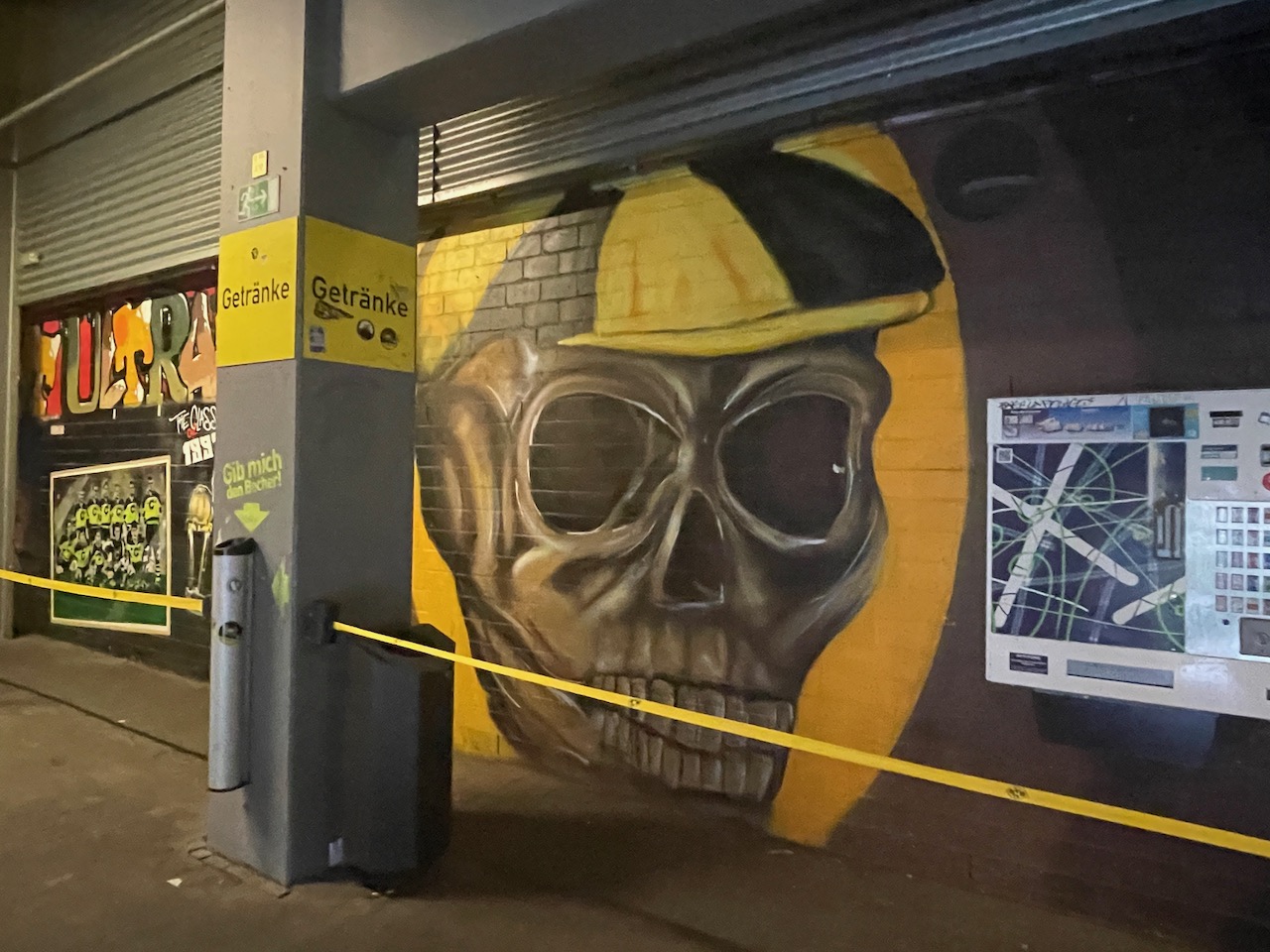
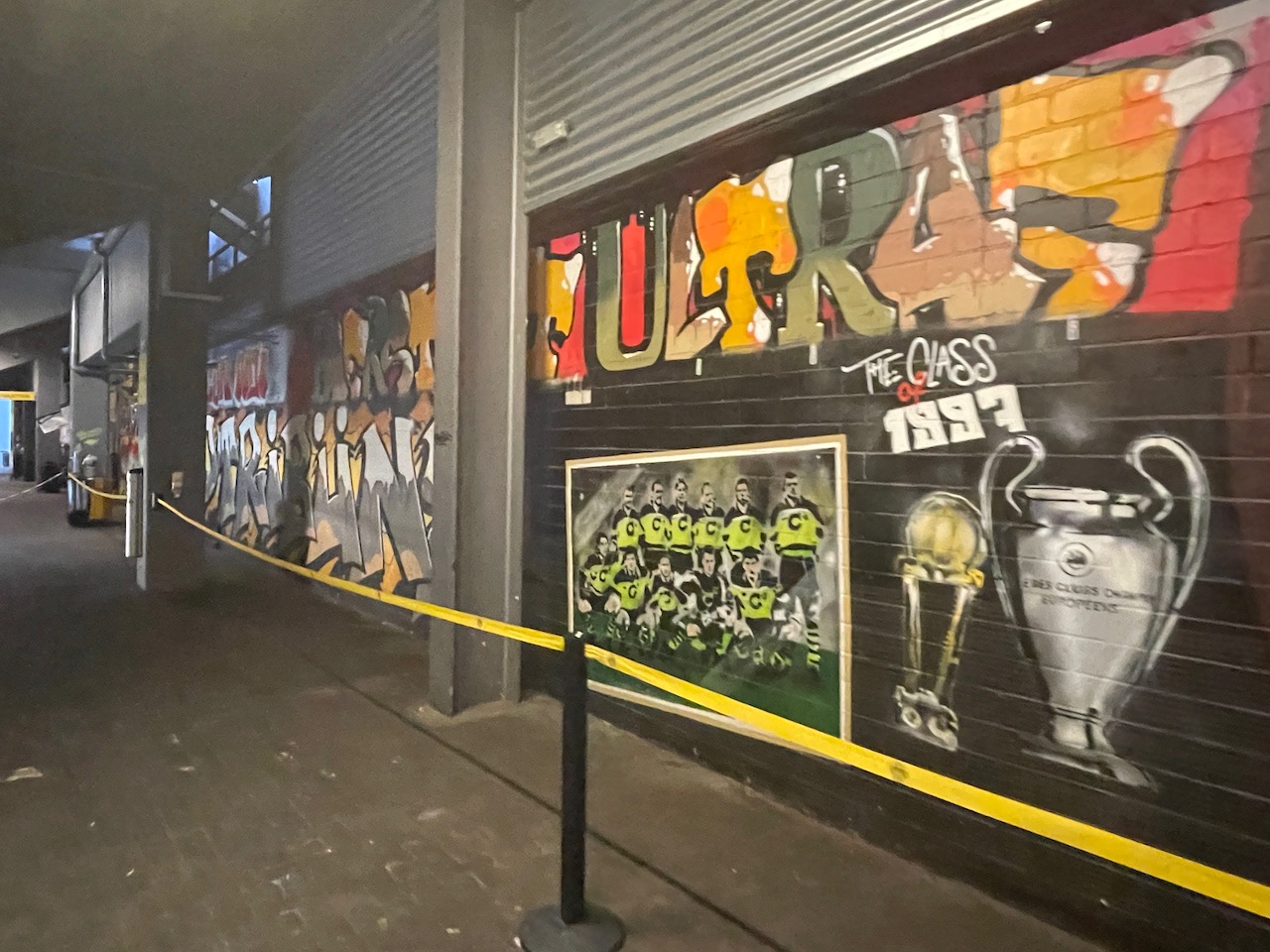
Its most famous aspect is the south stand, the Südtribüne (South Bank), with a standing-only capacity of 24,454. It’s known as Die Gelbe Wand, meaning “The Yellow Wall.” It also has some extraordinary graffiti in the concourse underneath, which you can visit on the stadium tour.
TOURS: The basic tour is the self-guided Stadium Walk and starts around 9 Euro. There are other options, including a barrier-free version and private tours. Book on the club’s website.
Here is a video from our self-guided stadium tour:
Learn More About Dortmund
Copa 90 has two great pieces on Borussia Dortmund, one on their rivalry with Schalke 04, and another on their youth academy.
Going to a Game at Borussia Dortmund
GETTING THERE: From the main train station in town, take the regional train to the Signal Iduna Park station or the the Underground to Westfalenhalle/Stadion. Both of those are a short walk away.
PUBS & GRUB: There is a large bar and beer garden next to the stadium called Strobels, but the whole area around the stadium turns into a giant outdoor party on game days, with the amount of beer and pork ingested beyond comprehension. Look for a Brinkhoff’s Biergarten at Freibad Volkspark near the train station. Even the Tennisclub Flora turns into a biergarten!
AROUND TOWN: Dortmund is in the western part of Germany in a very densely-populated area with cities like Cologne and Düsseldorf. The economy is former industrial and currently more research- and technology-oriented. It’s also known for large woodlands and park areas, especially Westfalenpark, one of the biggest inner-city parks in Europe, and has numerous theaters and museums. It also, like most German cities, has a large Christmas market.
Football fans visiting the area will want to check out the German Football Museum in town. Also of note is that several big German clubs clubs are nearby: Schalke 04 (20 miles), Bayer Leverkusen (54 miles), Koln (60 miles) and Borussia Monchengladbach (61 miles). So the area would seem to be a great base for groundhopping adventures.
Borussia Dortmund Tickets
Check the club’s website for the latest availability and information — but it’s a challenge. Basically each game goes up about 4-6 weeks beforehand, and at some point it’s a matter of dialing into a hotline number and hoping for the best.
Groundhopper Soccer Guides sells tickets and hospitality to Borussia Dortmund home games at Signal Iduna Park. Learn more about the options we offer. by clicking below.

Photo Gallery






Videos
Error: No videos found.
Make sure this is a valid channel ID and that the channel has videos available on youtube.com.


