
Club Profile
Portsmouth
Portsmouth and a game at Fratton Park are a trip back in time, inside and outside the football ground. The side can now finally also offer some improving football: Pompey are back in the Championship.
LOCATION: On the south coast, about ninety minutes from London’s Waterloo station
CONTACT: portsmouthfc.co.uk, 023 9273 1204, #Pompey
NICKNAMES: Pompey, pronounced POM-pee. There are two basic theories on this: that it comes from “Po’m P,” an abbreviation for Portsmouth Point in ships’ logs, and that it comes from the HMS Pompee, an infamous prison ship moored in the harbor for years. Either way, it predates the club.
History
Portsmouth was founded in the 19th century, had glory days in the early 20th century and early 21st, almost went out of business and was saved, and now they are building back up. If that sounds familiar, it’s pretty much the story of half of the English clubs.
This club was founded in 1898 by a pub owner and some friends. There is a blue plaque at 12 High Street in Old Portsmouth that commemorates the founding. For the ground, they picked a piece of land near Fratton station, and they have played on that spot ever since. The founders hoped they might get a rivalry going with already existing clubs in Brighton and Southampton. They were right on one count. In fact, in their first home game they beat Southampton 2-0, and they’ve probably been singing about that result ever since. They climbed up through the leagues, reaching the First Division in the late 1920s and losing FA Cup finals in 1928 and 1934 before finally winning it in 1939.
They won the league in 1949 and 1950, hung around the top through the decade, and got relegated in 1959. In less than 30 years, they were in the Fourth Division and bankrupt, after which they had a long period of mediocrity and instability until the early 2000s.
Legendary manager Harry Redknapp arrived in 2002 and took them to the championship of Division One (which we now call the Championship; it’s confusing), and then they spent eight years in the Premier League. Redknapp left for archrivals Southampton, causing many fans to hate him forever, but then he came back, and they were divided on whether to hate or love him. It’s complicated.
The two memorable events in this stretch were winning the FA Cup in 2008 (winning at Manchester United along the way) and the last day of the 2004-05 season. That’s when Portsmouth lost at West Bromwich Albion, which meant that West Brom stayed up and Southampton went down, leading to both West Brom and Portsmouth fans partying on the pitch at The Hawthorns.
Financial woes led to another relegation in 2010. In 2012 the Pompey Supporters Trust bought the team, which was then down in League Two. They made League One in 2017, and that summer the Supporters Trust sold the club to a member of the Eisner family of entertainment fame.
They made the League One playoffs in 2019 and 2020, and in 2019 they made the League Trophy final, where they and Sunderland combined to break the attendance record for that competition with 85,021 at Wembley. Pompey won it on penalty kicks. They made the final again for 2020, but lost to Salford City, again on penalty kicks.
In 2024 they won League One, finally getting themselves out of the third tier, and last season they finished 16th in the Championship.
2024–2025 SEASON: 16th in the Championship, 3rd Round FA Cup, 1st Round League Cup
2025–26 SEASON: The Championship (promoted in 2024)
Rivalries
To say that Southampton are rivals would be like saying the ocean is rather damp. Here’s just one example: When we saw them play Fleetwood Town a few years back, the fans constantly booed a Town player–perhaps, we thought, because he might have once played for Southampton, which in Portsmouth makes you scum forevermore. Neither was the case. We saw later on Twitter that they were taunting him because he grew up as a Southampton fan and had tweeted that Fratton Park is a shithole.
Really, it’s an obsession with these folks. I love it! And, since Southampton got relegated last season, they will finally play league games for the first time since 2012!
By most standards, Bournemouth and Brighton would appear to be nearby, but Portsmouth fans make it clear they don’t give a crap about either club.
Women's Team
Portsmouth Women play in the Women’s Super League 2, the second tier of the pyramid. Home games are at the ground of Havant and Waterlooville FC in Havant.
Songs
Portsmouth has one of the most famous songs—a chant, really—in all of English football. It might also be the oldest, but the folks in Norwich would probably disagree.
It seems that back in the day a local club called Royal Artillery FC played their games close enough to the guild hall that its bells could be heard and in fact alerted the referees to passing time. The fans would sing to the tune of the bells, telling the ref to blow full time. When Royal Artillery FC met its demise, many fans transferred their allegiance—and the chimes song—to Portsmouth FC. If you have a grandfather clock, you will know the tune when you hear it: “Play up, Pompey! / Pompey, play up!” It seems to come from the entire crowd naturally and spontaneously, like when the team earns a corner, and 20,000 fans suddenly and all at once belt it out. It’s extraordinary and profoundly simple.
By the way, the Southampton fans sing to the same tune: “Fuck off, Pompey! / Pompey, fuck off!”
They also play a folksy tune called “Portsmouth” when the teams come out, and everybody claps along. That goes back to their FA Cup run in 2008.
Stadium
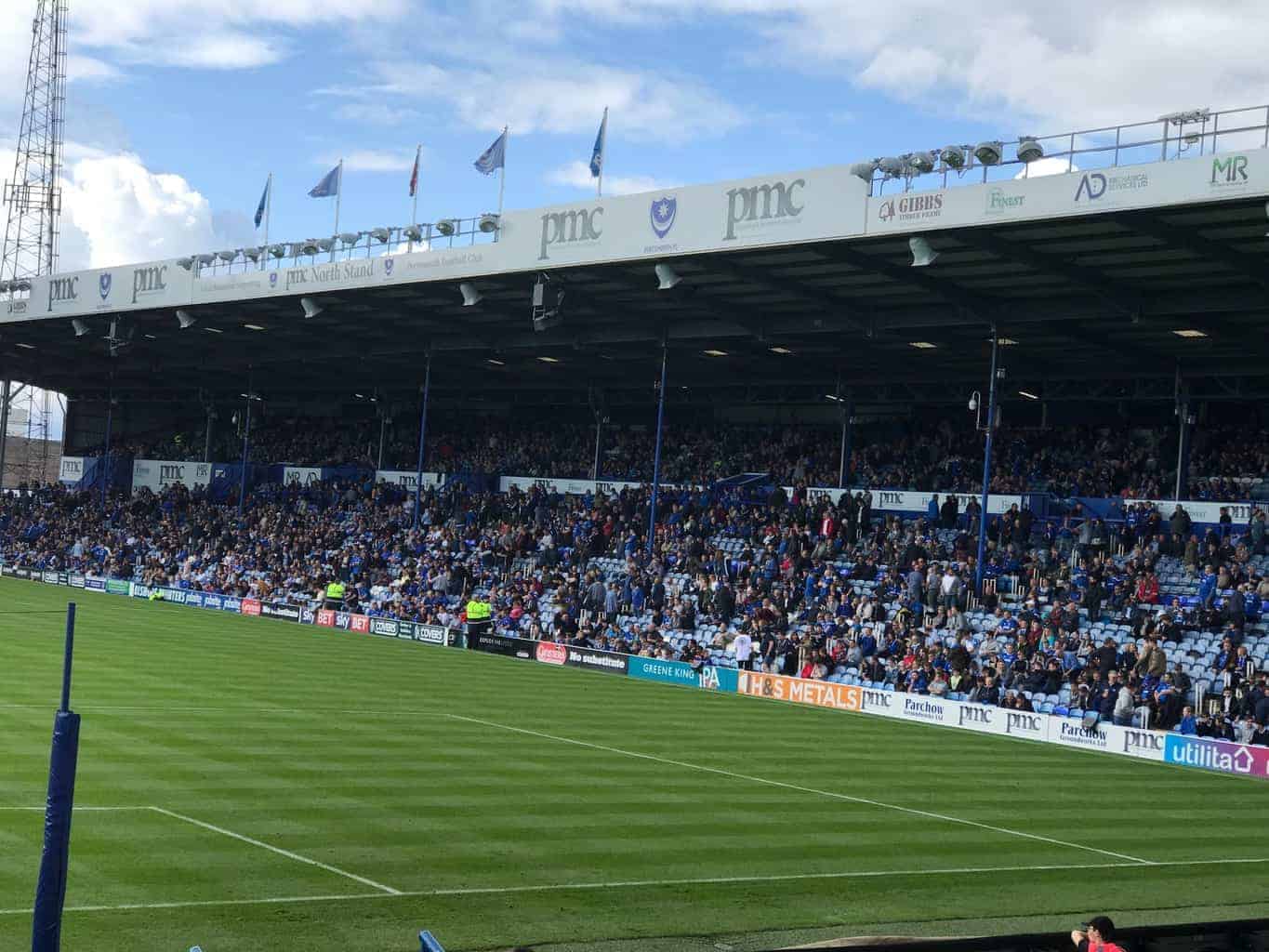
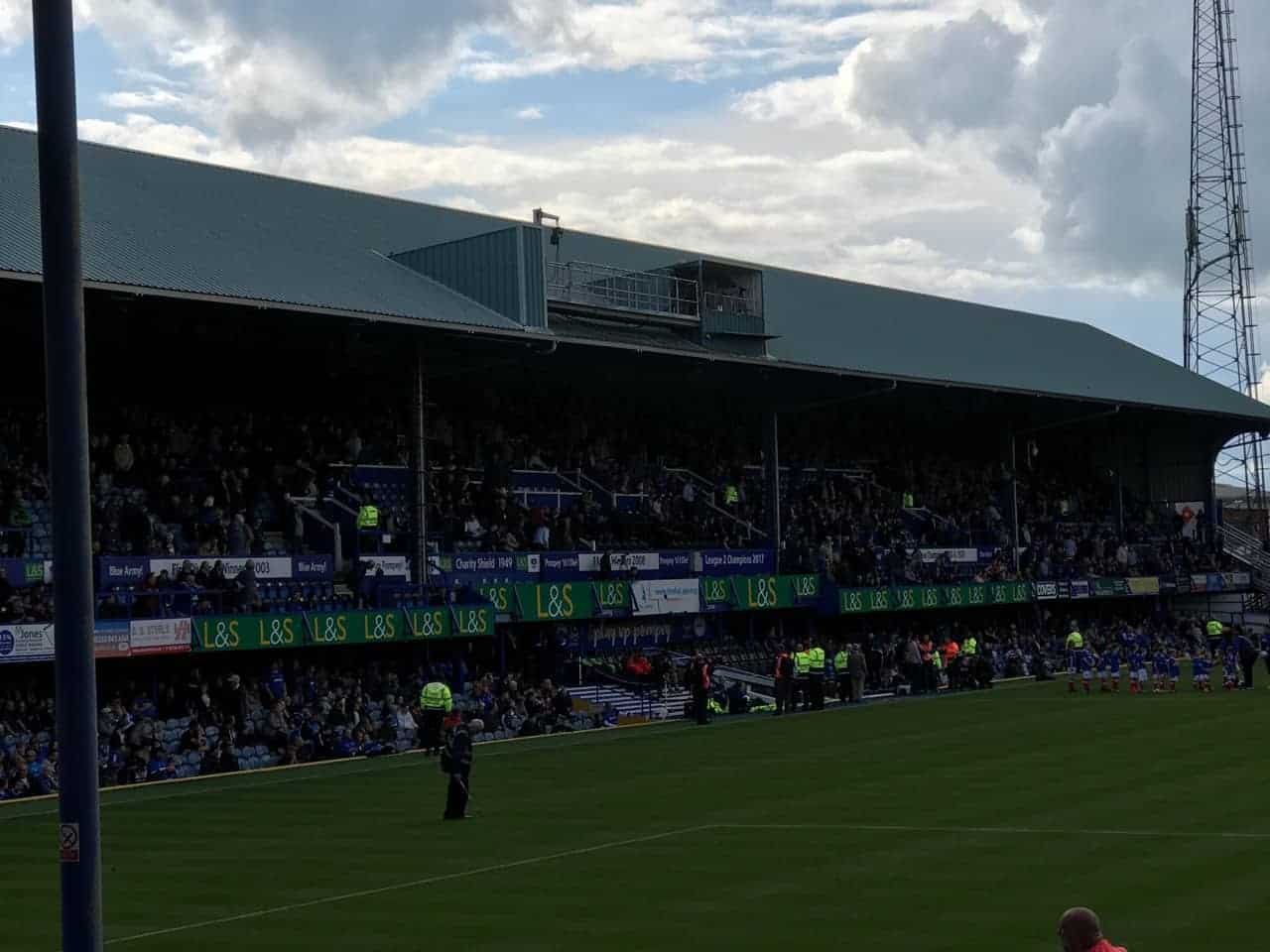
If you love an old football ground, Fratton Park is one of the greats. It’s the only home the team has ever had, and the two side stands date from 1925 and 1935. Everything about the South Stand in particular just screams old school, especially the (mock, but who cares) Tudor facade that houses a ticket office and an entrance. It was designed by famous architect Archibald Leitch, who created famous grounds up and down the country.
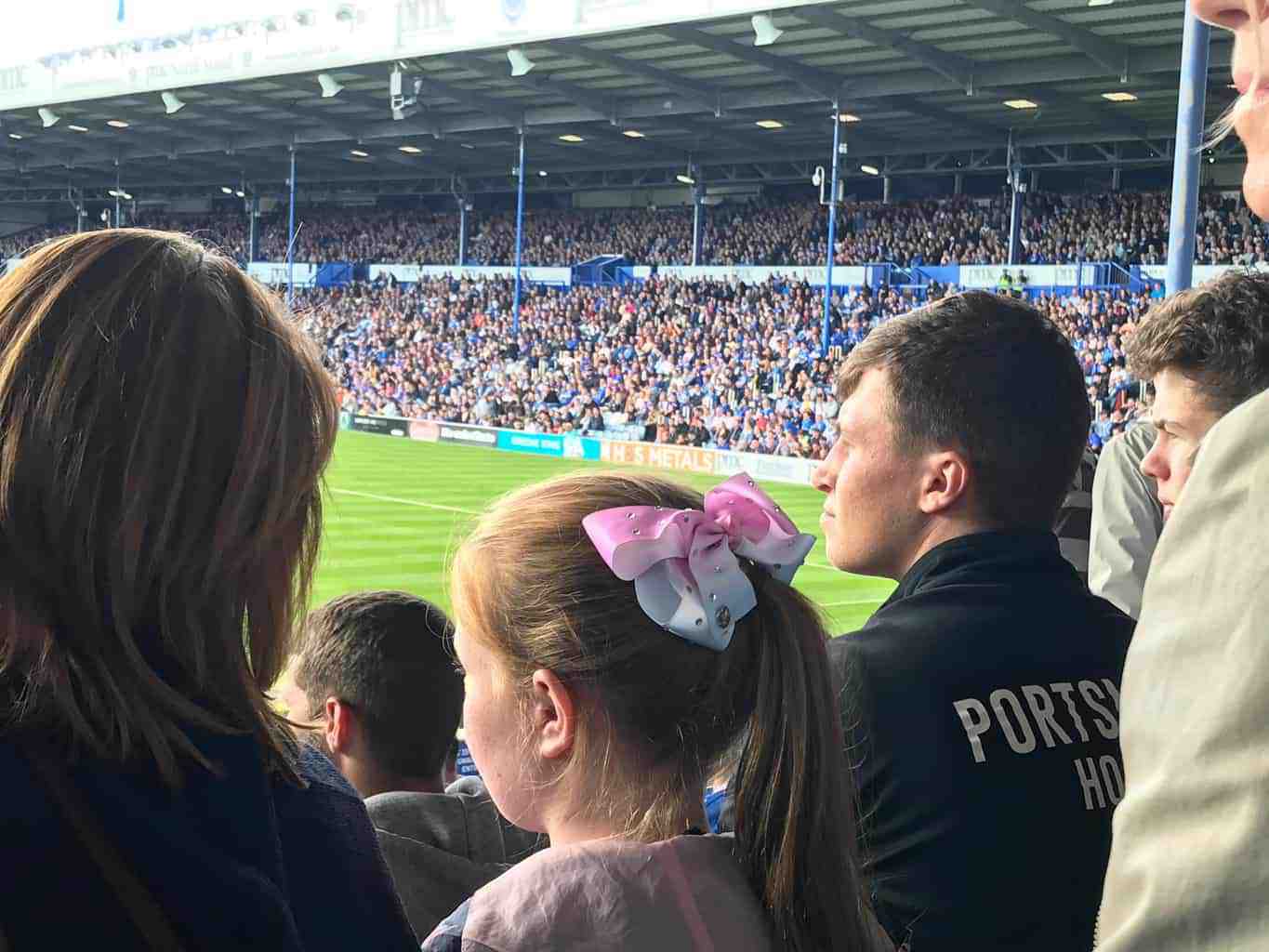
The ultras are in the west end, the 1997 Fratton Stand, which has a design of a former player Jimmy Dickinson on its seats. He holds the club record with 764 appearances from 1946 to 1965. That’s the second most by one player for one club in history. The away fans will be in the other end, the Milton, on the north side by the police command center.
They have been saying for years that they want and need a new stadium, so please, get to Fratton Park before they go and build whatever boring atrocity they are almost certain to replace it with.
TOURS: Tours are available on the mornings of home games for groups only; call to book ahead.
Going to a Game at Portsmouth
GETTING THERE: From the main rail station in town, which is called Portsmouth and Southsea, you have three options. You can walk half an hour, take bus 1, or take a train to Fratton and walk 10 minutes from there. The bus, which you catch at Stop M near the station, involves the least walking and takes the same amount of time.
PUBS: There are historic pubs in Old Portsmouth, but the ones most associated with the football club are Good Companions and the Shepherds Crook, both fairly near the ground. The former has become a designated away-fans pub, and the latter is closer to the ground, with a large outdoor area (just in case it isn’t raining).
On Milton Road, close to the ground, look for the Milton Arms and the Brewers Arms. Also, it is said that at the football-themed Newcome Arms, you might come across the legendary John Anthony Portsmouth Football Club Westwood, perhaps the most famous football supporter in England. And yes, that is his legal name. In the normal world, he runs a bookshop in town; in the football world, he can be seen wearing a massive stovepipe hat over a curly blue wig, blowing a bugle, and ringing a bell to the Pompey tunes from his spot in the Fratton Stand. He has 60 Portsmouth tattoos, “PFC” on his teeth, and the club crest on his head. He is simply a legend.
GRUB: There is only fast food around the ground, so eat in town. Deep Blue on the South Parade Pier has good fish and chips. There are plenty of options in the Gunwharf Quays area, as well as in Southsea just north of its common.
AROUND TOWN: Portsmouth has a naval history that goes back to Roman times. It was the main port of the British Empire and was considered the most fortified port in the world in the 19th century. It was a major point of embarkation for the D-Day invasion, and it is still considered the home of the Royal Navy as well as some two-thirds of its fleet.
As such, many of the sites around town are related to all that:
- The Mary Rose Museum displays a 16th-century sunken warship that was found in 1971 and raised nearly intact in 1982—one of the most famous such raisings in history. There are thousands of artifacts, intense research, and even skeletons of some crewmembers.
- The HMS Victory was Lord Nelson’s flagship and in fact is still a commissioned vessel of the Royal Navy. You can take a tour of this massive ship, including the precise spot where Nelson died at Trafalgar.
- Both of the above are in the Historic Dockyards, along with the submarine museum, the 1860 HMS Warrior, harbor tours, the Royal Navy museum, and an explosives museum. If you’re into this stuff, it’s heaven in Portsmouth.
- The D-Day Museum also includes the 272-foot-long Overlord Embroidery.
- The Royal Armouries is another military museum—one that occasionally shoots live cannons.
- Spinnaker Tower, built to look like a sail, is a 560-foot observation tower in Portsmouth Harbour. There are many options to visit, but the basic trip up is about £13 for an adult.
- Gunwharf Quays is a recently redeveloped area of shops and cafés.
- Old Portsmouth is where you’ll find the cathedral, pubs that date to the 17th century, and the town’s small fishing fleet.
Portsmouth Tickets
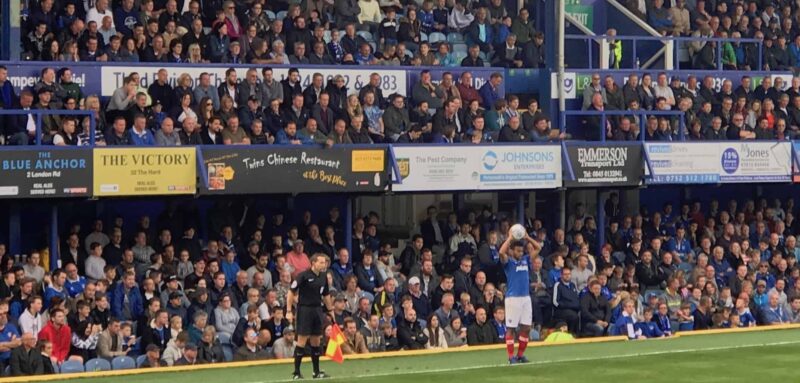
Tickets cost £26 for adults, and they rarely sell out.
Photo Gallery





Videos

Teams Coming Out at Portsmouth FC, 16 September 2017 vs Fleetwood Town
More About Portsmouth


