FC Barcelona Club Profile
Barcelona
Barcelona is, of course, one of the biggest clubs in the history of football. They like to say they are mes que un club, or “more than a club,” but to us they are more like a club than most of the “clubs” we’ve been to. That is, while they aren’t by any means a simple outfit, they are, in fact, owned by the fans and run by a president who is elected every five years.
LOCATION: Barcelona, Spain
WEBSITE: FCBarcelona.com
NICKNAMES: Barça or Blaugrana
FC Barcelona History
Where do you even start? They have won 77 major trophies, including 27 league titles, 31 Copa del Rey, and 22 European titles, including five Champions League wins and two FIFA Club World Cups. They were the first European team to win two trebles of League, Cup and Europe. In 2009 they won all six competitions they entered, and in 2010 three of their players finished top three for the Balon D’Or, awarded to the world’s best player.
The club started in 1899 and remains 100% supporter-owned, with a president who has to face election at least every five years. They were already a force in the first half of the 20th Century, but when the Spanish Civil War came, they and their city were strongly associated with Catalan resistance, and as the Franco dictatorship went on, Barca — along with most of Europe — fell behind Real Madrid.
When the great Dutch genius Yohann Cruyff arrived in the 1970s — after saying he chose Barcelona because he couldn’t play for a club associated with a dictator — and he led them to their first league title in 15 years. In the late 1970s they won their first European trophy and invested in a new academy called La Masia, or the farmhouse, which has gone on to produce countless legends.
Cruyff returned as manager in 1988 and built a monster team that included, among many La Masia products, future manager Pep Guardiola. They won their first European Cup (now Champions League) and four straight league titles. Cruyff, who has a statue outside the Camp Nou, is considered the father of the modern club.
When Guardiola returned as manager in 2008, he took a team loaded with galactic talent including Iniesta, Zavi and of course Lionel Messia — all from La Masia — and literally won everything there was to win. Iniesta even threw in the winner for Spain in the 2010 World Cup. Messi world the Ballon D’Or seven times with the club.
Guardiola left in 2012, and there was been a general afterwards. That was inevitable, but there have been financial problems, drama among the leadership, scandals, and a decline on the pitch. They won another Champions League in 2015, and a few more league titles, but they don’t quite weave the magic that they have so often in the past.
They did win the league and Copa del Rey again in the 2024-25 season. And for this season they are finally back in the (still being worked on) Camp Nou. So maybe the magic is coming back.
Barcelona Rivalries
Barcelona’s rivalry with Real Madrid, known as El Clasico, is perhaps the most famous in the world. It’s two Spanish and European giants, both with a galaxy of superstars past and present, usually with the league title on the line, and loaded with political significance going back to the Civil War and Catalan resistance. They have played more than 250 times since 1902, with Barcelona holding a slight edge in total victories.
In theory, there is a rival with the other club in Barcelona, Espanyol, but it is so lopsided as to seem somewhat irrelevant — certainly to Barca. The Derbi Barceloní has occurred 216 times, with more draws (46 as of 2023) then Espanyol wins (44).
Barcelona Women's Team
FC Barcelona Femení are, in many ways, currently what the men’s team was under Guardiola: the best team in Europe, with largely homegrown talent. They have also filled the 90,000-seat Camp Nou on a few occasions.
They made the top division in 2011 and have won it eight times since; they were also the first to win the Women’s Champions League, which they did in 2021 and 2023. And, as the men had Messi, Barcelona’s women have Alexis Putellas, who in 2021 and 2022 won both the Ballon D’Or and Best FIFA Women’s Player. Her teammate Aitana Bonmatí won the Ballon D’Or in 2023, and they both — along with five other Barca players — were on the Spanish team that won the 2023 World Cup.
Home games are usually at the Johann Cruyff Stadium in the western part of the city, but occasionally at Camp Nou. See the club’s website for schedule and ticket information.
Songs
FC Barcelona Stadium
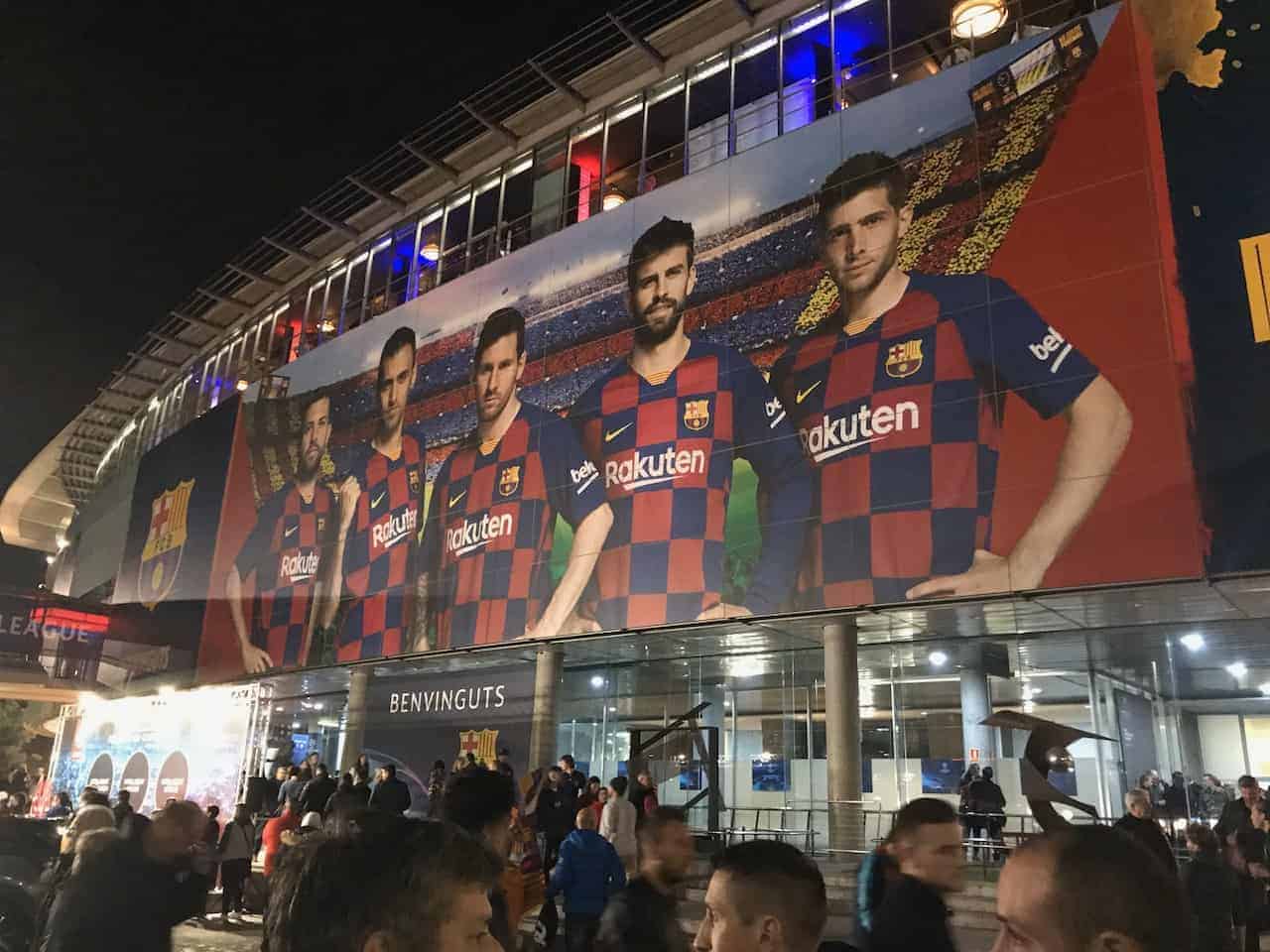
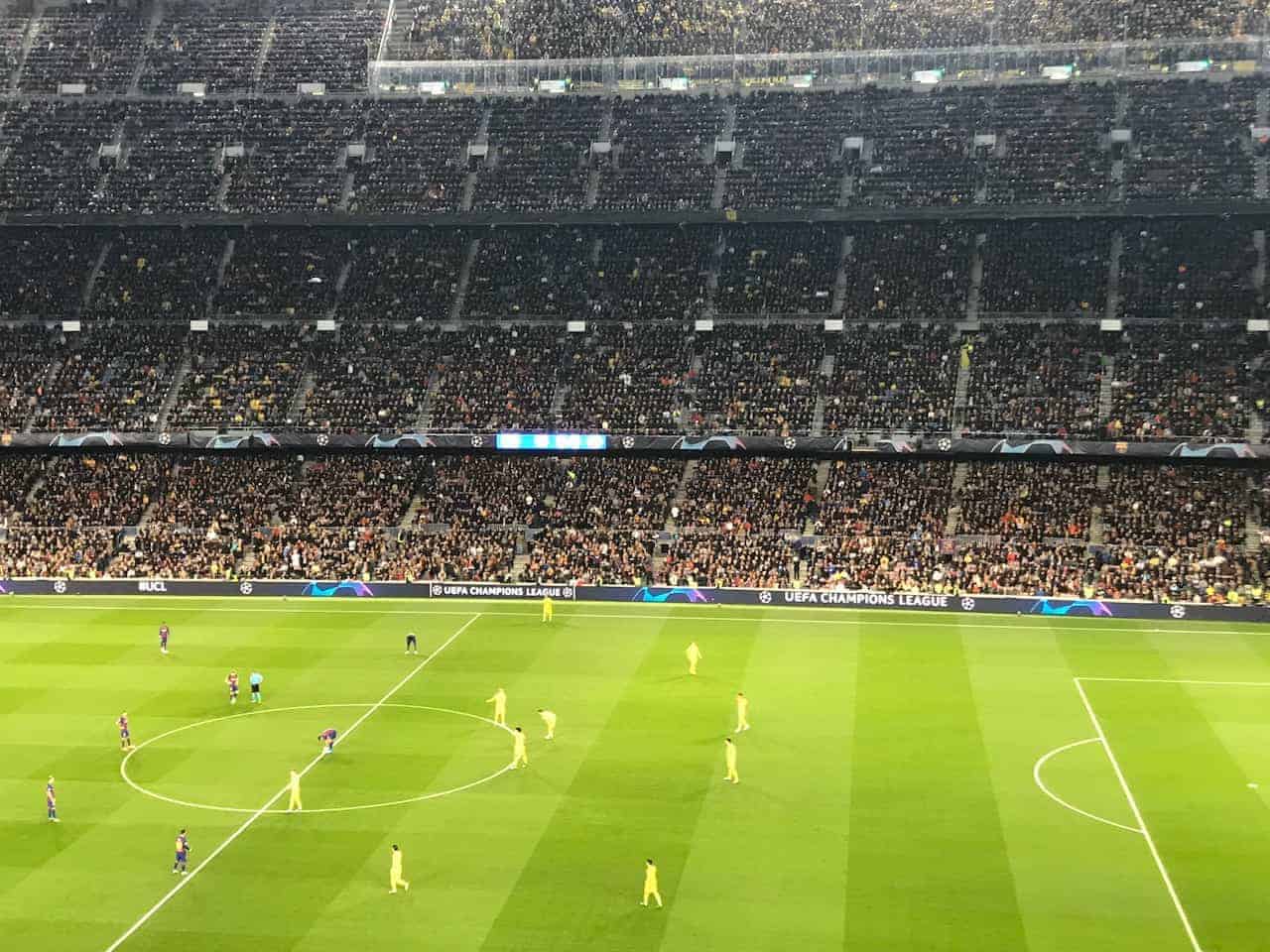
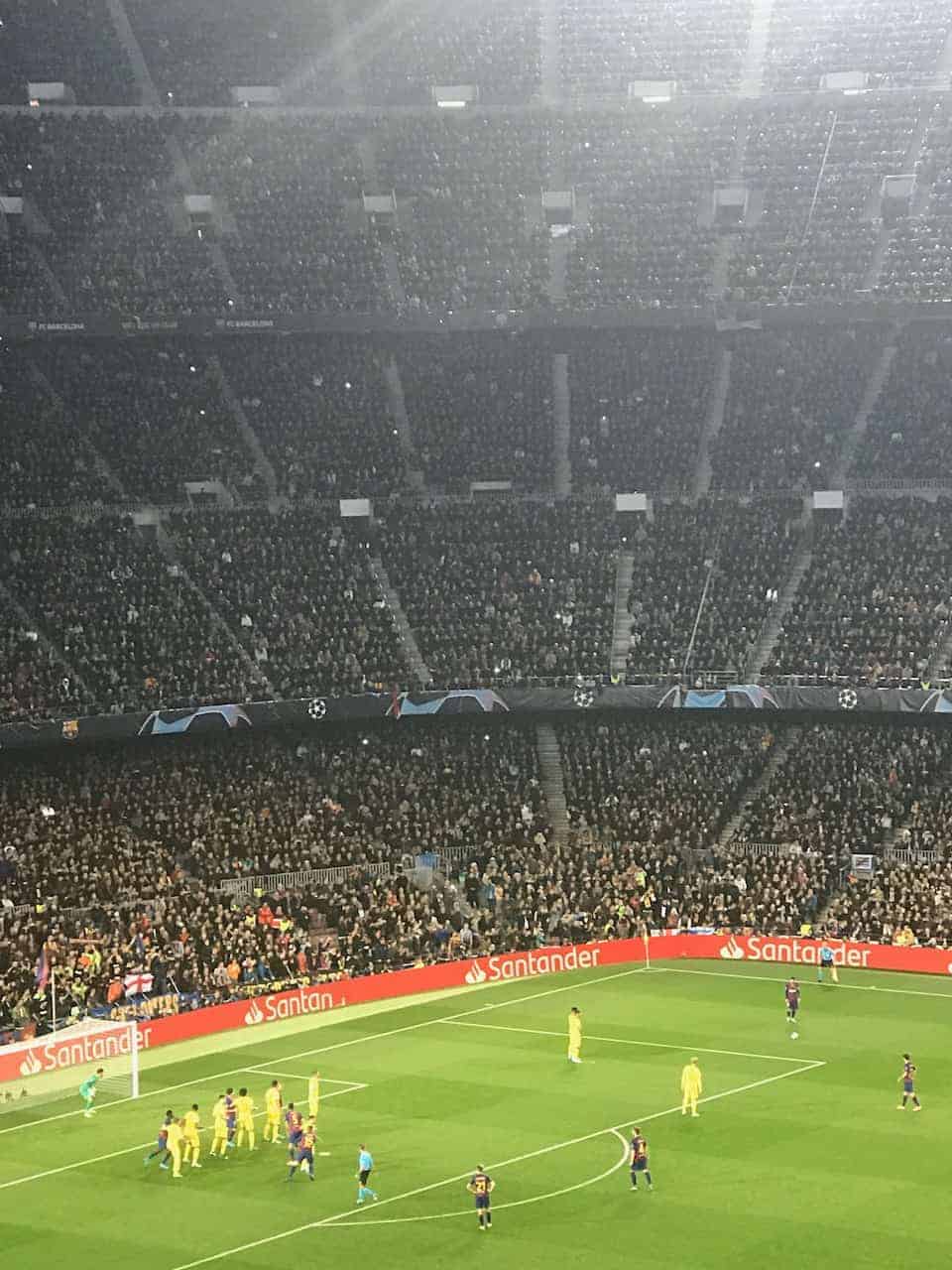
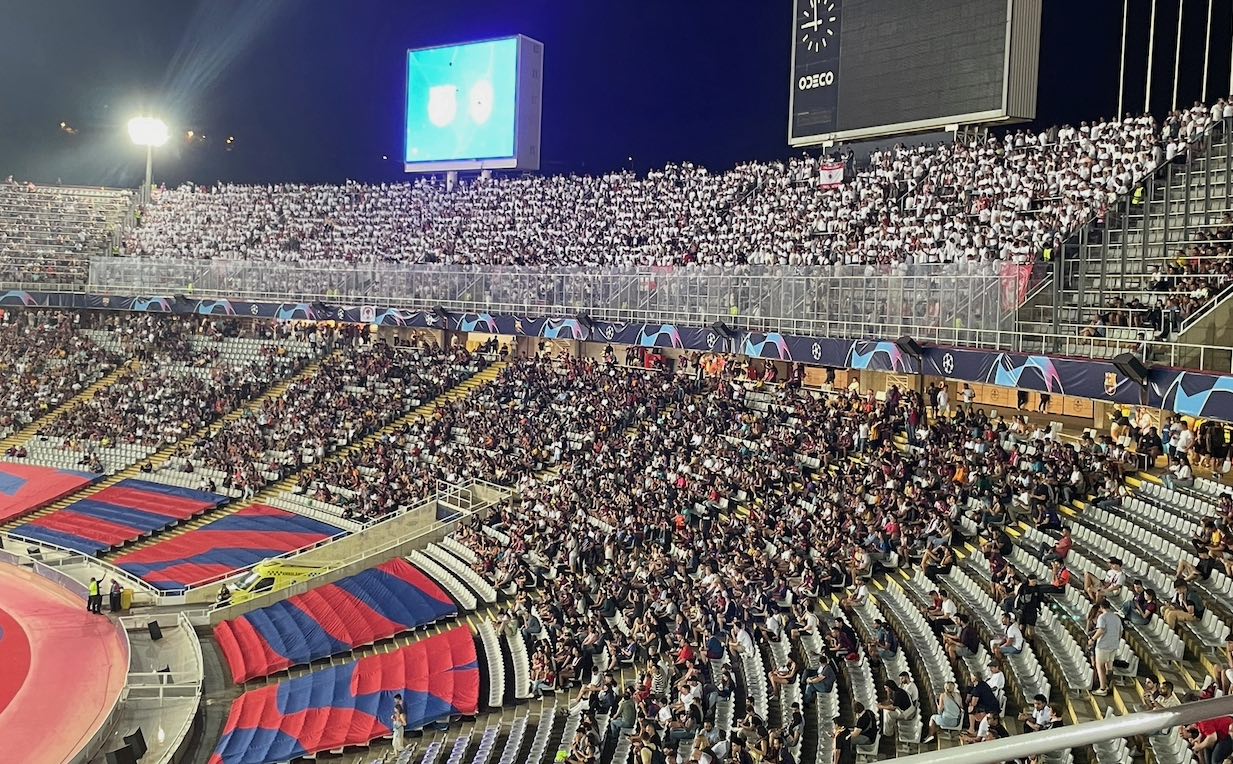
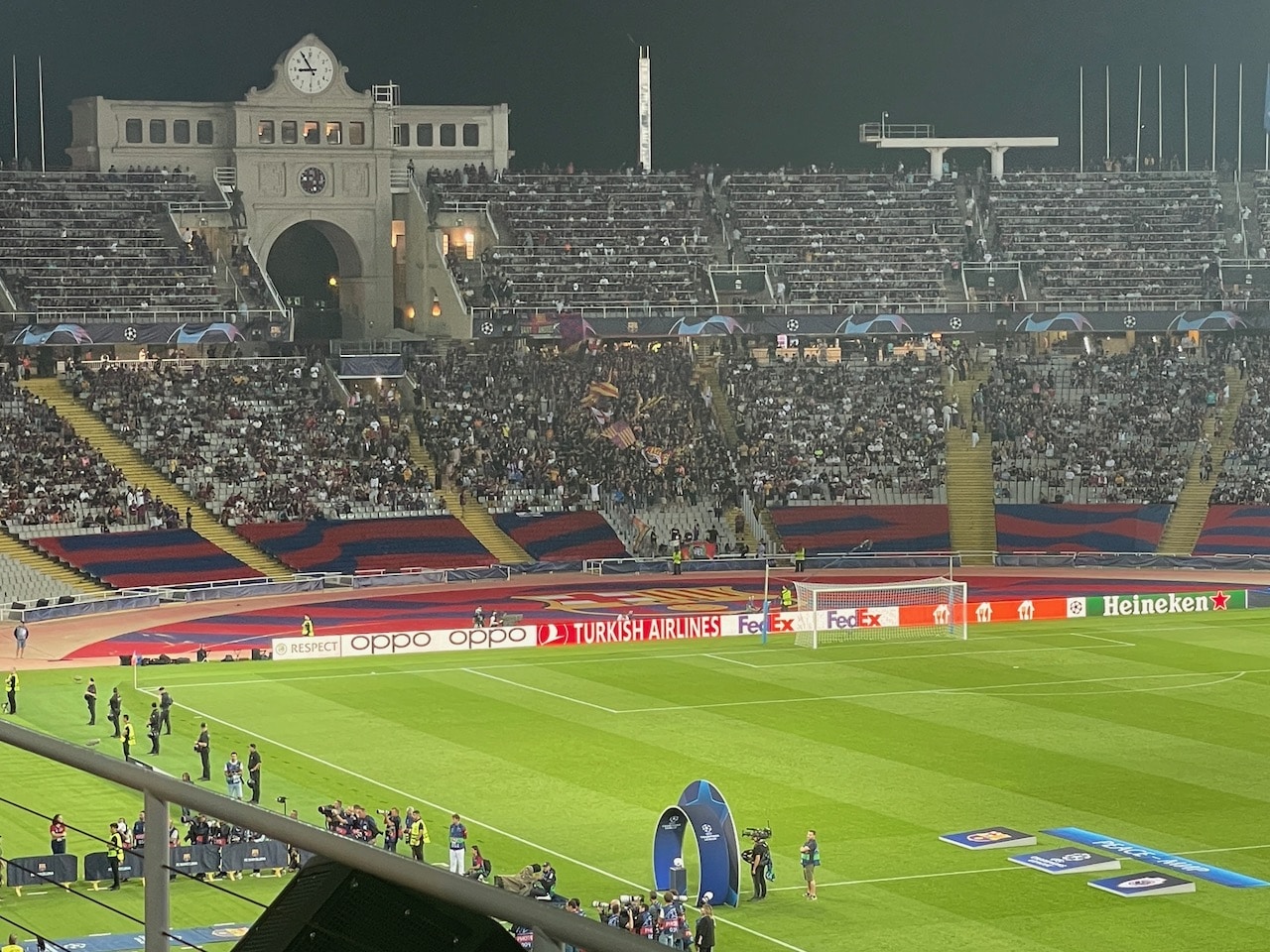
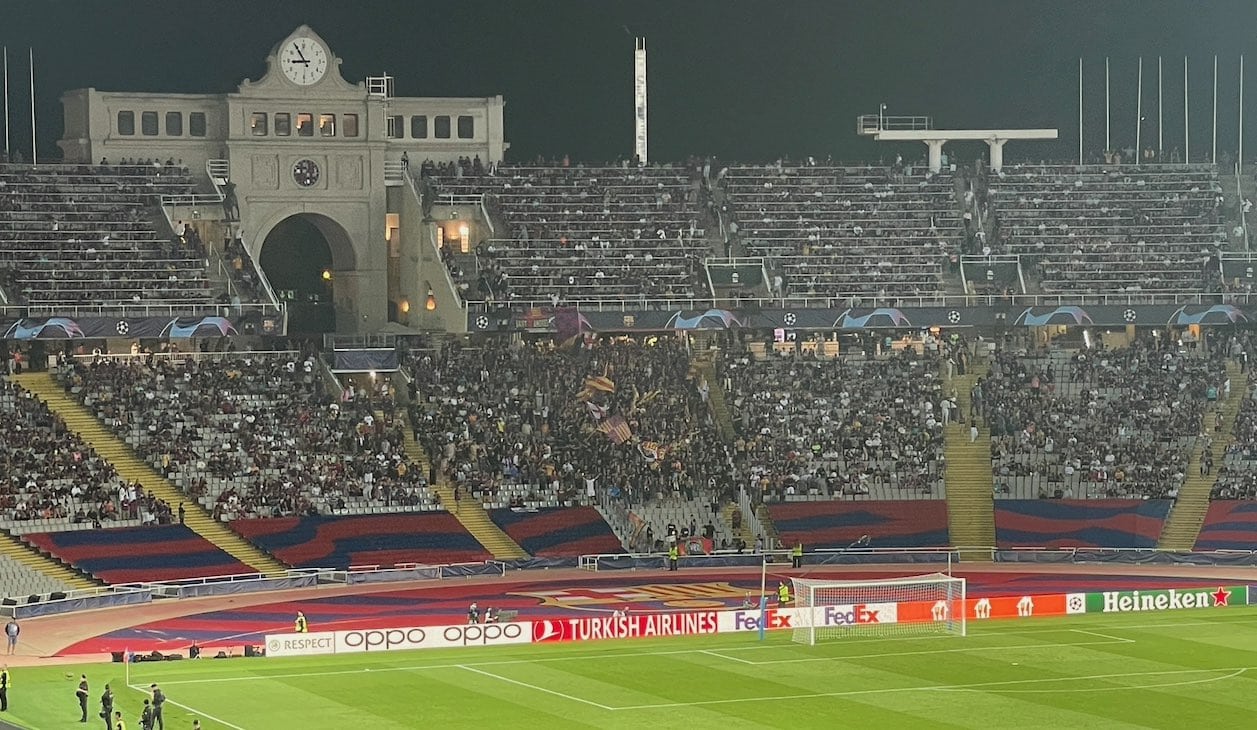
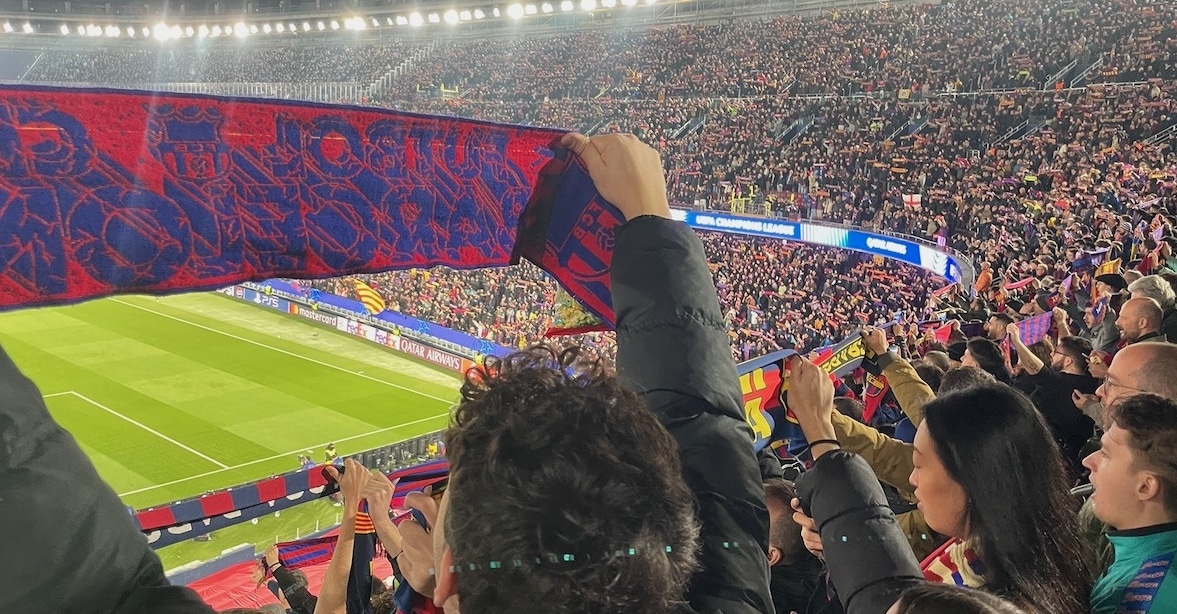
Barcelona’s home, the Camp Nou, is one of the most famous stadiums in the world and the fifth-largest in capacity with just over 99,000 seats. Or rather, it will be whenever they finish working on it. It will eventually have a roof on one side, as well.
Its name translates simply as “New Field,” and apparently the name stuck when it was constructed in the 1950s.
But the Camp Nou was rapidly falling behind in the world of fancy, money-spinning stadiums. So a massive reonvation project is underway, although they are back in it while the construction is ongoing. As of early 2026, the top tier doesn’t exist yet, so the bottom two are open. Spain is hosting the World Cup in 2030, so let’s hope it’s done by then!
Going to a Game at FC Barcelona
GETTING THERE: From the area around the train station, take bus D20 or 52, or tram line 5, to the south side of the stadium. Taking tram line 3 to the north side leaves a slightly longer walk. From the station, it’s only a 30-minute walk, and if you go along Avenida de Madrid, you’ll see lots of bars, restaurants, and local color.
PUBS & GRUB: There is a cluster of places on the south side, just off Avenida de Madrid, like Notorious, Corte and Brasa, and Pizzamarket. Inside the stadium is the usual stuff. But hey, you’re in Barcelona! If you can’t find something good to eat before the game, we don’t know what to tell you.
AROUND TOWN: Barcelona is a world-famous tourist destination. We’ll let our favorite travel guru, Rick Steves, give you a tour.
Barcelona Tickets
Tickets are available via the club’s website.
Groundhopper Soccer Guides also sells tickets and hospitality to Barcelona home games; click below for more.

Photo Gallery