Club Profile
Manchester United
Manchester United is a giant club with a giant stadium, a collector of championships, and a global brand that is loved all over the world and hated all over England. They have also been on a mission to reclaim their former place atop the league. But right now the wheels are off.
LOCATION: Manchester, which is two and a half hours from London’s Euston station
CONTACT: manutd.com
NICKNAMES: The Red Devils, Man United, or simply United
History
United have won major trophies in multiple decades, but they have not actually had a consistent record of massive success. They were founded in 1878 as Newton Heath FC, changed their name to the current one in 1902, won the league twice and FA Cup once by 1909…and then didn’t win anything for 40 years. They almost went bankrupt in 1931.
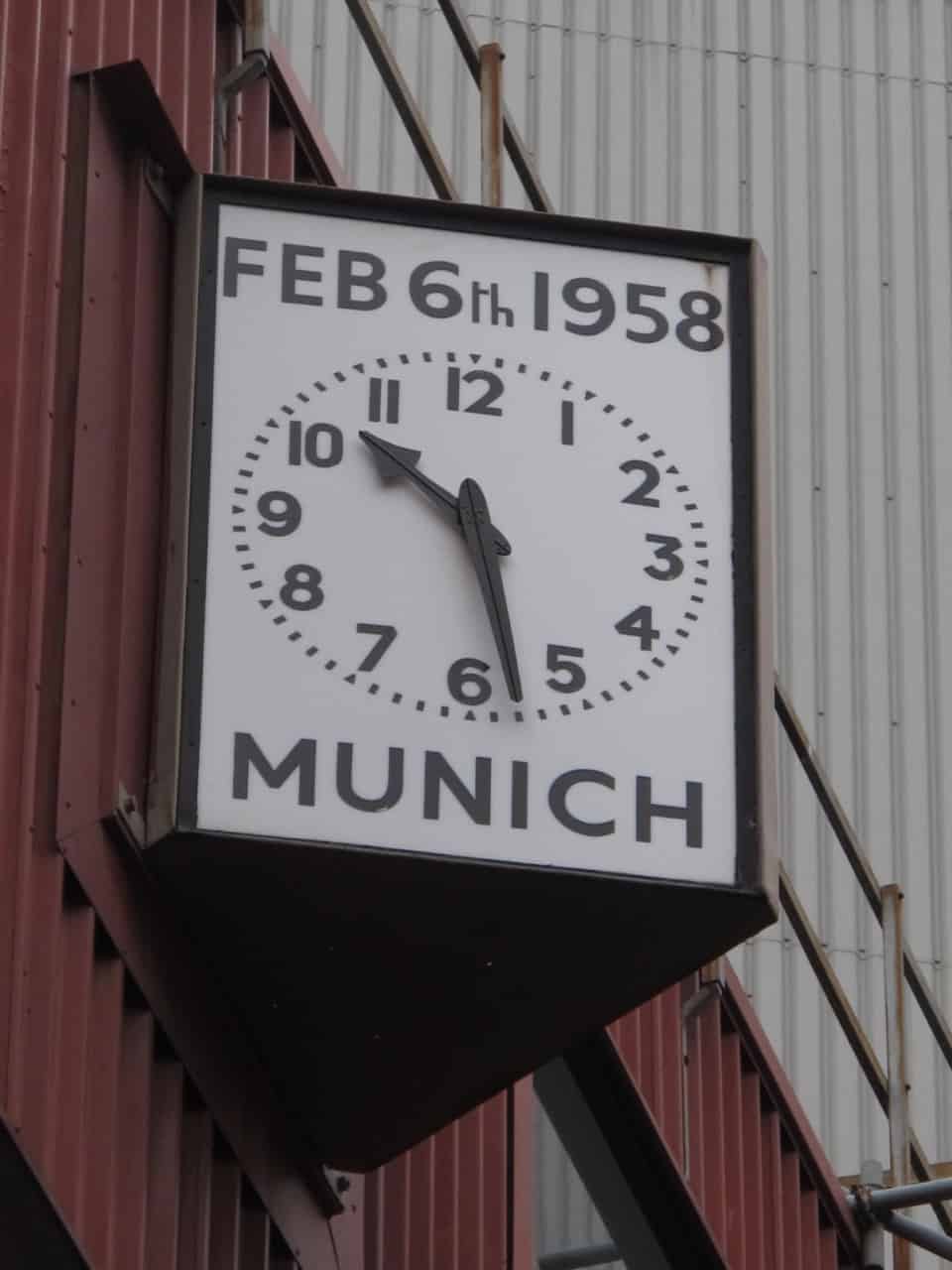
But in 1945 they hired a manager named Matt Busby and embarked on a great period of success. They won three league titles in the ’50s and became the first English club to compete in the European Cup (now Champions League). But that team, known for its youth as “Busby’s Babes,” was decimated by a plane crash in Munich on February 6, 1958. Twenty-three people died, including eight players. There is still a clock outside the stadium that is part of a memorial to that team.
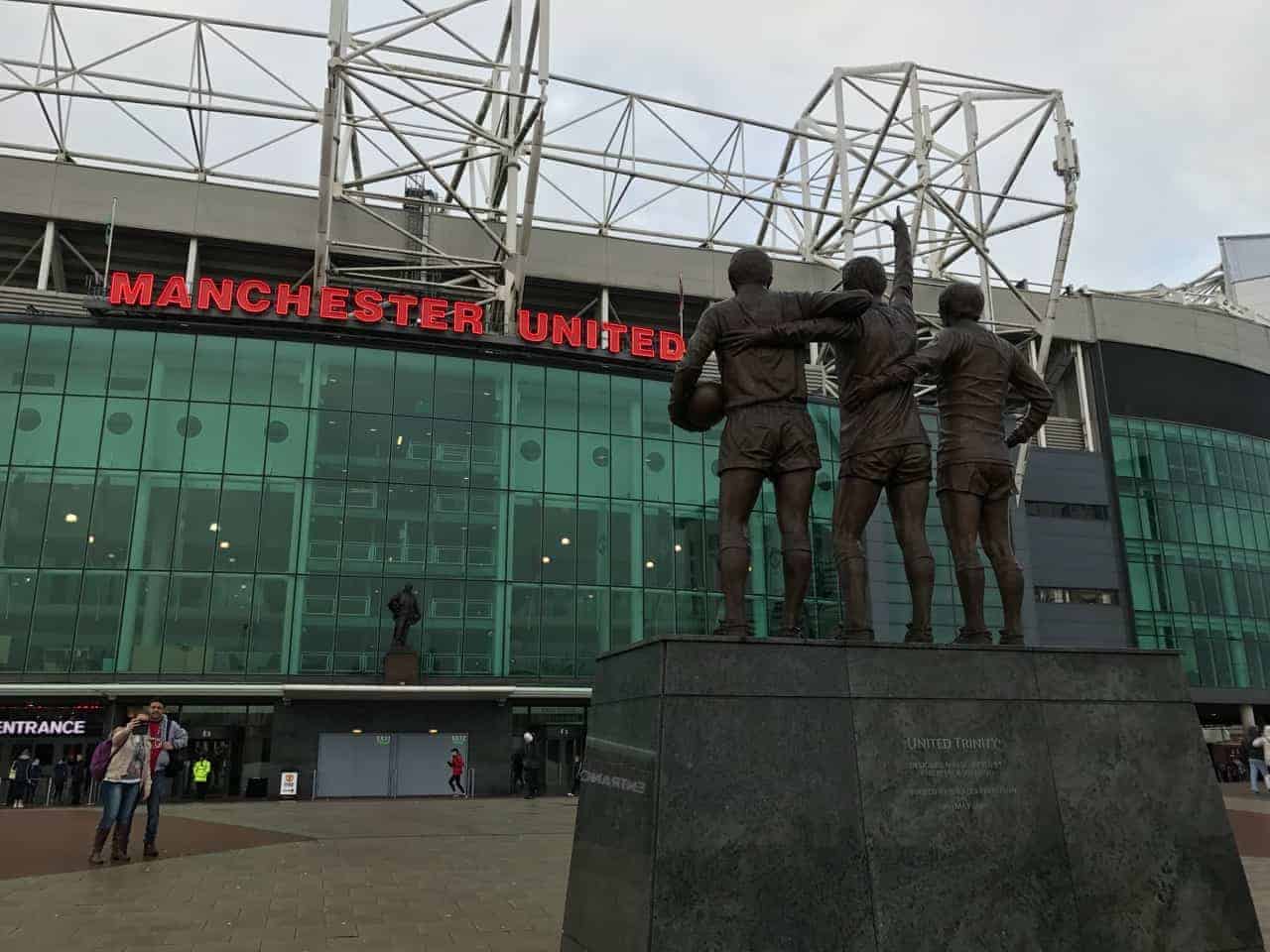
Busby rebuilt the team around legends Denis Law, Bobby Charlton, and George Best—the “United Trinity” whose statue faces that of Busby outside the stadium. All three were European Footballers of the Year at various points, and together they won league titles, FA Cups, and the club’s (and England’s) first European Cup in 1968. But Busby retired in 1969, and in 1974 United was relegated. Yes, this actually happened; Law, playing for Manchester City by then, scored a very famous backheel goal that did it—and refused to celebrate.
They got back up in a year but essentially floundered for another decade before hiring Alex Ferguson in 1986. They almost fired him, but he won the 1990 FA Cup and got to stay on. All he did after that was win 13 league titles (including three in a row twice), five FA Cups, four League Cups, and two Champions League titles—one of which came in the famous “treble” season of 1998–99, when they also won the league and FA Cup.
Ferguson retired in 2014, and another period of floundering began. They have won the FA Cup once and the League Cup twice since then, but for their legions of fans, that’s not good enough. The fear is that they will suffer the same fate as their great rival Liverpool, who won everything in the ’60s to ’80s but then didn’t win the league for 30 years.
Last season was a disaster, as they finished a shocking 15th in the League. So, since they also lost the Europa League Final to Tottenham, they won’t be in any European competitions this season for the first time in 10 years.
2024–25 SEASON: 15th in Premier League, 5th Round FA Cup, 5th Round League Cup, Europa League runners-up
2025–26 SEASON: Premier League (promoted in 1975)
Rivalries
Fans disagree on who the bigger rival is. Manchester City, whom Ferguson once referred to as “noisy neighbors,” has obviously become a major force. But Liverpool, so often the great rival for trophies, is probably still the biggest. Leeds United was a great rival in the ’60s and ’70s, so older fans will still resent them as well.

Women's Team
For some reason it took until 2018, but they finally have a women’s team. Manchester United started that year in the Women’s Championship at tier 2—and they won it. So they are now in the Women’s Super League, with home games at the quite remote Leigh Sports Village, where the men’s youth teams also play. Some games are at Old Trafford.
Songs
“Glory Glory Man United” is a mainstay, but there are many others. Still, opposing fans like to taunt the Old Trafford atmosphere as resembling a library, and the club has even tried to put in a “singing section” at some games. They will also do a looping, repetitious “Bring out United” just before the teams come out. They also have a nice simple one, chanting “Attack!” over and over.
Stadium
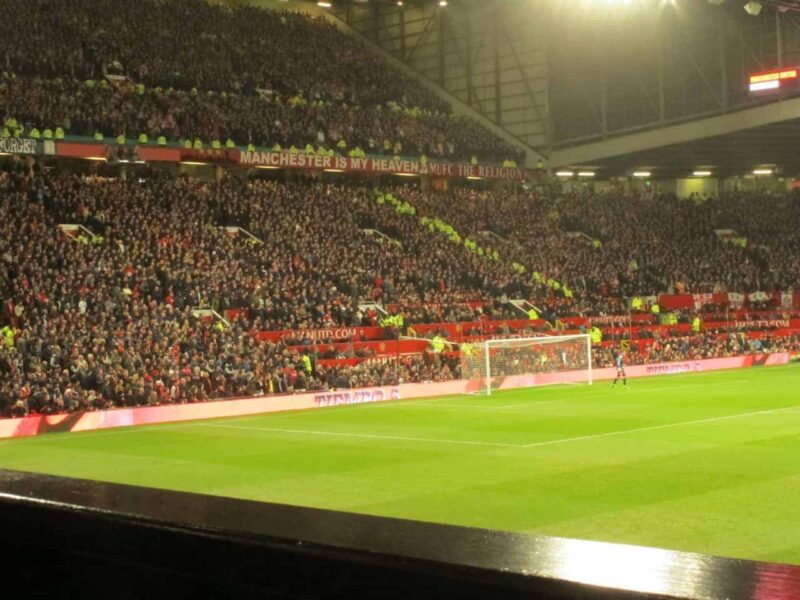
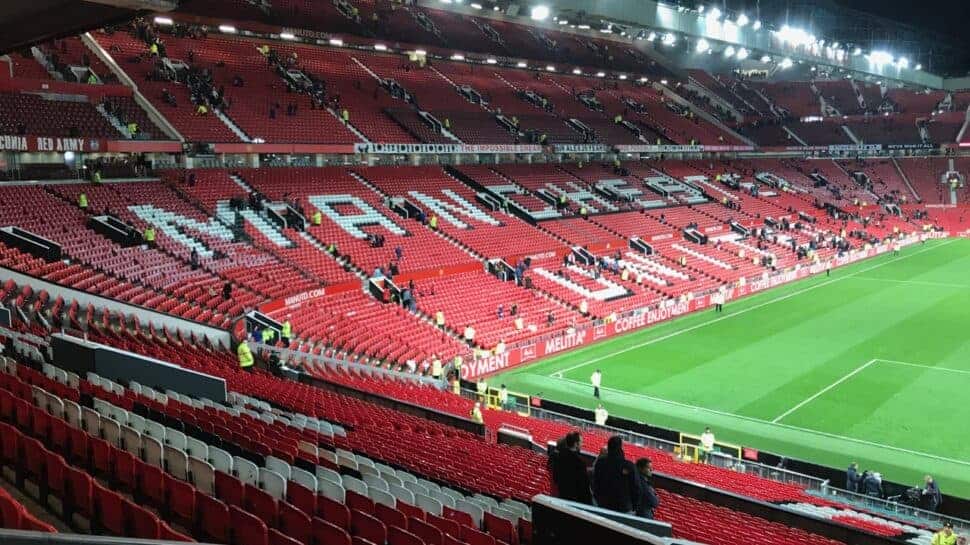
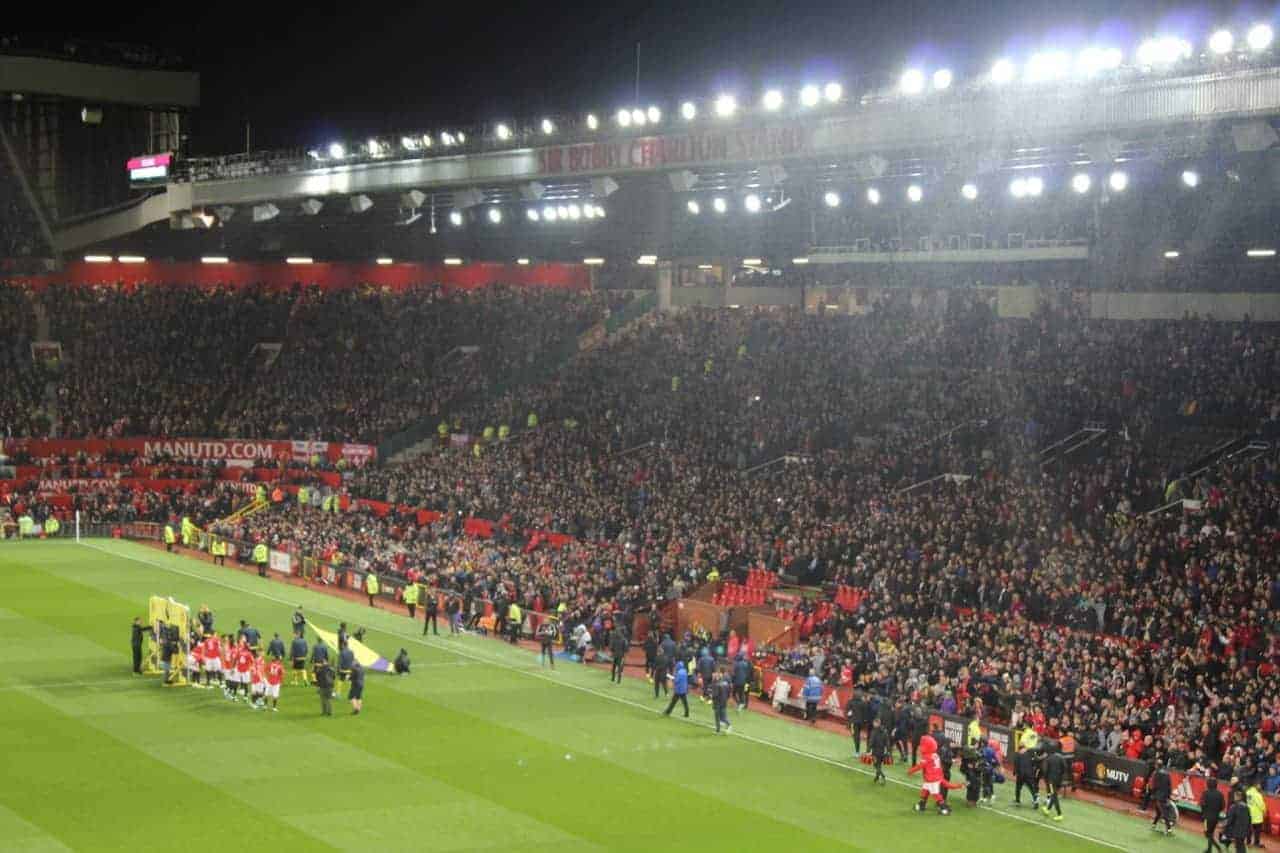
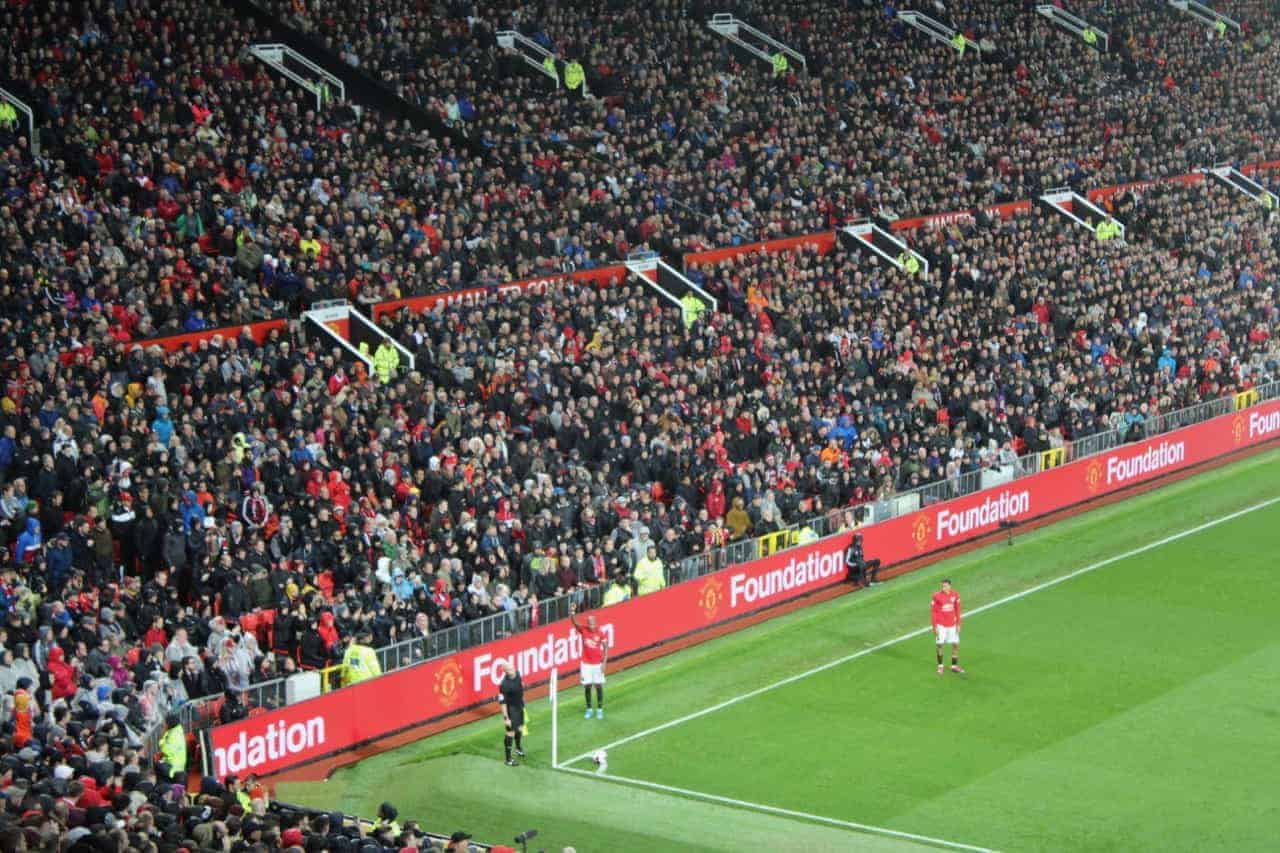
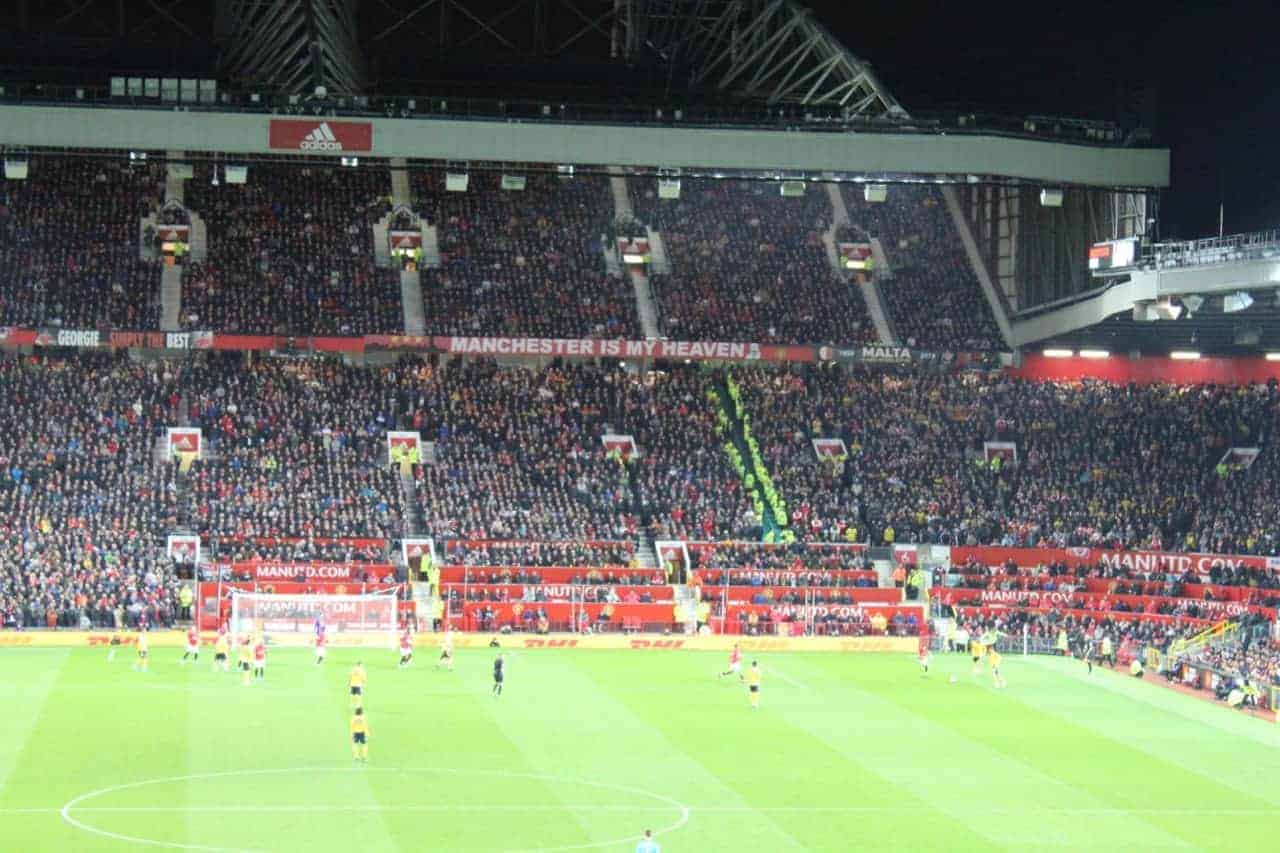
Old Trafford, also known as the “Theatre of Dreams,” is a palace of English football. It holds 74,994 people, making it the biggest club stadium in the country. Named for the neighborhood it’s in, it has been their home since 1909—although the stadium now certainly bears no resemblance to what it was then.
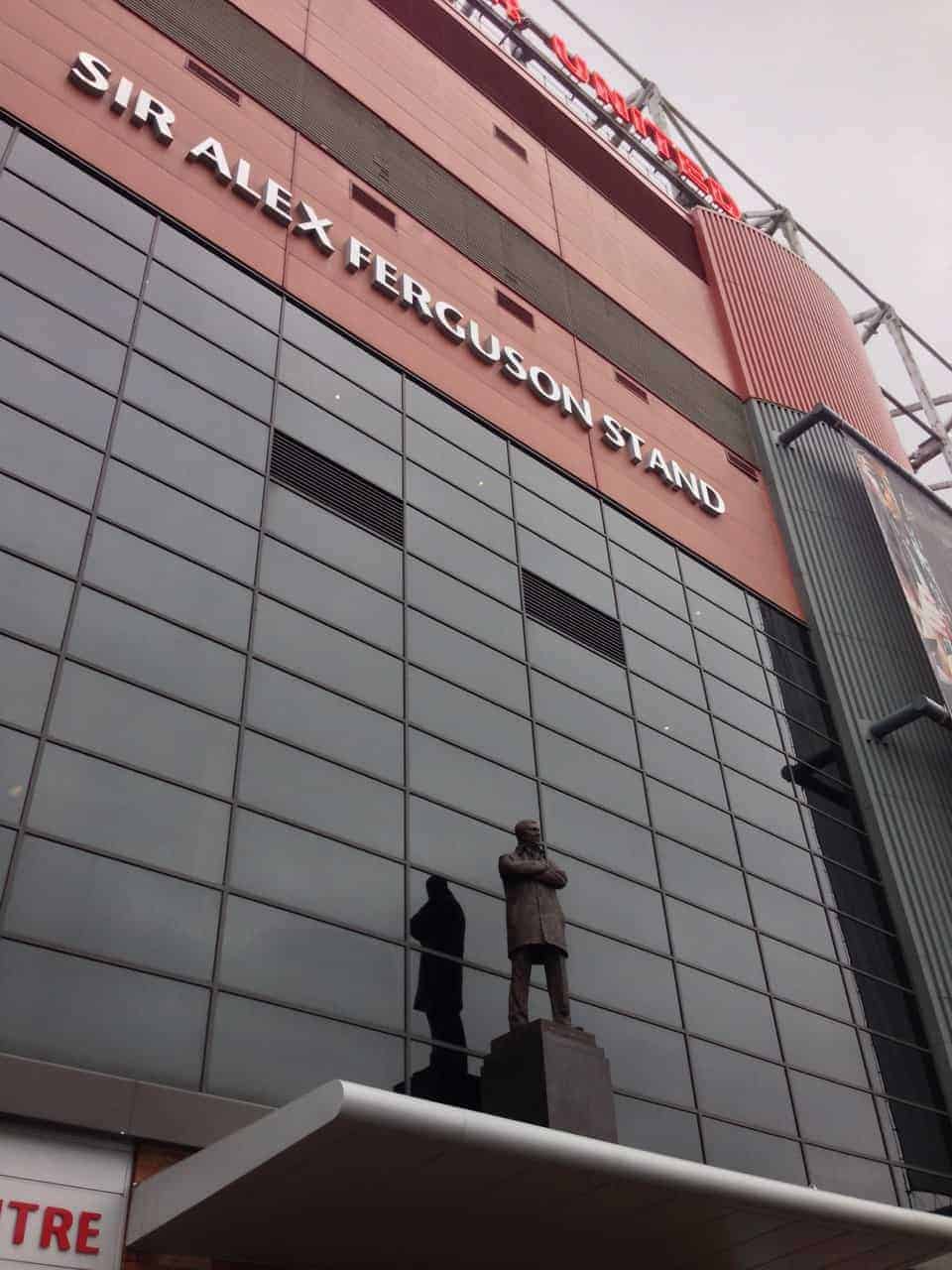
It’s basically three very large sides and one smaller one. The last is the Sir Bobby Charlton Stand, which they would like to expand, but the engineering challenges are immense. Across from that is the Sir Alex Ferguson Stand, the largest in the country with 25,500 seats. The East Stand (aka Scoreboard End) is behind one goal (away fans are in the corner between this and the Charlton Stand), and behind the other is the Stretford End, traditionally home to the most diehard fans. United likes to attack that end in the second half.
If you have any choice in the matter, try to sit in the Charlton Stand, as it has the best views of the other three towering structures, or in the Stretford End for atmosphere.
They have recently announced plans for a new 100,000-seat stadium right next to the current one. Who knows how long that will take to build.
TOURS: Offered all day every day, except for game days. The standard version (£28) includes the stadium and museum, but some tours are led by former players, some include food, and some include a boat ride on a canal from Central Manchester.

Going to a Game at Manchester United
GETTING THERE: It couldn’t be easier. You go to any Metrolink train station in the center—there is one at the main Piccadilly station—and take a train bound for Altrincham. It stops at Old Trafford, at which point the entire train will empty out. It’s about a 10-minute walk from there and the definition of “you can’t miss it.” A return ticket is around £4, and there will be assistants all over the Metrolink stops in the center if you have questions.
Alternatively, you can take the red Metrolink line from Deansgate and stop at either Imperial War Museum or Wharfside, both being a short walk from Old Trafford.
PUBS: There are really only three choices out by the stadium. As you walk in from the Metrolink station, you will see The Trafford on the right and The Bishop Blaize (now a Wetherspoon) on the left. The Trafford is more traditional; The Bishop Blaize is more modern and has an outdoor patio. Both will have a line to get in, and you will need to produce a home-section match ticket for admission. The same is true at Hotel Football on the other side of the stadium; it’s a hotel owned by former United players, including Ryan Giggs, and it has a couple of bars.
There is a convenient, if not too exciting, pub one stop before the stadium. Hop off at Trafford Bar, walk up to street level, and check out The Tollgate. It will be manageably crowded, anyway. And in town, there’s a United-themed pub called the Old Nag’s Head that is popular with local fans.
Another thing that we get asked a lot is “Since we can’t get (or afford) tickets, where can we watch the game in town?” There are, of course, a million pubs, many of which show games, but watching a game in a pub filled with fellow supporters just isn’t as big a deal in England as it is in the States. Still, we recommend Tib Street Tavern in the terrific Northern Quarter part of town.
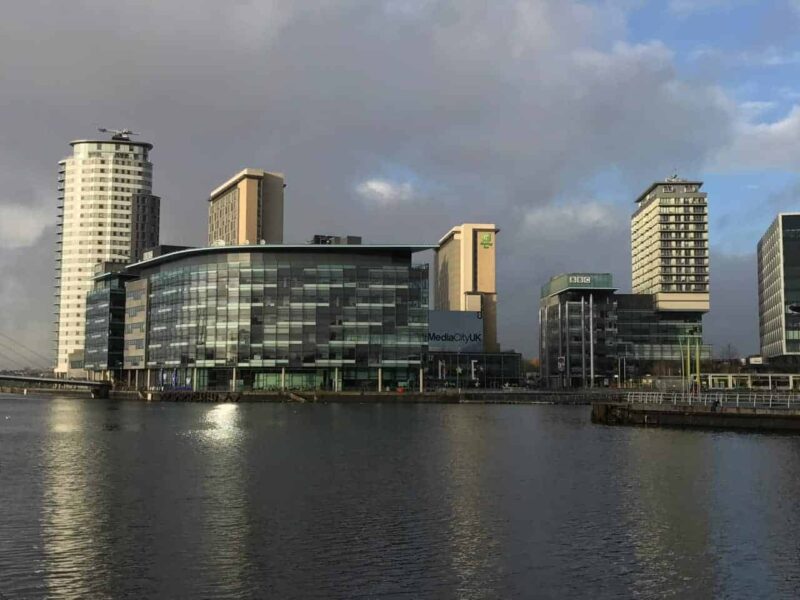
GRUB: All the pubs listed above have food, although service will be challenged on game days. You really should just count on eating in town or as part of the hospitality package you probably had to buy. You can also take the Metrolink to Media City UK and eat at one of several places over there, then walk about 20 minutes to the game. Or check below for food suggestions elsewhere.
AROUND TOWN: Manchester is, for us, an undiscovered destination in England—especially for the football fan. It has many of the modern conveniences and historic and cultural attractions of London but without the crowds. There are great tours available in the center, which is highly pedestrian friendly and has some free circle bus lines.
There is also, of course, another pretty big football club in town as well as the National Football Museum, which reopened after a remodel in 2019. The Classic Football Shirts shop is well worth a stop. And there are many other clubs in the surrounding area, some reachable by Metrolink. This makes Manchester a fantastic base for a northern football-themed adventure. Within 90 train minutes of Piccadilly station, you can see a game at Huddersfield Town, Rochdale, Wigan, Bolton Wanderers, Macclesfield Town, Barnsley, both Sheffield clubs, Burnley, Bradford City, Leeds United, Blackburn Rovers, Preston North End, and Stoke City—and that’s not even to mention that Liverpool is just under an hour away by train.
Back in Manchester, we recommend several parts of town in particular. Chinatown is fantastic and filled with restaurants; our favorite is the relatively subdued Happy Seasons. The Northern Quarter—like Chinatown, just minutes from Piccadilly station—is rapidly becoming hipster central. Turtle Bay is a chain that does some good Caribbean food, and Canal Street is the center of the vibrant Gay Village.
And perhaps the coolest is the Curry Mile, a neon-lit stretch of Wilmslow Road in Rusholme that is lined with curry shops, kebab houses, sweet shops, and barbershops. It is said to be the largest concentration of South Asian restaurants outside of South Asia, but it’s also starting to attract a lot of Middle Eastern places as well. My Lahore is the more popular option, but the much more subdued Al-Madina is our favorite.
That is all within about a 20-minute ride on several bus lines, or roughly a £10 taxi fare, from the city center.
Manchester United Tickets
Along with Liverpool, Arsenal, and Chelsea, these are among the toughest tickets in the country to get-seemingly no matter how poor they are on the pitch. They have made club membership a requirement; these range from £35 to £75 — and then you can pay £41 to £53 for tickets, which you probably can’t get anyway. If you do, they will probably be low behind a goal. And you will definitely never get an away ticket to see them play somewhere else.
Scoring one or two seats for a home game against a lowly team is one thing. Getting more than that together will only happen at Cup games against nobodies, and getting anything against a big club almost certainly won’t happen. This means you have to go with hospitality packages or the secondary market, in which you’re on your own.
Groundhopper Guides is an authorized reseller of several hospitality packages at United.

Photo Gallery

Videos

More About Manchester United