
Club Profile
Real Betis
One of two well-supported teams in one of Spain’s most beautiful cities, Betis — and their derby with Sevilla — should be very high on your groundhopping to-do list.
LOCATION: Seville, Spain
CONTACT: realbetisbalompie.es, +34 955 463 955, #RealBetis
NICKNAMES: Los Verdiblancos, El Glorioso, or just Betis
History
Let’s start with their formal name and a couple of words you may wonder about: Real Betis Balompié. Betis comes from the Roman name for the river in town, now known as the Guadalquivir, and Balompié is the formal name for football in Spanish: balón for ball and pie for foot. Everybody actually calls the game fútbol, though. And Real is because they “recived royal patronage” back in 1914, whatever that means.
They were founded in 1907 as the merger between a student team and a breakaway club from the pre-existing Sevilla FC, and they adopted green stripes at the insistence of a founder who had studied in Scotland and admired Glasgow Celtic.
They won their only league title in 1935, but that progress was halted by the Spanish Civil War, and in 1947 they went down to the third tier for 7 seasons.
It was during this time they developed their motto, “Viva el Betis, Manque Pierda,” which translates as “Go Betis, even though you lose.” Not if or when you lose, but even though you lose.
But their attendance stayed strong, despite all the ups and down, and their “Green March” reputation for away-game attendance stays with them to this day.
In the 1950s and 60s, as Spain industrialized, some 2 million people left Andalusia for jobs, mainly around Barcelona. And since, at the time, Betis fans tended to be less well off than Sevilla’s, it was mainly they who left. A result is that, by most estimates, Betis is the fourth biggest club in the country in terms of support, behind only Barcelona and the Madrid clubs.
They did win the Copa del Rey, Spain’s domestic cup, in 1977, and what followed has been nearly 50 years of the occasional decent league finish, a nice run in a second-tier European competition, promotions, relegations, and a round of serious financial troubles.
In 2005, they bagged another Copa del Rey, in extra time against Osasuna — well worth a watch on Youtube. They also finished fourth in the league that year and went into the Champions League, dropping out at the group stage. And then, after some more of the same — a relegation, some European quarterfinals, and so on — they again won the Copa del Rey in 2022, beating Valencia on penalties — the last one scored by academy product Juan Miranda.
Copa 90 on Youtube did a great job with the club and that final in this video, and the official highlights are here.
That got them into the 2022-23 Europa League, where they won their group, putting them into the round of 16 — another decent European run. Alas, they went out, 5-1, to Manchester United.
2022–23 SEASON: 6th in La Liga, Copa del Rey Round of 16, Europa League Round of 16.
2023–24 SEASON: La Liga, Europa League
Rivalries
El Derbi Sevillano, also simply known as El Gran Derbi, is one of the most intense in world football. In fact, the first match between Real Betis and Sevilla, in 1915, was abandoned due to violence.
Since then, Sevilla has a slight edge in the more than 100 meetings, with some very noteworthy games along the way. In 1958, when Sevilla opened their new stadium, Betis won the opener there, 4-2. A 2007 Copa del Rey match was suspended due to violence and had to be finished in an empty stadium in another city.
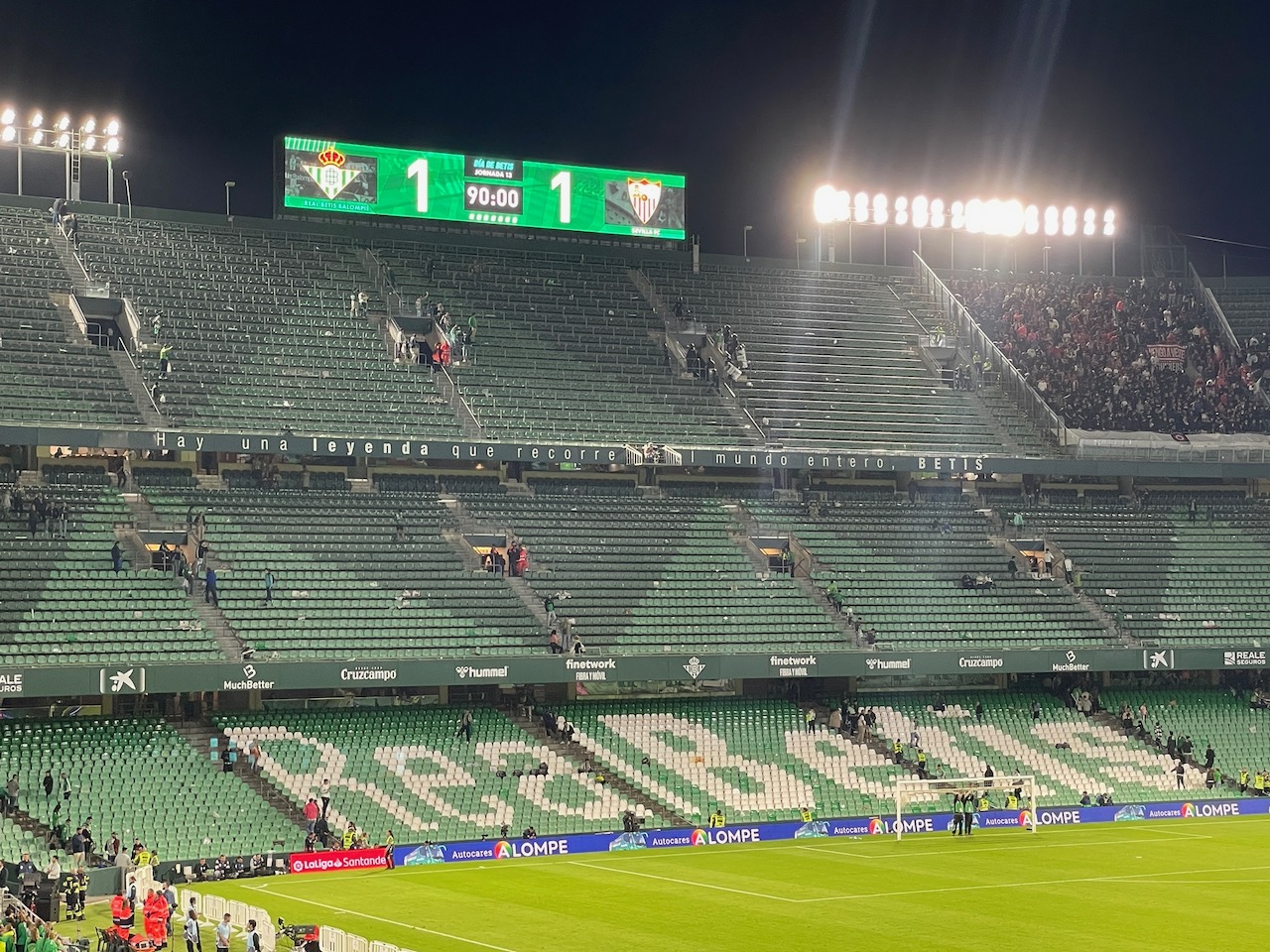
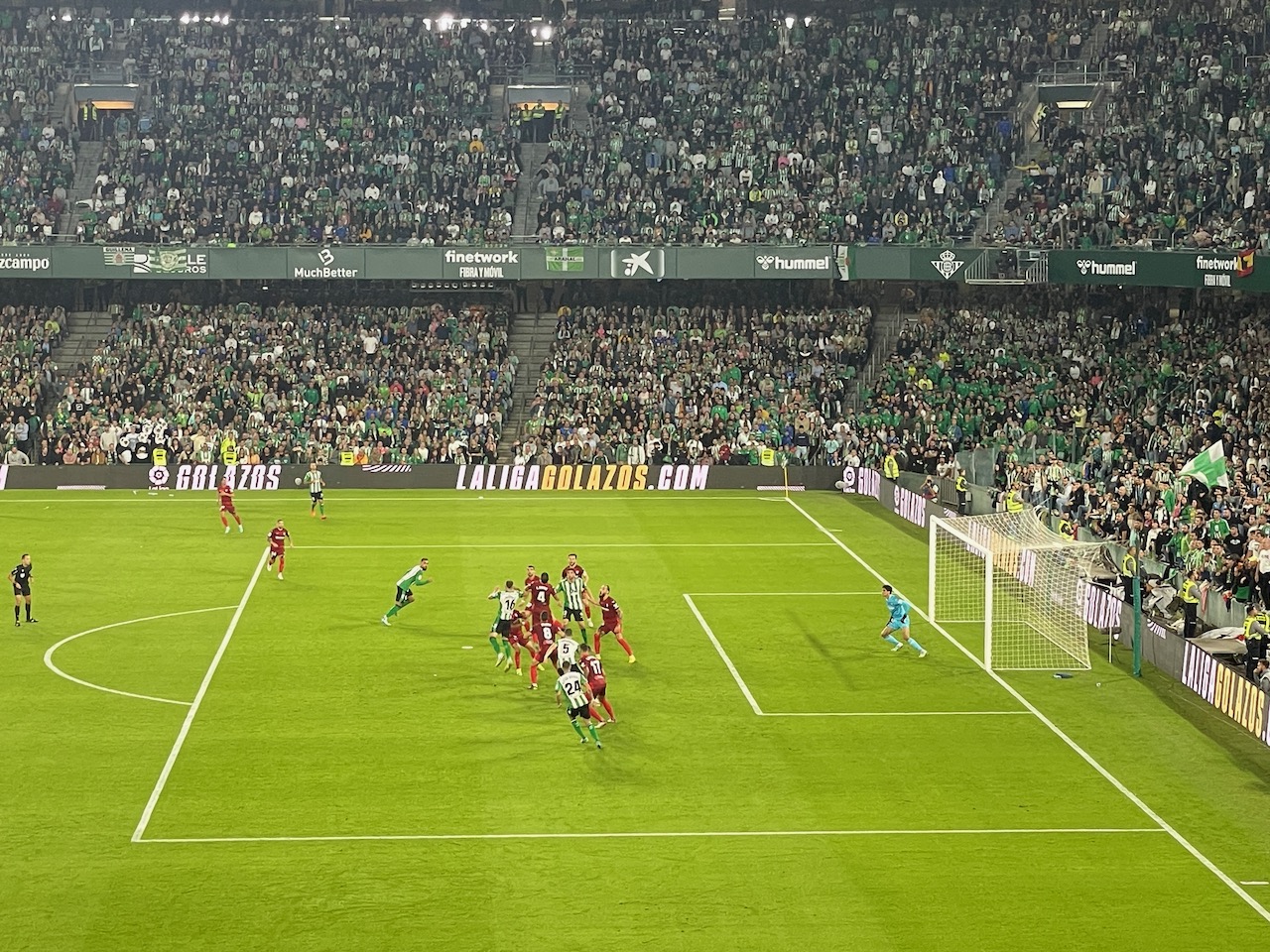
In January 2022, after Sevilla scored the opener at Betis, an object thrown from the stands hit a Sevilla player in the head, meaning that game was also suspended and finished in an empty stadium. A year later, Groundhopper Guides was in attendance when a massive Betis tifo mocked that player as Pinocchio for lying about the incident, then the game ended with one goal apiece and four red cards. See below for more on that night.
So we would strongly suggest you consider attending El Derbi Sevillano. Just keep your head on a swivel, as they say.

Women's Team
Real Betis Balompié Féminas competes in Liga F, the top league in Spain. Home matches are played at Ciudad Deportiva Luis del Sol, just down the road from the men’s stadium. Check their website for fixture information.
Songs
The Himno del Betis starts off on the stadium’s loudspeakers with a violin playing, then builds to a remarkable singalong and the fans chanting “Betis” while pushing their scarves forward in unison. The words are roughly thus:
We are all here to sing your song
we’re crowded together like cannonballs
and there is no one who can understand this affection.
And even if you were last, we always see you as champion
Betis! Betis! Betis!
Now, Betis, now.
Don’t stop attacking
because the goal is going to arrive
There’s also a bouncy, fun horn song you’ll hear before games called Baila Conmigo, or Dance With Me.
Stadium
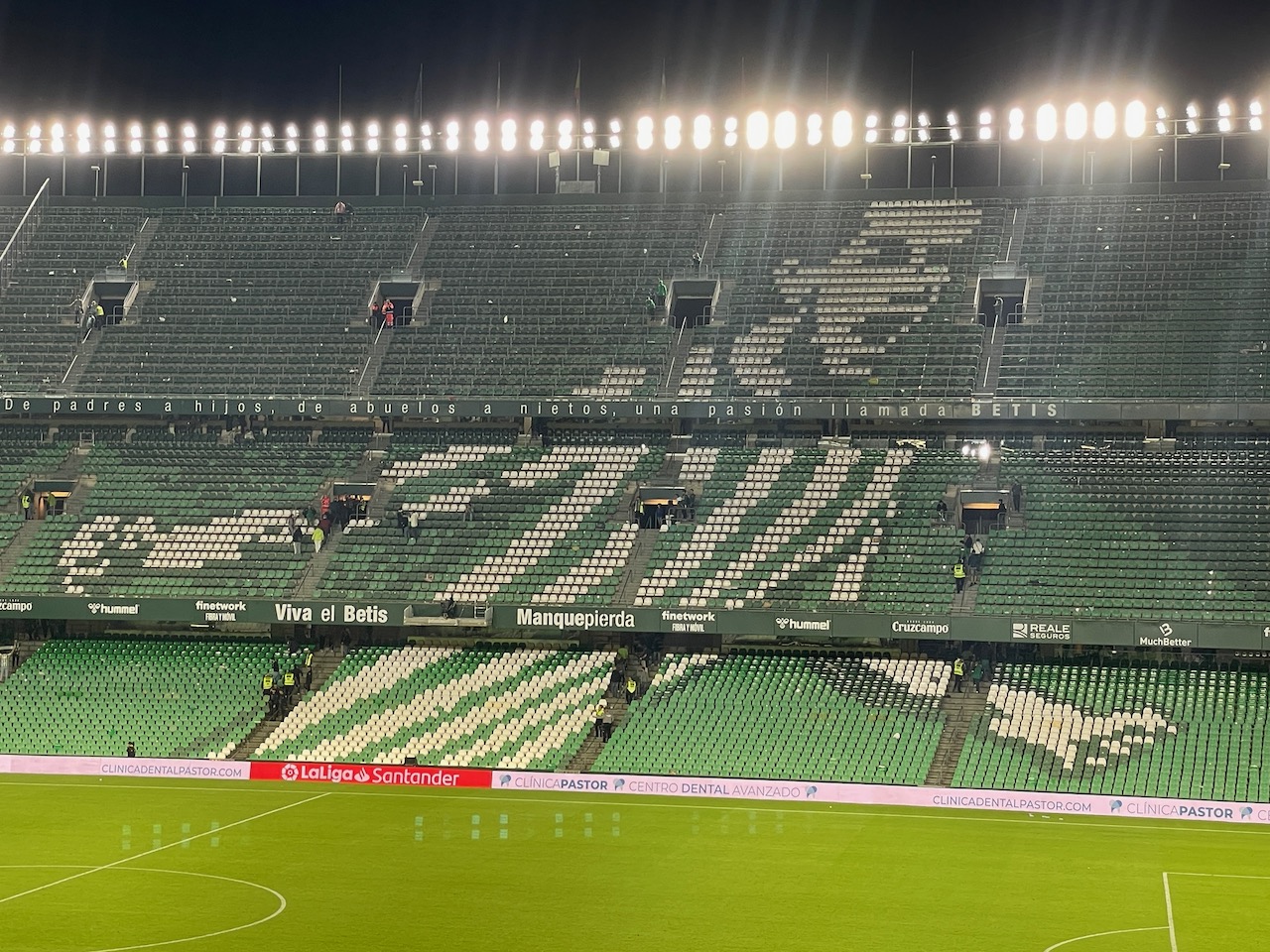
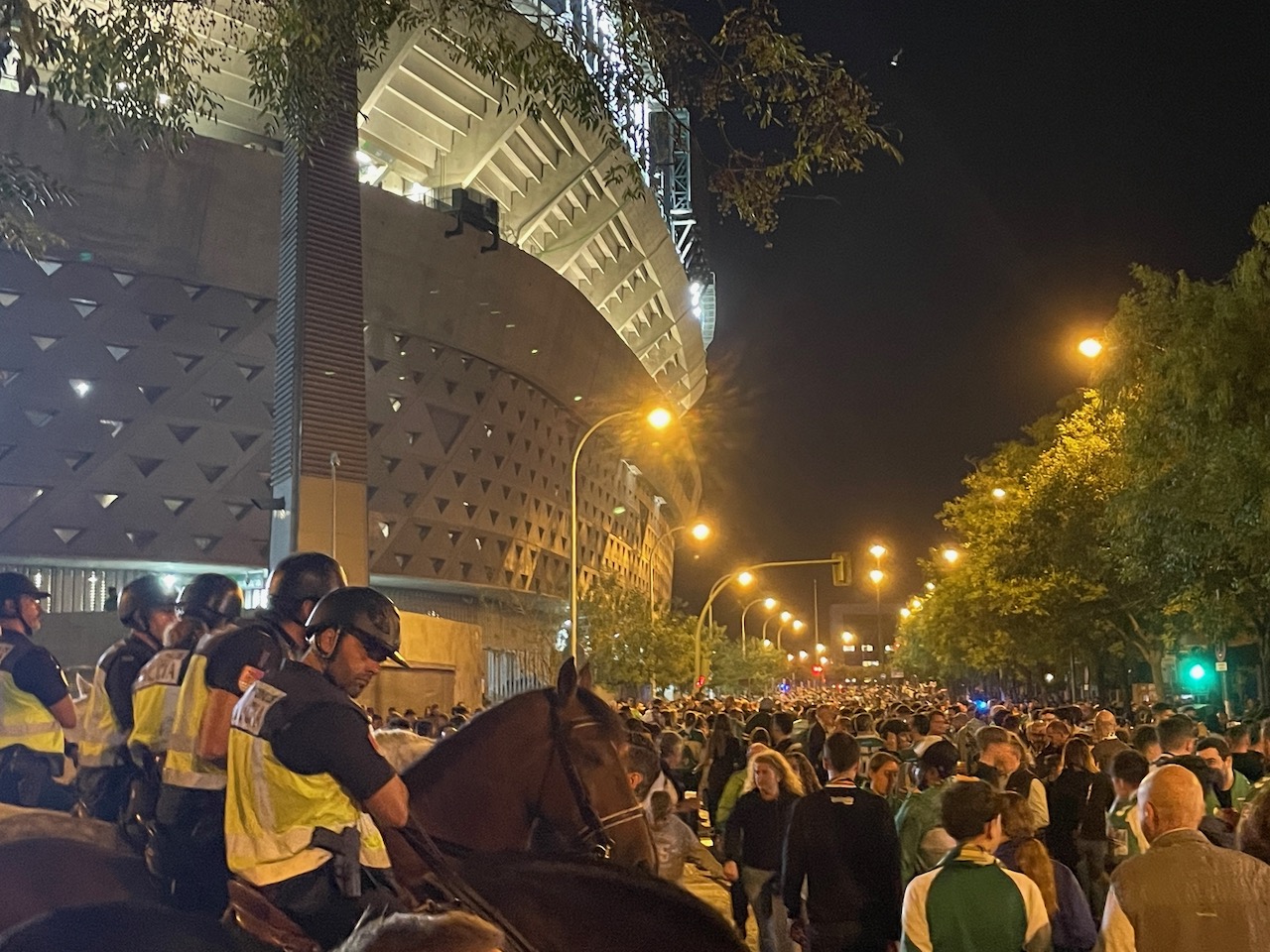
Located just south of the city center, Estadio Benito Villamarín, named for a former club president, holds a little over 60,000 people. It’s the fourth-largest stadium in Spain.
Although the club has played on this patch of ground since 1929, what exists today was mainly built in the 1990s, with the new South Stand just opened in the last few years. It’s three continuous tiers on one side and behind each goal, with another stand on the side housing offices, dressing rooms and even a roof. The rest of the place is uncovered.
Away fans will be sat way up in the third tier of the northeast corner.
TOURS: Available daily for 10 Euros via the club website.
Going to a Game at Real Betis
GETTING THERE: It’s just under 15 minutes by bus from the city center. From the Jardines del Prado de San Sebastián, take the #34, the #1, or the 1310, 1320 or 1340. It’s also about a 40-minute walk or an easy taxi ride. If you want a taxi afterwards, try to arrange it ahead of time.
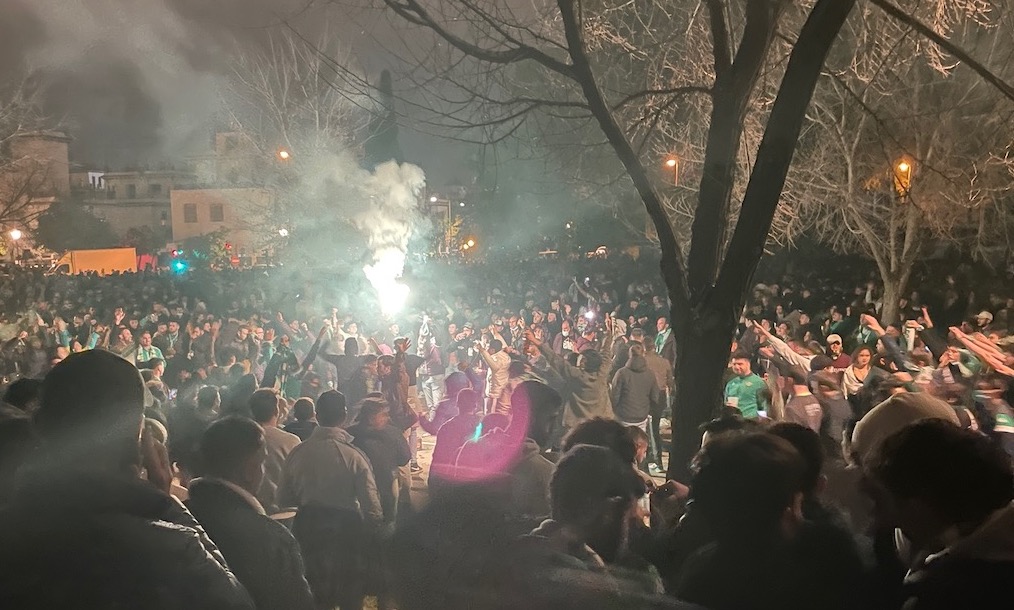
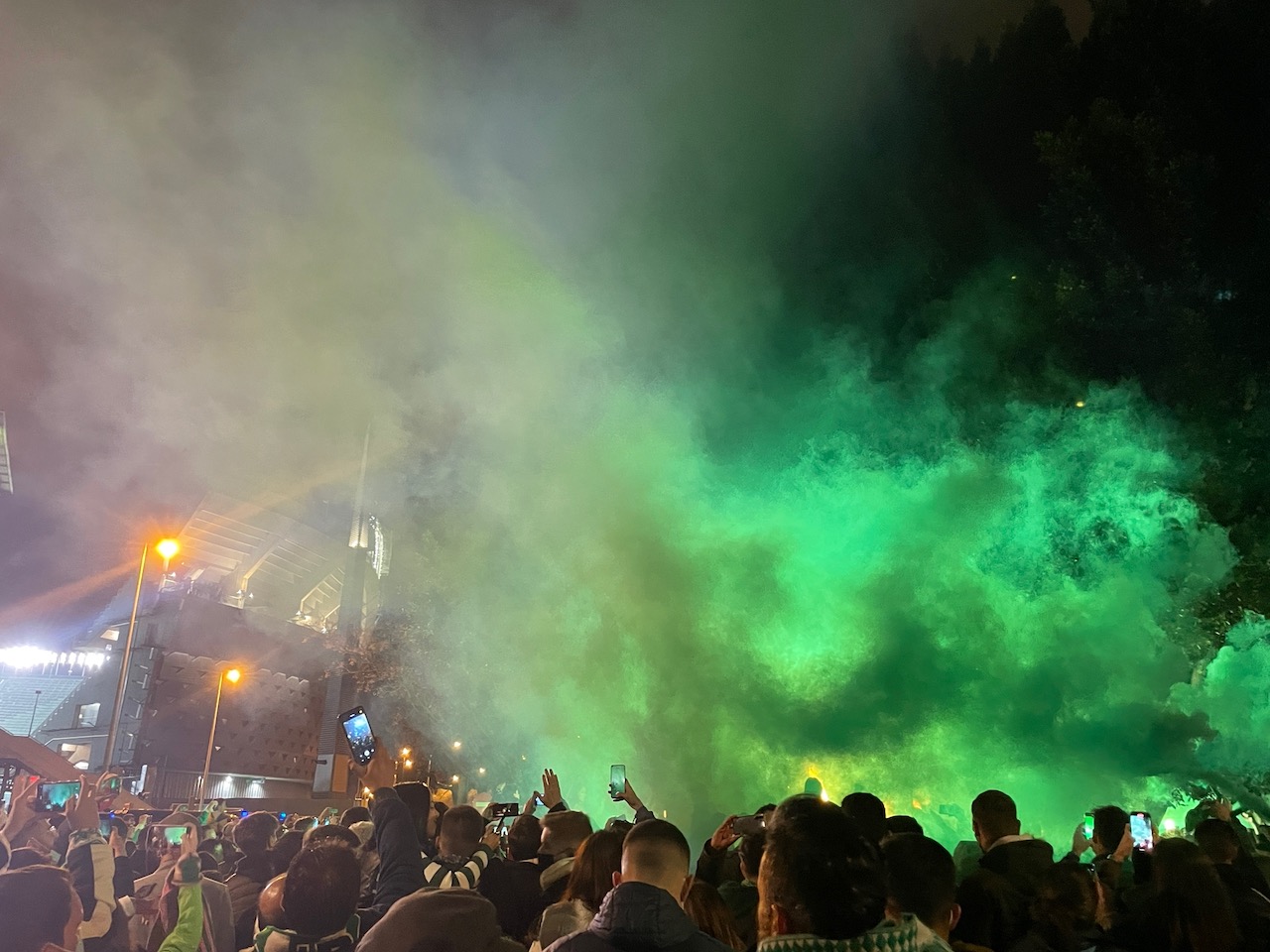
PUBS: There really aren’t any around the stadium. There is often a party atmosphere in the Río Guadaira. Sur Park. That’s also where Béticos will congregate to welcome the team coach with flares and songs.
GRUB: There will be plenty of food options right around the stadium on game days — burgers, sandwiches, etc. Otherwise, there is a wealth of food and drink options in town.
AROUND TOWN: Seville is one of the touristic hot spots of Spain, famous for its central old city with the Alcázar Palace, the cathedral, and the narrow, winding streets filled with shops and cafes and lined with orange trees. We won’t attempt any kind of thorough guide here, but our favorite tapas place is Bar Baratillo, located just by the old bullfighting ring. Bar Casa Morales in the center is a famous and atmospheric (and crowded) place dating to 1850.
Just off the main tourist track, the neighborhood of Triana is well worth a visit. It’s just across the river and the ancestral home of Real Betis; be sure to swing by Calle San Jacinto, which is lined with cafes and bars.
Real Betis Tickets
With more than 60,000 seats available, most home games don’t sell out — even the derby match we attended had some empty seats around. Check the club’s website.
Groundhopper Soccer Guides sells tickets and hospitality to Real Betis home games. Learn more about the options we offer below.

Photo Gallery



Videos

More About Real Betis


